

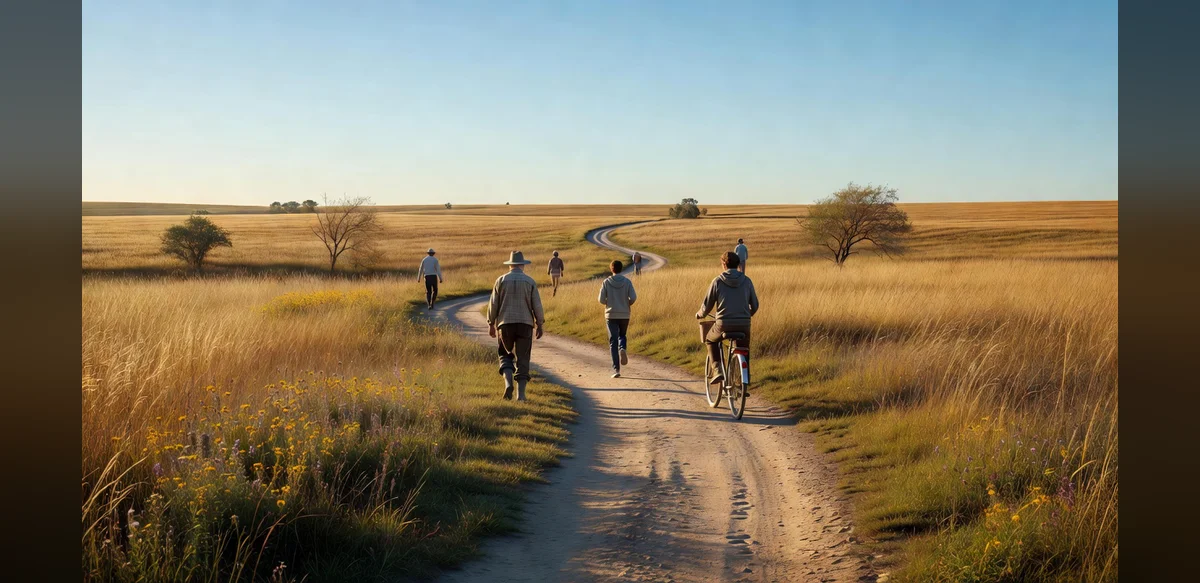
Residents in countryside areas have historically dealt with higher rates of long-term health conditions, partly because of widespread challenges that limit opportunities for regular movement. Research conducted at North Carolina State University examines these issues in detail and points to approaches that certain locations have adopted through careful planning and joint efforts among local groups. The findings emphasize that addressing such obstacles requires more than individual motivation and instead calls for coordinated actions at the community level.
Systemic factors often reduce access to suitable spaces for exercise in these settings. Limited infrastructure, such as few sidewalks or recreational facilities, combines with greater distances between homes and services to make consistent activity difficult. Economic constraints further restrict options, leaving many without affordable programs or equipment. These elements together contribute to elevated risks of ongoing illnesses that affect overall well-being across generations.
The university investigation reviews cases where targeted funding has helped overcome some of these hurdles. Investments in shared pathways, local parks, and group classes have shown promise when paired with input from residents themselves. Collaboration among health workers, government offices, schools, and volunteer organizations appears central to sustaining these changes over time. Examples illustrate how pooling resources can lead to new venues that encourage participation without requiring extensive travel.
Public awareness campaigns tied to these initiatives also play a role by highlighting benefits and reducing stigma around seeking support for activity. Data from the study suggest measurable shifts in participation rates where such combined strategies were implemented. However, the research notes that success depends on adapting methods to specific local conditions rather than applying uniform solutions everywhere.
Ongoing evaluation remains important to determine long-term impacts. Follow-up assessments can identify which elements yield the strongest results and where adjustments are needed. Policymakers and community leaders may draw from these insights to guide future allocations and partnerships aimed at narrowing health gaps between rural and other populations.
Broader implications extend to national discussions on equity in wellness resources. By focusing on practical steps like infrastructure upgrades and inclusive planning, regions can work toward environments that support healthier routines for all ages. Continued attention to these topics may help inform similar efforts in comparable settings facing parallel constraints.


