


In ancient Jordan, a devastating illness likely prompted cries of alarm as it claimed numerous lives, profoundly influencing society and historical records.
Modern scientists are now revealing fresh insights into this event. A multidisciplinary group from the University of South Florida is investigating the Plague of Justinian and its extensive consequences. Led by associate professor Rays H. Y. Jiang from the College of Public Health, the team has released the third installment in a series of studies on what is considered the initial documented bubonic plague epidemic in the Mediterranean region.
Their recent publication, titled ‘Bioarchaeological signatures during the Plague of Justinian (541-750 CE) in Jerash, Jordan,’ is featured in the Journal of Archaeological Science. It enhances knowledge of the epidemic that resulted in millions of deaths throughout the Byzantine Empire.
‘Our goal was to go beyond pinpointing the causative agent and examine the impacted individuals, their identities, lifestyles, and the nature of pandemic fatalities in an actual urban setting,’ Jiang explained.
A Large Burial Site Highlights the Extent of Mortality
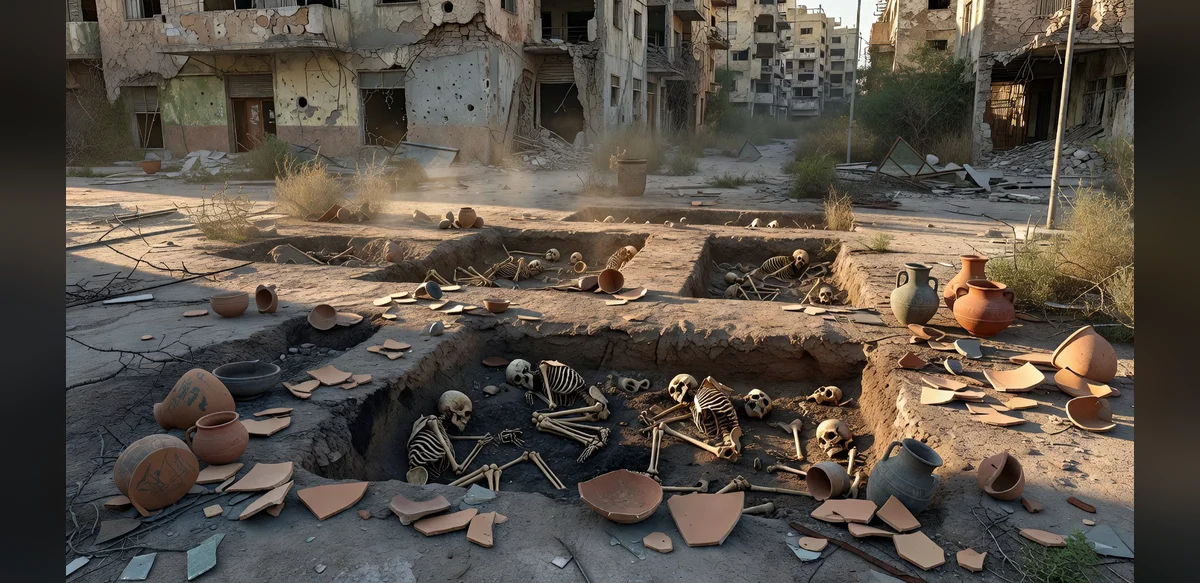
During the peak of the Plague of Justinian, victims originated from diverse, often isolated groups. In death, they were united. Numerous bodies were hastily interred atop ceramic waste in a forsaken communal space, forming the core of this investigation.
Jiang acted as the lead researcher, collaborating with experts from USF’s Genomics, Global Health Infectious Disease Research Center, and departments such as anthropology, molecular medicine, and history. Further input came from archaeologist Karen Hendrix at the University of Sydney in Australia and a DNA facility at Florida Atlantic University. Prior studies in the series concentrated on Yersinia pestis, the bacterium behind the plague. This latest effort delves into the disease’s immediate and enduring societal impacts, along with potential modern lessons.
‘The previous reports identified the plague bacterium,’ Jiang noted. ‘The Jerash location transforms that genetic information into a narrative about the victims and a city’s ordeal during a catastrophe.’
Initial Verified Plague Mass Burial
Accounts from history recount extensive sickness in the Byzantine period, but many presumed plague gravesites lacked solid confirmation. Jerash now represents the first site where a mass grave linked to the plague has been verified via archaeological findings and genetic analysis.
The team established that the interment was a one-time occurrence, distinct from cemeteries that accumulate over time. In Jerash, hundreds were laid to rest in just days. This finding alters perceptions of the First Pandemic by delivering concrete proof of massive death tolls and shedding light on living conditions, mobility, and susceptibilities in ancient cities.
Travel Patterns and Unseen Links
The results also address a persistent puzzle. Records and genetic evidence show people moved and intermingled across areas, but burial data often indicates localized groups.
The Jerash evidence demonstrates that both scenarios can occur simultaneously. Migration usually happened gradually across generations, integrating into routine existence and becoming hard to spot in regular graveyards. In emergencies, though, people from transient backgrounds converged, exposing those concealed ties.
Data indicates the buried individuals in Jerash were part of a nomadic segment within the broader city population. Typically dispersed regionally, they were consolidated in one grave amid the emergency.
Examining the Personal Toll of Epidemics
‘By connecting biological data from remains to the archaeological context, we observe how illness influenced actual individuals in their social and environmental surroundings,’ Jiang stated. ‘This allows us to view historical pandemics as experienced human health occurrences, beyond mere textual descriptions of outbreaks.’
The work is transforming scientific perspectives on epidemics, stressing not only their origins and transmission but also their effects on everyday routines and societal frameworks. Crowded urban areas, movement, and ecological shifts contributed then, similar to now.
‘Epidemics extend beyond biology; they are societal phenomena, and this research illustrates how illness interacts with daily activities, mobility, and fragility,’ Jiang added. ‘Since epidemics expose vulnerabilities and their causes, those dynamics continue to influence disease impacts on communities today.’
Research Group
Besides Jiang, the USF contributors to the three publications included:

