


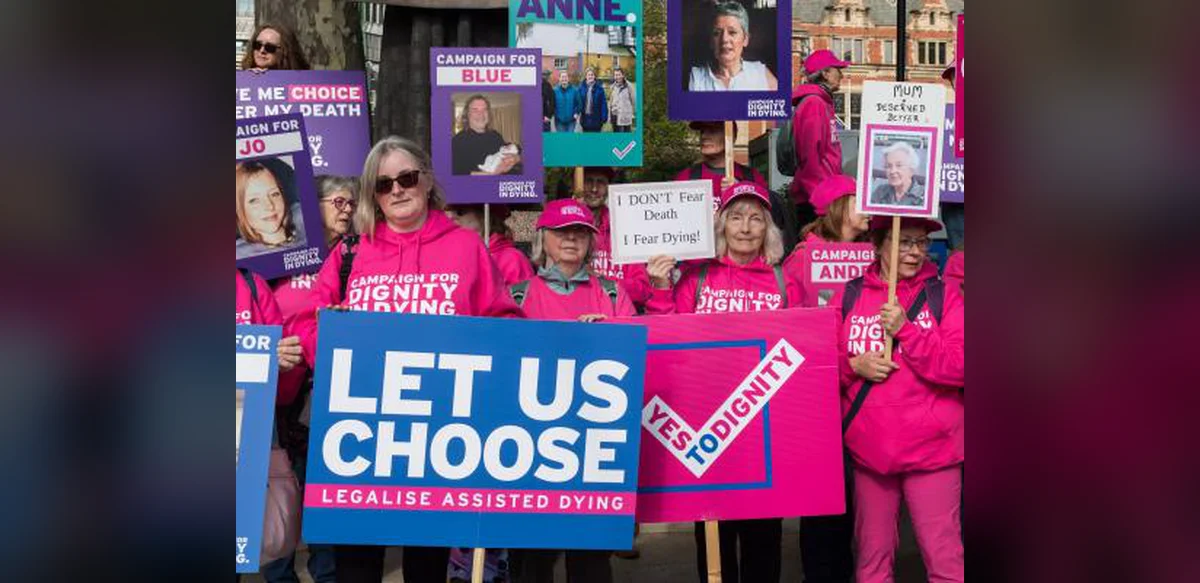
Following the collapse of efforts to introduce legislation permitting assisted dying for terminally ill individuals with under six months to live, advocates and opponents expressed strong dissatisfaction with each other. Proponents, including those facing terminal conditions, attributed the defeat of the terminally ill adults (end of life) bill—which had advanced through the House of Commons—to interference by a small group of unelected members in the upper house. In contrast, critics, comprising lawmakers, upper house members, and advocates for disability rights, contended that the proposal was inadequately prepared and overlooked key operational issues in implementing assisted dying.
Sarah Wootton, head of Dignity in Dying, accused a small number of peers, whom she called steadfast adversaries of assisted dying, of controlling discussions in the upper house and introducing numerous amendments to delay the bill. She remarked that it was disgraceful for such a minor fraction—under 1% of the unelected chamber—to act this way, emphasizing their duty to review rather than obstruct.
Hannah Slater, 38, who is living with terminal breast cancer, labeled the bill’s failure as undemocratic. She expressed deep disappointment for those seeking control over their end-of-life decisions in the face of terminal illness, calling the last-minute denial frustrating, harsh, and unjust.
However, one of the peers frequently targeted by supporters defended the opposition’s actions. Tanni Grey-Thompson, a crossbench peer and ex-Paralympic athlete, who highlighted issues like the effectiveness of lethal medications and their use during pregnancy, stated that the bill collapsed due to its flawed drafting. She argued it required far greater precision.
Grey-Thompson noted that critiques of the 1,200 amendments ignored the intricacies involved, as a single concern often necessitated changes across multiple sections. For instance, her proposal to adopt the standard legal phrase ‘disabled people’ instead of ‘people with disabilities’ demanded 12 amendments. She added that the upper house’s function includes examining technical details, and resistance stemmed from intense pressure to approve hastily, not just from a few individuals.
Pete Donnelly, an advocate for disability rights, commended the amendments, saying they prevented the bill from passing without proper examination. Concerned that such laws might eventually include people with disabilities, he described the proposal as hazardous and potentially deadly. He suggested it should proceed as government-backed legislation for thorough review, pointing out deficiencies in procedures, protections, and the medications involved.
Labour MP Josh Fenton-Glynn, who chose not to vote during the bill’s second reading in the Commons, believed it still fell short on measures to shield terminally ill individuals from family pressure. As a health select committee member, he stated that advocates of assisted dying should prioritize a secure and functional law, which this was not. He would support revisions addressing these flaws but opposed resubmitting the same problematic version, leaving him to reject a risky measure.
Labour peer Luciana Berger argued that the bill deserved the same preliminary review as other conscience-based private members’ bills, such as those on abortion and the death penalty, which involved prior commissions. This process ensured engagement with relevant professional groups and practicality in implementation.
Andrew Copson, chief executive of Humanists UK, countered that claims of insufficient scrutiny were unfounded. He noted that assisted dying had undergone exceptional examination, surpassing any other private member’s bill, even prior to reaching the upper house. Opponents portray it as a new concept, yet similar laws function in over 36 regions affecting hundreds of millions, making this one of parliament’s most analyzed reforms.

