

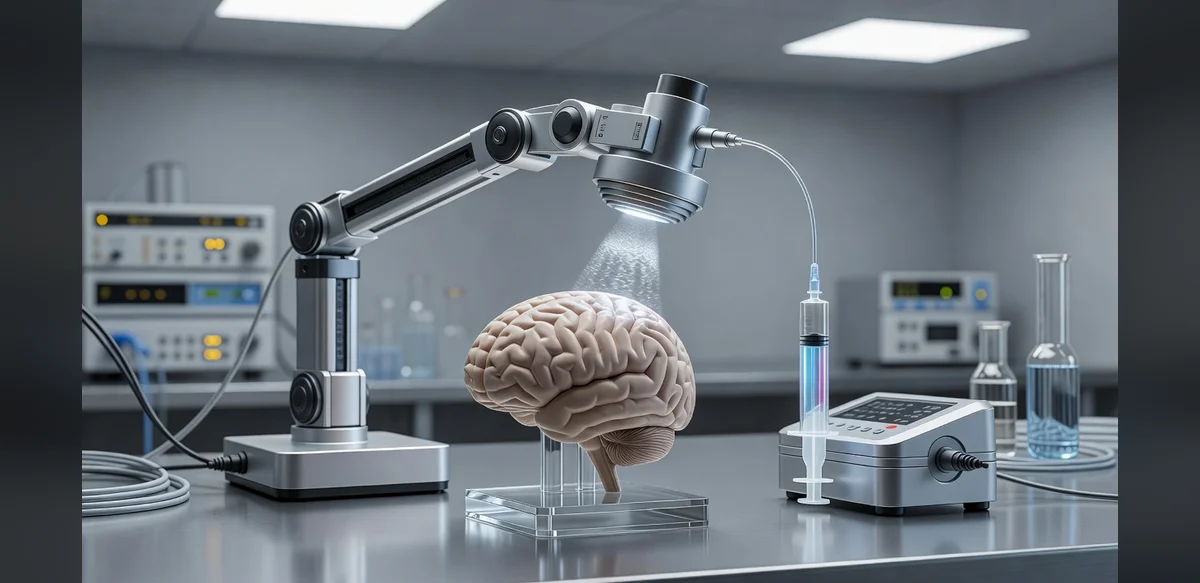
Recent findings from researchers at UVA Health indicate that gliomas could be particularly responsive to a method involving focused sound waves for delivering medication. This approach aims to enhance treatment options for brain tumors by directing drugs more precisely to affected areas.
The study highlights that these tumors appear more open to the technique than surrounding healthy brain tissue. Such a difference may allow for improved precision when administering therapies, potentially reducing effects on normal cells.
Focused sound waves represent an emerging tool in medical research for reaching difficult locations within the brain. By concentrating energy at specific points, the method can temporarily alter barriers that typically limit drug access.
Gliomas are a category of tumors that originate in the brain or spinal cord. They vary in aggressiveness and can present significant challenges for standard treatments due to their location and characteristics.
The observation that gliomas may accept the sound wave method more readily than normal tissue suggests a possible advantage in future applications. Researchers note this as a promising indicator for refining delivery strategies.
Further exploration of this technique could contribute to broader understanding of how sound waves interact with different tissue types. The current results provide a foundation for continued investigation into optimizing such approaches.
Medical research in this area continues to examine ways to combine sound wave technology with existing treatment protocols. The goal remains to increase effectiveness while maintaining safety standards.
Overall, the determination that gliomas show heightened receptivity offers a new perspective on potential therapeutic pathways. It underscores the value of ongoing studies into non-invasive delivery systems for brain-related conditions.
Additional work will be needed to translate these laboratory insights into clinical settings. The initial data supports the idea that targeted sound waves merit further attention in oncology research.
This development aligns with wider efforts to improve care for patients facing complex brain tumors. By focusing on tissue-specific responses, scientists hope to advance more tailored interventions over time.


