


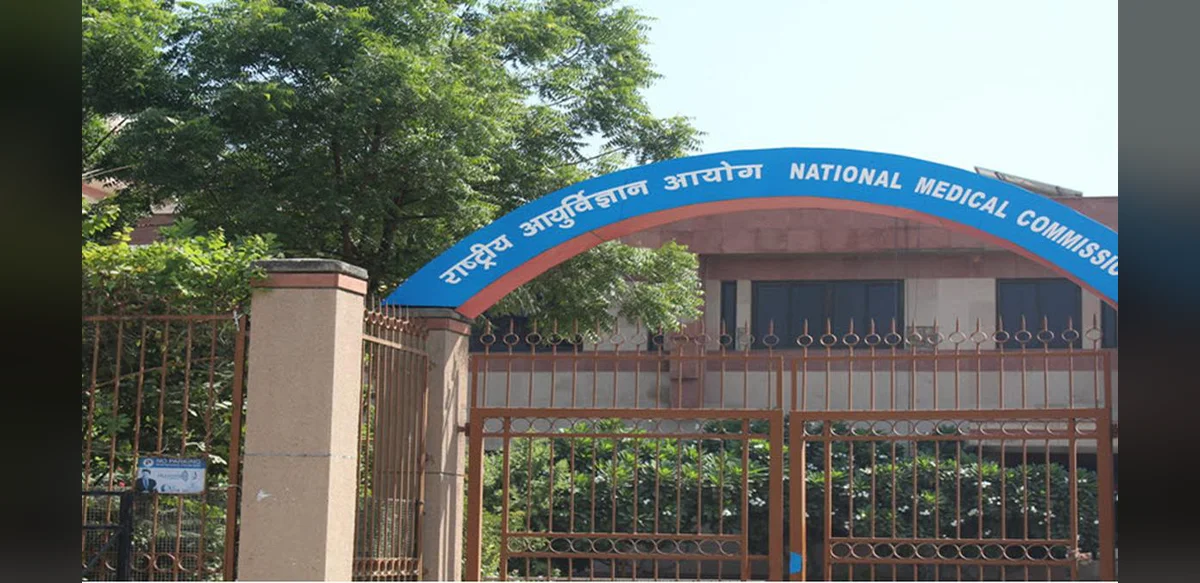
To safeguard students, the National Medical Commission intends to halt approvals for medical colleges that remain under construction or rely on temporary facilities. It seeks amendments to regulations on setting up new institutions.
The draft Establishment of New Medical Institutions, Assessment and Rating (Amendment) Regulations, 2026, issued for public feedback, mandate that applicants finish all required infrastructure before requesting permission to launch an MBBS program.
Temporary hospital or building setups will be disallowed, and applications from sites still under construction will not be considered.
Stricter standards amid rising numbers
The changes coincide with the regulator publishing the MBBS seat allocation for the 2026-27 academic year, detailing approved undergraduate intakes nationwide.
Both measures aim to enforce higher quality during rapid growth in medical seats.
India has nearly tripled MBBS capacity in ten years, expanding from 51,348 seats in 2014 to 1,36,939 for 2026-27, per Union Health Ministry data.
Shift in regulatory stance
A senior ministry official noted that swift seat expansion has boosted access to medical training yet raised issues about infrastructure and standards, leading to the current overhaul.
The approach differs from recent years. While the government expanded undergraduate medical education to ease doctor shortages, repeated concerns emerged over approvals granted despite unfinished facilities, insufficient staff, or non-operational hospitals. Several colleges later faced measures from the Medical Assessment and Rating Board following inspection findings.
The amendments target these issues at the application stage.
Full campuses required
Applicants must now prove that teaching hospitals, college structures, and all mandatory infrastructure are fully operational before submitting forms. Those using temporary or partial facilities will be ineligible.
Documentation rules are also stricter. Applicants need a valid university Consent of Affiliation, a recent solvency certificate, and a commitment to establish a dedicated corpus fund for operations. Existing colleges must maintain such funds, with amounts set later by the board.
Incomplete submissions will receive no chance for correction, an official stated. The regulator further proposes penalties for attempts to sway approvals via intermediaries, allowing the board to halt or reject such cases immediately.
Rapid expansion continues
The NMC has released the 2026-27 MBBS seat matrix, bringing total undergraduate seats outside Institutes of National Importance to 1,36,939.
Counselling bodies must assign students only to seats approved by the board, barring excess admissions. Issued on July 14, the matrix adds 9,911 seats to the prior total of 1,27,028.
Growth includes 2,400 new seats from 25 recently opened colleges, seven government-run and 18 private. The remainder stems from increased intake at existing sites. Government institutions provide 63,296 seats across 441 colleges, while private ones offer 73,643 across 382. Uttar Pradesh, Karnataka, Tamil Nadu, and Maharashtra account for over one-third of national capacity.

