


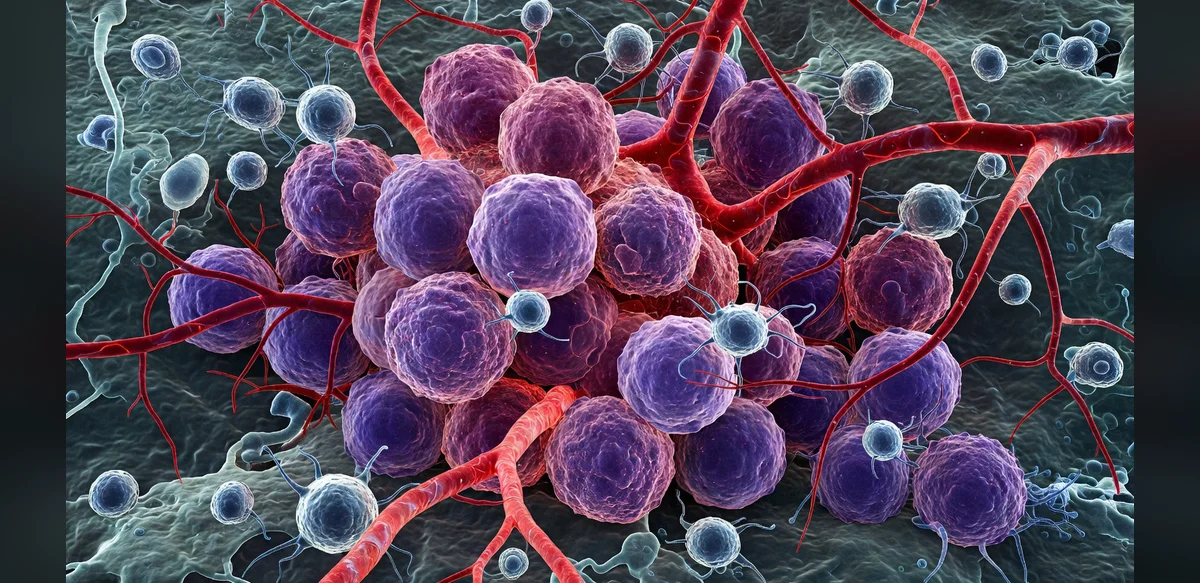
New research has connected a molecule involved in gene regulation to the advancement of skin cancer and its capacity to evade the body’s immune system.
Experts at NYU Langone Health and the Perlmutter Cancer Center identified a vital protein called the transcription factor HOXD13 as central to melanoma development. This protein supports the creation of blood vessels that deliver oxygen and nutrients to tumors. Such transcription factors manage how DNA instructions are converted into proteins essential for bodily functions.
HOXD13 Enhances Tumor Vascularization
Published in Cancer Discovery, the study revealed that HOXD13 triggers multiple pathways to boost blood supply to tumors, known as angiogenesis. These include pathways related to vascular endothelial growth factor (VEGF), semaphorin-3A (SEMA3A), and CD73. In lab tests, lowering HOXD13 levels resulted in reduced tumor sizes.
Effects on Immune Defenses
The researchers observed that melanoma patients with elevated HOXD13 had lower counts of cytotoxic T cells in their bloodstream. These cells detect and eliminate cancer cells. Additionally, T cells struggled to penetrate tumors in cases with high HOXD13.
“Our findings indicate that the transcription factor HOXD13 strongly promotes melanoma expansion while inhibiting the T cell responses required to combat it,” stated lead researcher Pietro Berico, PhD, a postdoctoral fellow at NYU Grossman School of Medicine and the Perlmutter Cancer Center.
How Tumors Form an Immune Shield
Deeper examination showed that HOXD13 modifies the tumor surroundings to diminish immune effectiveness. It elevates CD73 levels, which increase adenosine production. This compound creates a shield around tumors by impeding T cells and blocking their access to cancerous areas. Disabling HOXD13 allowed greater T cell infiltration into tumors.
“These results suggest that jointly addressing angiogenesis and adenosine-receptor pathways could offer a novel therapeutic strategy for melanomas driven by HOXD13,” commented senior researcher Eva Hernando-Monge, PhD, a pathology professor at NYU Grossman School of Medicine and Perlmutter Cancer Center member.
Prospects for Integrated Therapies
Hernando-Monge highlighted ongoing clinical trials evaluating drugs that inhibit VEGF or adenosine receptors in melanoma and other cancers. Some trials combine these with immunotherapies that activate the immune system against cancer.
Should these trials succeed, the team aims to investigate combined VEGF and adenosine-receptor blockers tailored for patients with high HOXD13 expression.
The scientists also plan to assess if similar pathways can be targeted in other cancers with raised HOXD13, including specific glioblastomas, sarcomas, and osteosarcomas.
Research Methods and International Partnership
To draw these insights, the team examined tumor samples from over 200 melanoma patients across the United States, Brazil, and Mexico, pinpointing active biological pathways. HOXD13 stood out as crucial. Further tests in mice and human melanoma cells verified its role in vascular development and immune avoidance. Inhibiting HOXD13, VEGF, and adenosine pathways underscored their significance for tumor persistence.
Support and Contributors
Funding came from National Institutes of Health grants P30CA016087, R01CA274100, P50CA225450, and U54CA263001, plus support from the Melanoma Research Foundation, Melanoma Research Alliance, United Kingdom Medical Research Council grant MR/S01473X/1, Brazilian National Council for Scientific and Technological Development grants 442091/2023-0 and 309661/2023-4, and Wellcome Trust Career Development Award 227228/Z/23/Z.
Alongside Hernando-Monge and Berico, NYU Langone participants included Amanda Flores Yanke, Fatemeh Vand Rajabpour, Catherine Do, Ines Delclaux, Tara Muijlwijk, Robert Stagnitta, Theodore Sakellaropoulos, Michelle Krogsgaard, Ata Moshiri, Iman Osman, Jane Skok, Amanda Lund, and Markus Schober.
External collaborators were Irving Wilmer and M. Estefania Vazquez-Cruz, led by Carla Daniela Robles-Espinoza at the National Autonomous University of Mexico in Juriquilla. Others included Matheus Riberio and Annie Squiavinato, under Patricia Possik at the Brazilian National Cancer Institute in Rio de Janeiro.

