

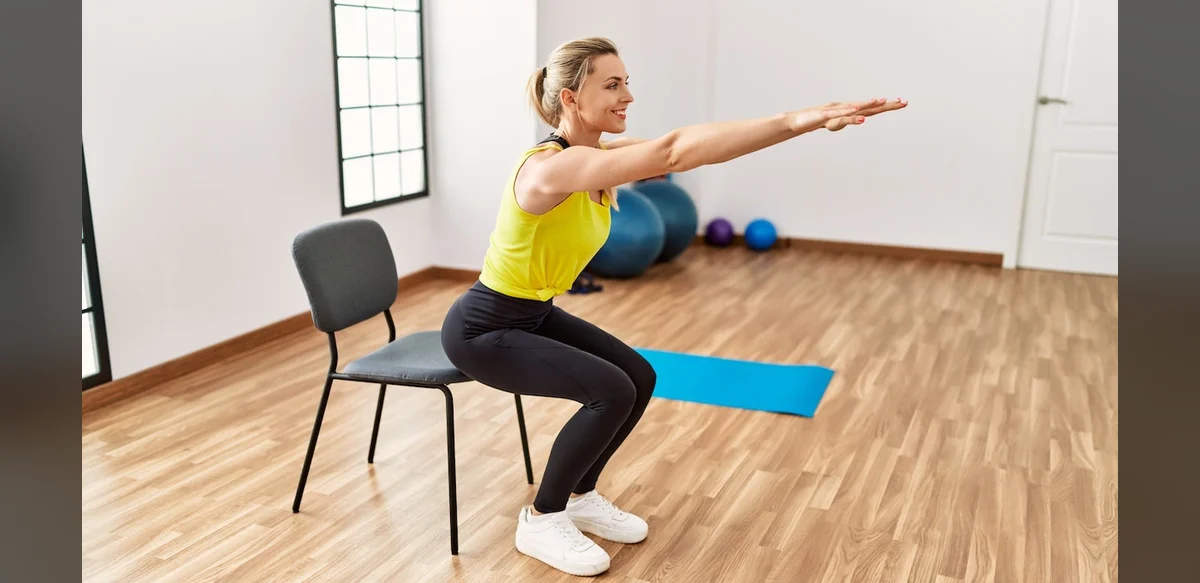
Health experts have highlighted a straightforward assessment known as the 30-second chair stand test as a potential marker for overall longevity and physical capability. The evaluation measures how many times an individual can rise from a seated position to standing within half a minute, providing insight into lower body power and stability.
Certified fitness professionals note that performance on this test correlates with reduced fall risk and better daily function, particularly among older adults. Benchmarks vary by age and gender, with higher repetition counts generally indicating stronger muscle endurance and mobility.
The test requires minimal equipment, typically just a sturdy chair with no armrests. Participants start seated with arms crossed over the chest and are instructed to stand fully before returning to the seat as many times as possible in 30 seconds. Proper form ensures accurate results and minimizes strain.
Research in exercise science supports the value of lower body strength for maintaining independence. Weakness in the legs and core can contribute to balance issues, increasing the likelihood of falls that lead to injury. Regular assessment allows individuals to track progress and adjust routines accordingly.
To improve scores, trainers recommend targeted movements such as bodyweight squats, step-ups onto low platforms, and seated leg lifts. These exercises build strength gradually and can be performed at home without specialized gear. Consistency over weeks tends to yield noticeable gains in repetition numbers.
Nutrition also plays a supporting role, with emphasis on adequate protein intake to aid muscle maintenance. Combined with the test, such habits form part of broader strategies for healthy aging. Public health messages often encourage simple, accessible activities to promote widespread participation.
Medical studies continue to explore links between functional tests like this one and long-term health outcomes. While not a replacement for comprehensive medical evaluations, the chair stand method offers an easy entry point for self-monitoring. Individuals concerned about results are advised to consult healthcare providers for personalized guidance.
Variations of the test exist for different populations, including modifications for those with joint concerns. Safety remains paramount, with recommendations to perform the assessment on stable surfaces and stop if discomfort arises. Over time, repeated practice can enhance both confidence and physical resilience.
Community programs sometimes incorporate similar assessments to educate participants on fall prevention. Data from such initiatives show that awareness of personal benchmarks motivates continued activity. This aligns with efforts to reduce healthcare burdens associated with mobility-related incidents.
Overall, the 30-second chair stand test serves as one tool among many for evaluating fitness levels. Its simplicity makes it suitable for broad use, encouraging more people to focus on strength-building habits that support extended health spans. Further details on specific benchmarks and exercise progressions are available through qualified training resources.


