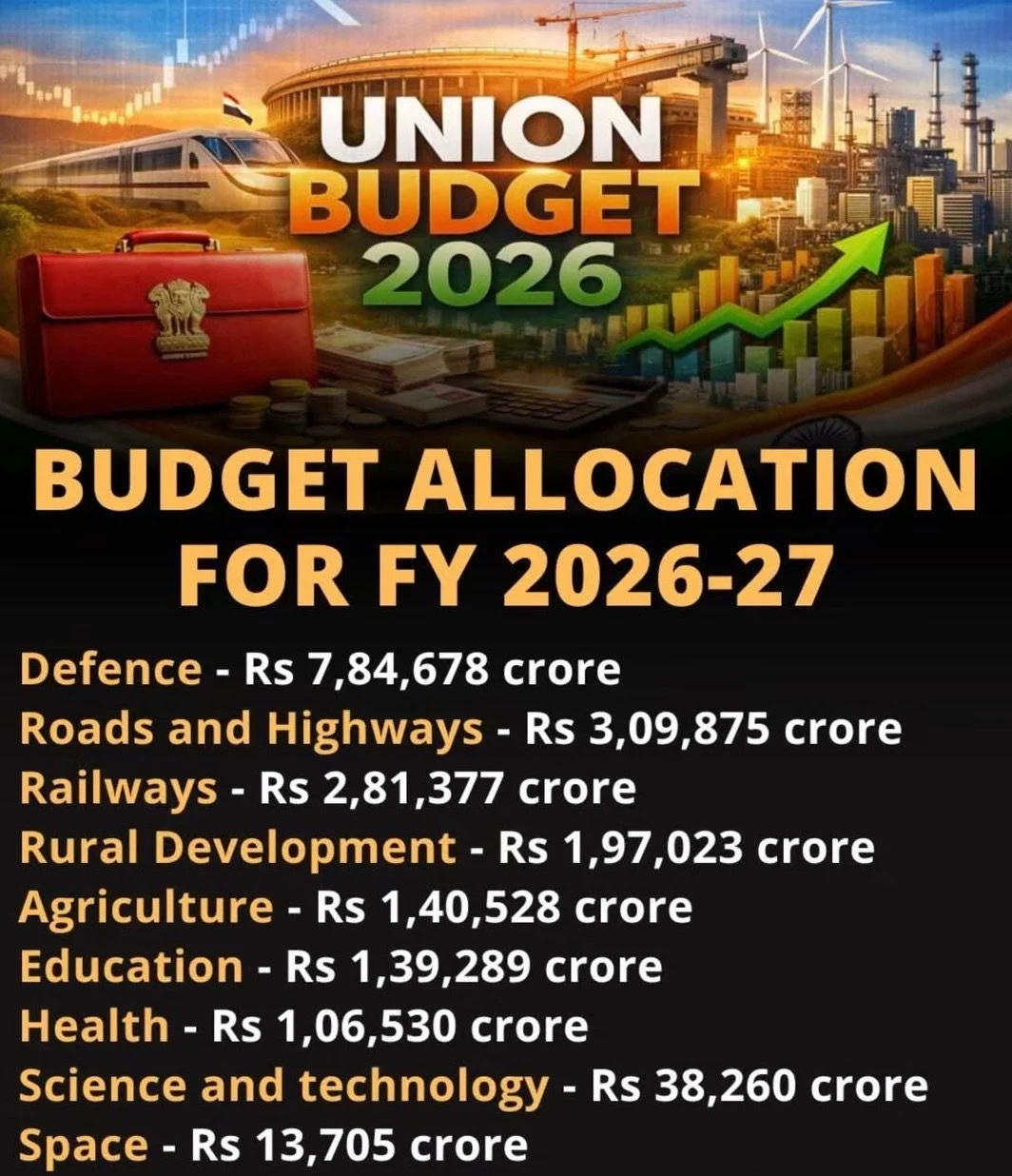
The Union Budget 2026-27, presented by Finance Minister Nirmala Sitharaman on February 1, 2026, has indeed placed a strong, record-setting focus on rural and national infrastructure, as part of a broader
₹12.2 lakh crore public capital expenditure push.
Based on official PIB releases and post-budget analyses, here are the key highlights regarding infrastructure and rural development for 2026-27:
1. Massive Rural Infrastructure & Development Allocation
- Total Rural Development Budget: Allocations for Rural Development have risen by over 211% over the decade, reaching ₹2.73 lakh crore in 2026-27.
- Combined Rural & Agriculture Focus: The combined budget of the Rural Development and Agriculture ministries has exceeded ₹4,35,779 crore.
- Viksit Bharat G Ram G (VB-G RAM G): Replacing MGNREGA, this new scheme has been allocated ₹95,692.31 crore (centre share) to modernize employment, with a target of 125 days of work per household, focusing on water security, rural roads, and disaster preparedness. Total allocation including state share exceeds ₹1.51 lakh crore.
- Rural Housing (PMAY-G): The Pradhan Mantri Awaas Yojana-Grameen has been allocated ₹54,916.70 crore in 2026-27 to accelerate the completion of rural houses, representing a significant 69% increase over the 2025-26 revised estimates.
- Rural Connectivity: The Pradhan Mantri Gram Sadak Yojana (PMGSY) saw allocations increase to ₹19,000 crore.
2. National Infrastructure Highlights (2026-27)
- Record Capital Outlay: Total public capital expenditure (capex) is set at ₹12.2 lakh crore, an increase of nearly 9% over 2025-26, intended to boost long-term capacity.
- Railway Modernization: A total outlay of ₹2.78 lakh crore is dedicated to the railway sector, including 7 high-speed rail corridors.
- Waterways & Logistics: The budget proposes to operationalize 20 new National Waterways over the next five years to improve green logistics.
- Urban & Regional Infrastructure: The budget focuses on infrastructure development in Tier-II and Tier-III cities (population >5 lakh), with specific plans for City Economic Regions (CERs).
3. Key Policy Shifts for Rural Areas
- Women-Led Transformation: The DAY-NRLM (National Rural Livelihoods Mission) is allocated ₹19,200 crore, with a new proposal to establish Self-Help Entrepreneur (SHE) Marts to transition Self-Help Groups (SHGs) into sustainable enterprises.
- Infrastructure Risk Guarantee Fund: To encourage private investment in rural and other infrastructure projects, a fund will be established to provide partial credit guarantees to lenders.
- Digitalization: Launch of ‘Bharat-VISTAAR’, a multilingual AI-based platform to provide customized advisory services to farmers.
Note: The figure of ₹3.4 lakh crore specifically for “rural infrastructure” is likely a combined figure encompassing housing, roads, and water, as the total Rural Development Ministry budget is around ₹2.73 lakh crore, while combined agriculture and rural spending exceeds ₹4.35 lakh crore.