

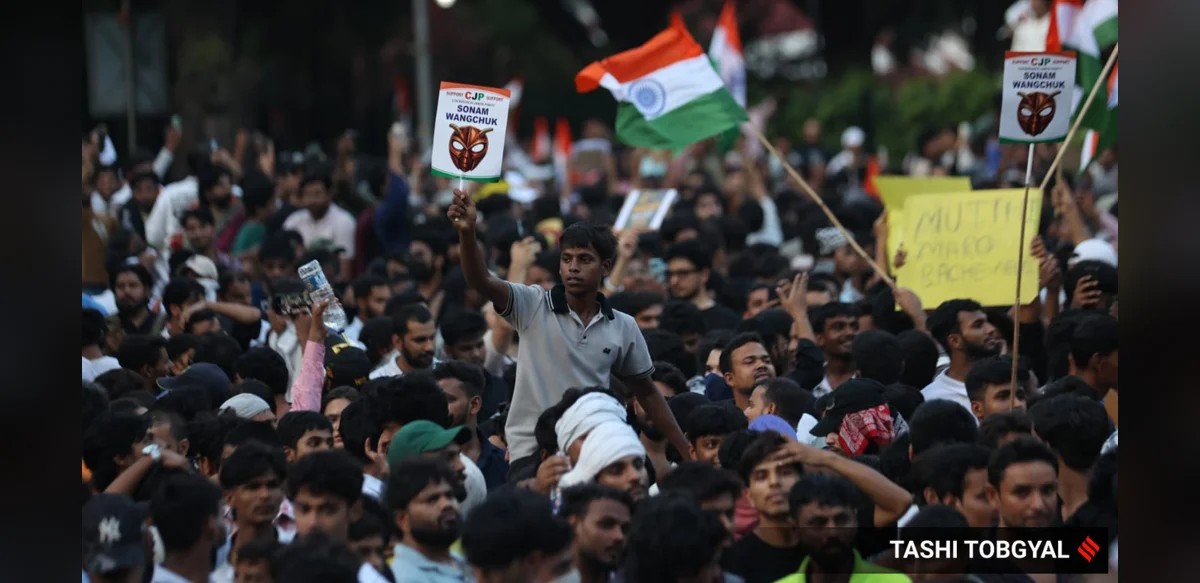
The Cockroach Janta Party demonstration concerning the NEET examination irregularities from earlier this year reached its 26th day on Thursday. What started as a student-led effort seeking accountability in competitive testing has expanded into a broader political campaign. It now links events from the July 20 march toward Parliament, subsequent court actions, hunger strikes, backing from opposition groups inside and outside the legislature, and responses from senior officials including Nadda. Recent confrontations near Delhi’s Jantar Mantar on the third day of the sit-in, claims of communication restrictions, and a conditional proposal by climate activist Sonam Wangchuk to conclude his fast have heightened the discussion.
The campaign began roughly a month earlier when the CJP charged the administration with failing to guarantee integrity in NEET testing after reports of leaks surfaced. The group called for the resignation of Union Education Minister Dharmendra Pradhan, an open inquiry into the reported irregularities, comprehensive changes to the education framework, and support for families of students who died by suicide linked to the leaks.
Over the past four weeks the effort has drawn participation from activists, agricultural organizations and opposition parties beyond its initial student base.
Why has the demonstration persisted at Jantar Mantar?
After being blocked from advancing to Parliament on July 20, participants relocated their action to Jantar Mantar and maintained a continuous sit-in. The protest marked its fourth day on Thursday, though tensions rose again on Wednesday evening.
On Wednesday, Delhi Police took strong measures against demonstrators outside Jantar Mantar and restricted internet access in the area. Officials reported that around 12,000 individuals assembled at the site, which normally accommodates about 4,000, leading to overflow onto adjacent streets. Police stated that new clashes occurred following an altercation between some protesters and a group of Nihangs. Tear gas and baton charges were used to clear the crowd. Six officers, including two Assistant Commissioners of Police, sustained injuries, according to PTI. The CJP claimed internet services near Jantar Mantar were suspended on Wednesday and questioned whether further action was planned. Party founder Abhijeet Dipke urged police to avoid force and pledged that the agitation would continue until demands are addressed.
What has the Centre stated regarding the demonstrations?
The government has expressed willingness to speak with protesters while maintaining that the matter belongs in Parliament rather than becoming a street confrontation. Prime Minister Narendra Modi indicated that fast-track courts would be established to prosecute those responsible. Union Health Minister JP Nadda noted that discussions with the CJP had already occurred and that further talks remained possible. He described the earlier meeting as cordial, said points raised were submitted in writing, and affirmed readiness for additional dialogue. Nadda added that the administration supports detailed parliamentary debate on examination reforms and would reply to Wangchuk’s follow-up letter. No indication has been given that the demand for Dharmendra Pradhan’s resignation is under consideration. Nadda also accused the opposition of turning the issue political. CJP spokesperson Saurav Das stated on Wednesday that the party had again declined an invitation to meet Nadda at his residence, insisting any talks occur at Jantar Mantar or a nearby neutral location for security reasons. Das emphasized that discussions require genuine intent to meet the demands.


