

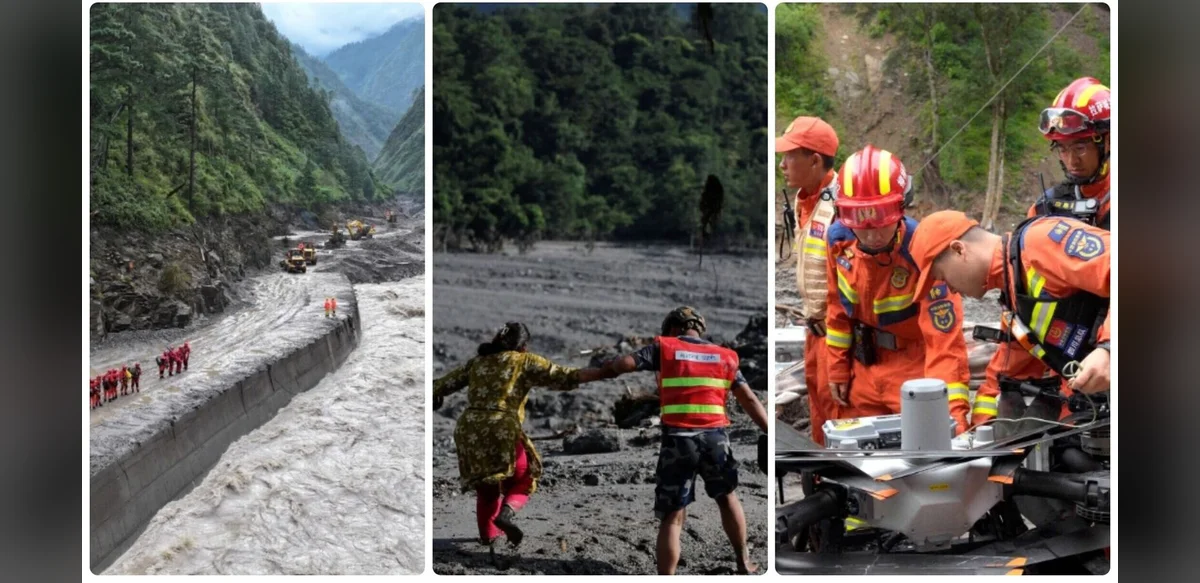
A 5.1 magnitude earthquake struck Longchang City in Sichuan Province of southwestern China according to reports from the China Earthquake Networks Centre. The event prompted authorities in neighboring Nepal to issue a flash flood warning for areas along the Trishuli river. Local officials began evacuations in communities near the river as a precautionary measure.
The seismic activity occurred in a region known for occasional tremors due to its geological position. Residents in the affected Chinese city felt moderate shaking but no immediate reports of major damage emerged from initial assessments. Chinese monitoring agencies continued to track aftershocks and provide updates to the public.
In Nepal, the warning focused on potential secondary effects such as landslides or sudden water surges that can follow earthquakes in upstream areas. Emergency teams moved quickly to alert villages along the Trishuli corridor and guide residents to safer locations. The operation aimed to reduce risks in case of any disruption to river flow or slope stability.
Government spokespersons in Nepal emphasized that the measures were preventive. They urged people to avoid riverbanks and low-lying zones until further notice. Communication channels including local radio and mobile alerts were used to reach remote settlements.
Cross-border coordination between Chinese and Nepalese agencies helped share seismic data rapidly. This allowed Nepalese authorities to assess possible downstream impacts even though the earthquake epicenter lay outside their territory. Such cooperation is common in the Himalayan region where natural events can affect multiple countries.
The Trishuli river originates in the high mountains and flows through several districts before joining larger waterways. Its course makes communities along its banks sensitive to changes triggered by seismic or weather events. Evacuation points were set up at schools and community centers on elevated ground.
No casualties or significant structural damage were reported in the initial hours following the earthquake. Monitoring stations on both sides of the border remained active to detect any escalation. Officials stated they would lift warnings only after confirming stable conditions.
Public response in the affected Nepalese areas appeared orderly. Families gathered essential items and followed guidance from local volunteers. Relief organizations stood ready to provide food and shelter if the situation extended beyond the first day.
Seismologists noted that earthquakes of this magnitude occur periodically in the broader tectonic zone. They advised continued public awareness and adherence to safety protocols during any advisory period. The current episode highlighted the value of early warning systems linking neighboring nations.
Updates from the field indicated that evacuations proceeded without incident. River levels were being monitored hourly for any unusual rise. Authorities planned to review the situation at regular intervals throughout the night.
The episode served as a reminder of the interconnected nature of natural hazards in South Asia. Even a moderate earthquake hundreds of kilometers away can lead to precautionary steps in adjacent regions. Both Chinese and Nepalese agencies expressed commitment to maintaining open information channels.
Further bulletins will be issued as new data becomes available. Residents were asked to stay tuned to official sources rather than unverified social media posts. The focus remained on safety and minimizing disruption to daily life.


