


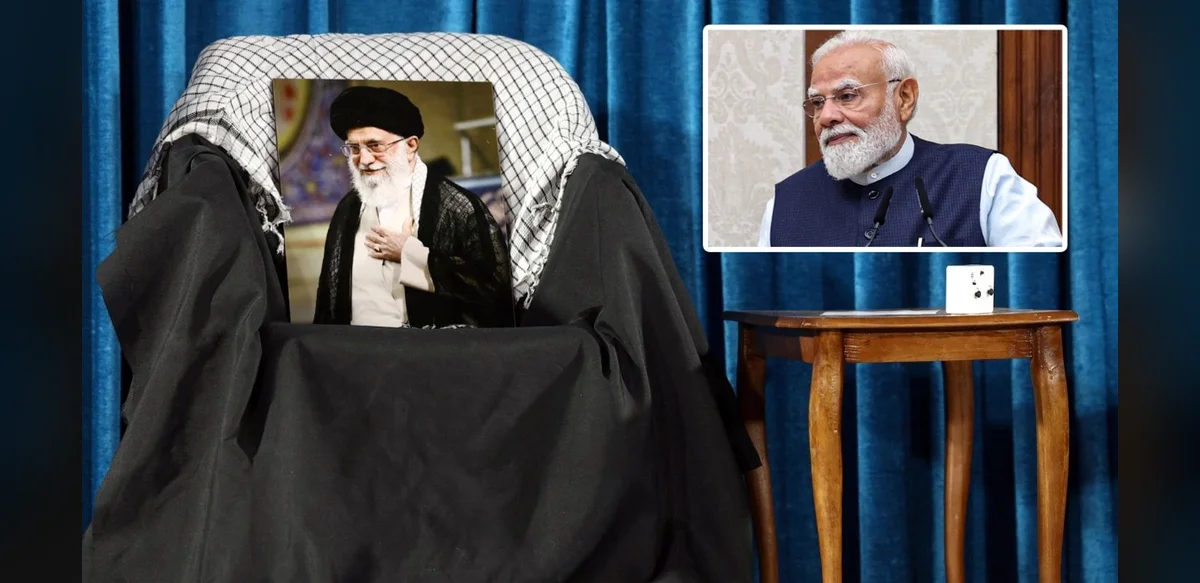
Iran has invited Prime Minister Narendra Modi to attend the state funeral for the late Supreme Leader Ayatollah Ali Khamenei, creating a diplomatic challenge for New Delhi. Khamenei, who died in US-Israeli strikes on February 28, will be buried in Mashhad following processions in Tehran, Qom and parts of Iraq. The ceremonies are set for July 4 to 9.
India’s response, including whether it sends a senior representative, will be closely observed by regional and global powers. New Delhi maintains longstanding ties with Iran through energy, trade, connectivity and cultural exchanges. At the same time, its strategic partnerships with the United States, Israel and Gulf nations such as the UAE have strengthened considerably.
India has handled similar cases previously. After Iranian President Ebrahim Raisi died in a helicopter crash in May 2024, New Delhi observed a national day of mourning and dispatched then-Vice President Jagdeep Dhankhar to the funeral.
The context of Khamenei’s death adds sensitivity. He was killed on the opening day of military action involving the US and Israel. India stayed silent initially and later expressed condolences through Foreign Secretary Vikram Misri at the Iranian Embassy. Modi has urged dialogue, restraint and respect for sovereignty.
Sending a high-level representative would align with past practice and affirm ties with Iran. However, it could draw scrutiny from Washington and Jerusalem. As the leader of Shia Muslims worldwide, Khamenei’s funeral also carries added weight for India, which has the second-largest Shia population after Iran.
India’s interests in Iran extend to the Chabahar Port project, which provides access to Afghanistan and Central Asia despite recent sanctions issues. Energy security and the welfare of Indian workers in the Gulf further underscore the need for regional stability.
Yet India’s close defence and technology links with the US and Israel, along with expanding Gulf partnerships, complicate any decision. Experts note that a visible presence at the funeral could highlight India’s independent policy but might also strain relations with key allies.

