


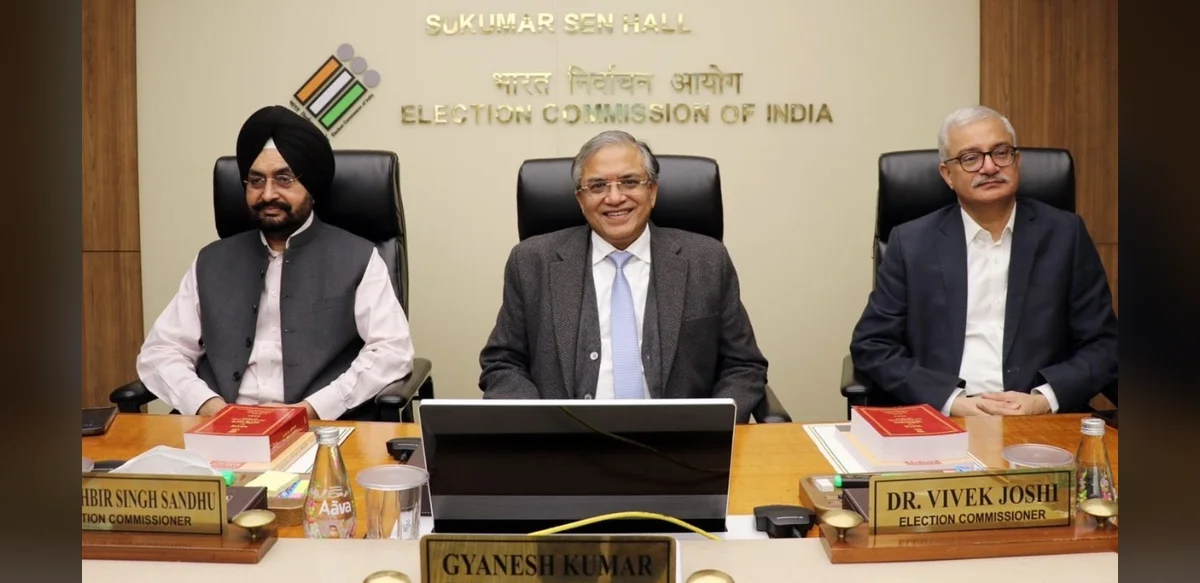
The Election Commission of India has addressed recent reports suggesting internal differences among its officials, emphasizing that while opinions may differ during discussions, all final decisions are reached unanimously. In a statement issued on Wednesday, the poll body sought to clarify its position on a document that had highlighted alleged dissent within its ranks.
According to the commission, the process of deliberation allows for varied viewpoints to be expressed openly before any resolution is adopted. This approach ensures thorough examination of issues related to electoral processes across the country. Officials noted that such internal exchanges are a standard part of institutional functioning and do not affect the collective outcome.
The clarification comes amid scrutiny over certain administrative matters handled by the commission in recent months. Reports had pointed to possible disagreements on procedural aspects, prompting the body to issue a formal response. The commission maintained that every decision, including those concerning sensitive electoral preparations, received full consensus among its members.
Observers have observed that the Election Commission often deals with complex challenges involving logistics, voter registration, and enforcement of model code of conduct. In this context, the body reiterated its commitment to transparency while upholding the principle of collective responsibility. It further stated that any perception of division does not reflect the actual decision-making mechanism in place.
Legal experts have commented that unanimous outcomes following debate strengthen institutional credibility. They pointed out that similar practices exist in other constitutional bodies where diverse inputs lead to unified positions. The commission’s statement aligns with this framework, underscoring that final calls on matters like polling schedules or candidate disqualifications are always joint.
The report in question appears to have originated from internal notes that were not intended for public circulation. The Election Commission has downplayed its significance, describing it as a routine record of preliminary discussions rather than evidence of conflict. It added that the focus remains on delivering free and fair elections nationwide.
Political analysts suggest the development may influence public perception ahead of upcoming state-level polls. However, they also note that the commission’s track record of managing large-scale electoral exercises continues to command respect. The emphasis on unanimity is seen as an effort to project stability and cohesion.
In its communication, the poll panel highlighted several instances where initial differences were resolved through dialogue, resulting in effective policies. These include reforms in voter verification systems and measures to enhance accessibility for marginalized communities. Such examples, it said, demonstrate the value of inclusive deliberation.
The Election Commission has urged media outlets and the public to avoid drawing conclusions from incomplete information. It stressed that its operations are guided by constitutional mandates and established protocols. Any internal document must be viewed within the broader context of institutional processes.
Moving forward, the body plans to continue its work on strengthening electoral infrastructure. This includes training programs for polling staff and upgrades to electronic voting mechanisms. The commission expressed confidence that its decisions will continue to enjoy broad acceptance among stakeholders.
Critics have called for greater disclosure on how dissent is recorded and addressed. In response, the commission indicated that it already maintains detailed minutes of meetings, which are available for review under relevant transparency laws. It believes this balances the need for open discussion with accountability.
Overall, the statement serves to reaffirm the Election Commission’s role as an impartial arbiter in India’s democratic framework. By highlighting unanimous final decisions, it aims to reassure citizens about the integrity of the electoral system. The episode underscores the challenges of managing a vast and diverse democracy while maintaining internal harmony.


