

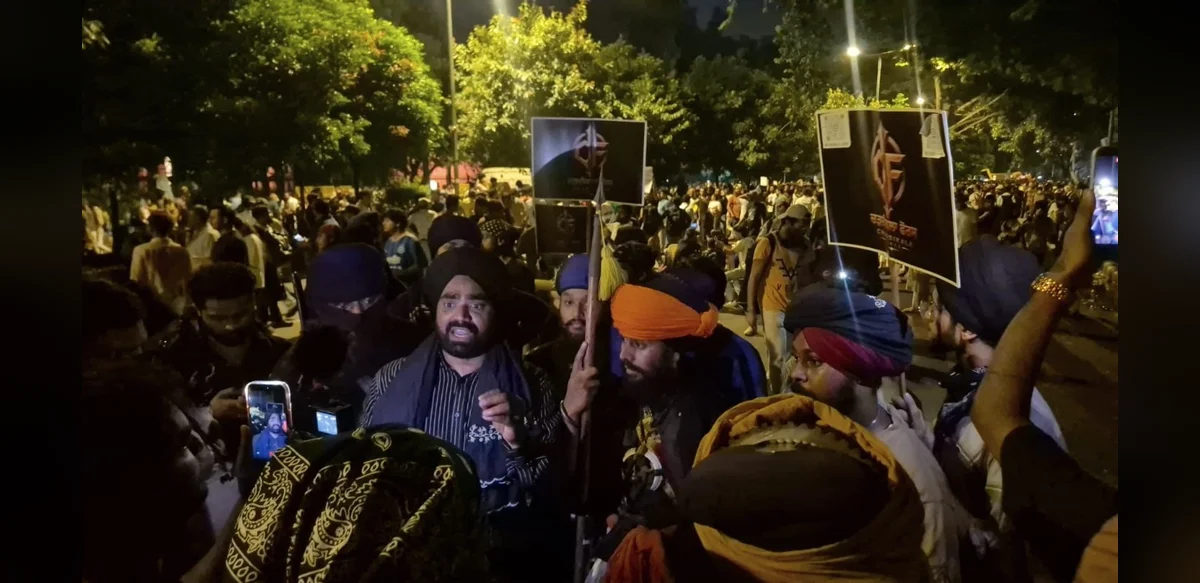
A voice over a loudspeaker at Jantar Mantar in New Delhi around 10:30 p.m. on Wednesday declared that Muslims do not chant certain slogans. Parts of the crowd repeated the statement, prompting immediate responses of other religious chants from the loudspeaker group. The exchanges lasted several minutes while hundreds observed or recorded the scene.
Nearby on Tolstoy Marg, members of a Sikh warrior order stood with swords, ceremonial blades and spears in front of Delhi Police and Rapid Action Force personnel. Some raised their weapons, drawing attention and applause from onlookers.
Without prior information, visitors would struggle to recognize the gathering as a protest over the NEET-UG paper leak and calls for the Union Education Minister’s resignation.
Reporting from the site since the protest began on June 6 shows rising attendance, especially during an activist’s hunger strike. After a July 20 march toward Parliament was blocked, the character of the demonstration shifted. Organizers appear to have lost control, and outside elements have become prominent.
A retired lieutenant general noted that poor communication can allow peaceful youth protests to be taken over by others, with the action now spreading beyond Delhi.
Incidents include an assault on a YouTuber and clashes between protesters and the armed group. Security forces have maintained restraint following earlier criticism.
The site now resembles multiple separate demonstrations. Clusters discuss education reforms alongside unrelated political and communal topics. Many participants seem drawn by general public anger rather than the original issue.
The protest gained cohesion after the activist arrived and began a hunger strike, attracting students and volunteers from various states. His removal to a hospital on July 18 reduced that unifying focus. Police action during the July 20 march increased participation, though much of the new attendance centers on opposition to the crackdown itself.


