


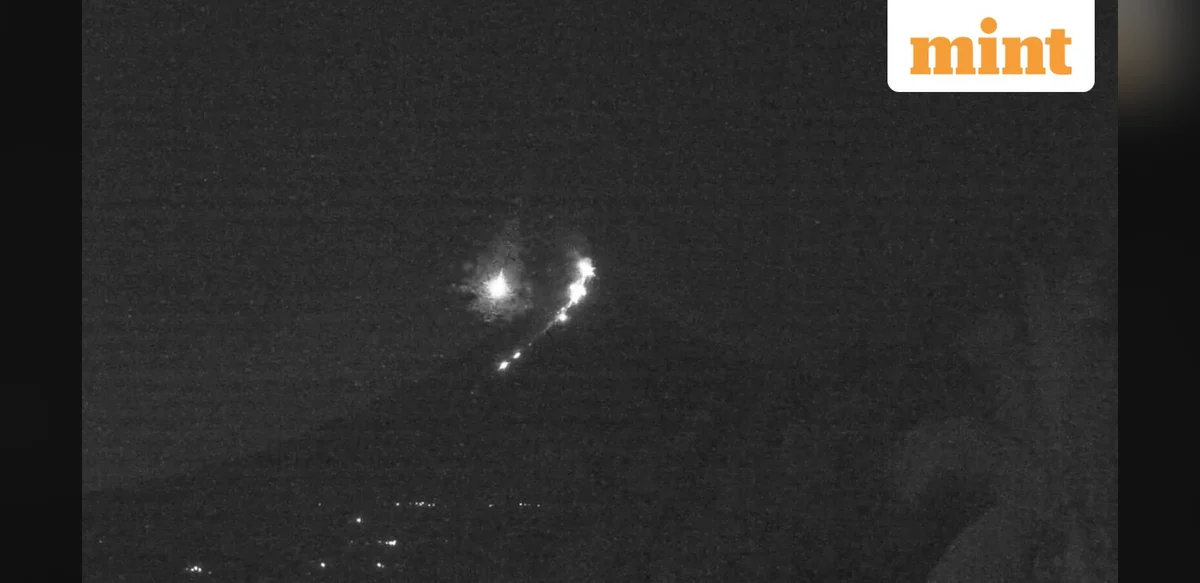
Skywatchers can observe the Southern Delta Aquariids, an annual meteor shower active from July 12 to August 23, 2026. Peak activity is forecast for the night of July 30–31, though bright moonlight will reduce visibility of many faint meteors.
The shower originates from debris of Comet 96P/Machholz, a short-period comet that orbits the Sun every five years. As Earth crosses the comet’s trail in July, particles enter the atmosphere at about 41 km per second and burn up, producing visible streaks.
Unlike the Perseids, these meteors are typically faint and fast, rarely creating bright fireballs or persistent trails.
The American Meteor Society lists maximum activity on July 30–31. Ideal dark-sky conditions allow a zenithal hourly rate of roughly 25 meteors per hour, but the full Moon on July 29, at 98 percent illumination, will obscure many meteors. EarthSky estimates 15 to 20 meteors per hour under moonless dark skies.
The main obstacle this year is moonlight. With the peak only two days after full Moon, lunar glare will hide most faint meteors. Experts advise watching in moon-free hours after midnight during the week before the peak.
The shower is best seen from the Southern Hemisphere and southern latitudes of the Northern Hemisphere, including Australia, South America, southern Africa and parts of the southern United States, where the radiant stands higher. Farther north the radiant stays low, limiting sightings. Meteors appear to radiate from Aquarius.
For best results, watch after midnight until dawn, select a site away from city lights, allow 20–30 minutes for dark adaptation, lie back to view a wide sky area, and look midway between the horizon and zenith.
Meteor showers occur when Earth passes through dust streams from comets or asteroids. Particles heat and vaporize on atmospheric entry, creating light streaks. Comet 96P/Machholz, discovered in 1986, has a nucleus about 6.4 km across.
Activity continues into late August. Early August also brings the start of the Perseids; Delta Aquariids meteors come from the southern sky while Perseids radiate from the north.

