

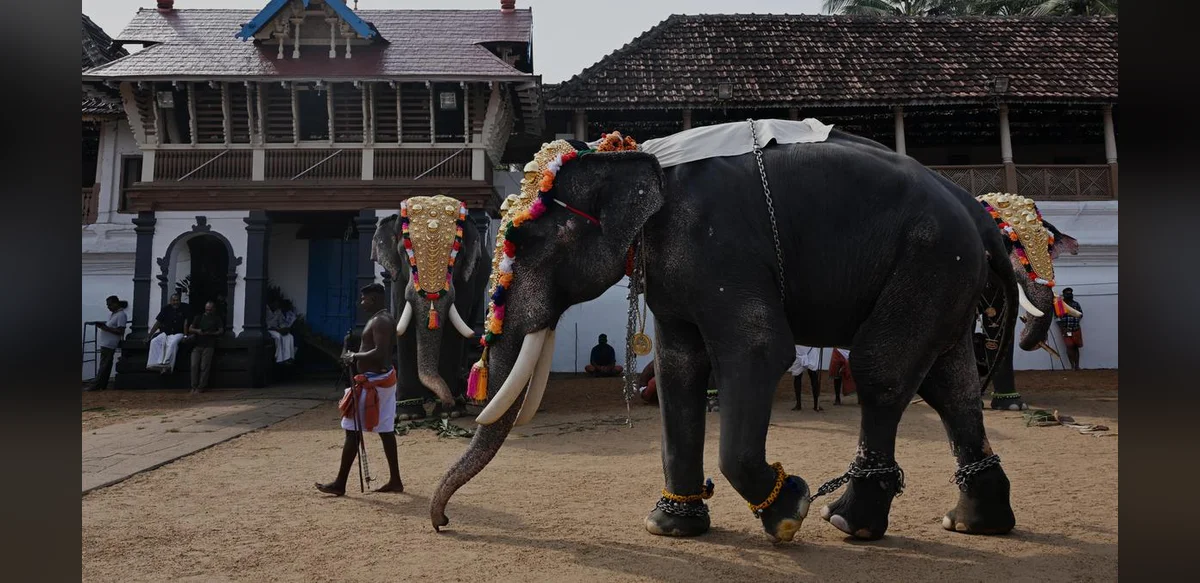
The Supreme Court stated on Tuesday that elephants in temples deserve respect and proper care as symbols of divinity. It issued multiple orders on the maintenance, health and welfare of captive elephants nationwide.
A bench led by Chief Justice Surya Kant along with Justices Joymalya Bagchi and V. Mohana noted that the court was not examining religious rights or beliefs regarding temple elephants. Instead, it focused solely on applying best practices for managing these animals by private owners, circuses, temples, forest departments, zoos and rehabilitation centres.
Additional Solicitor General Aishwarya Bhati presented a February 2026 memo from the Captive Elephants Healthcare and Welfare Committee. It reported that captive elephant numbers rose from 2,675 to 2,725. Private owners held 1,678, circuses 47, temples 96, forest departments 768, zoos 63 and rehabilitation centres 332.
Senior advocate K. Parameshwar, representing Kerala temple groups, said the case revives issues ahead of festivals in the state. He noted that elephants there are tagged, tracked and subject to strict health rules, with their use in festivals forming a core part of local tradition.
Senior advocate Aparna Bhat, for the Wildlife Rescue and Rehabilitation Centre, argued the case addressed only physical and mental harm to elephants in commercial and religious settings, not faith. She cited violations of the 2024 Captive Elephant Transfer Rules.
The petition requested updates on DNA profiling of captive elephants via the Gaj Suchna app. The bench appeared unconvinced about halting new captive elephants, citing abandoned calves in the Northeast.
The memo outlined new DNA sampling kits for states and a forthcoming handbook on captive elephant management. Additional guidelines on care and tusk trimming were also planned.
The court ordered the committee to submit a full action report and implement prior decisions promptly. It also asked the ministry for an update on DNA profiling status across all captive elephants.
The bench stressed focus on upkeep and healthcare rather than ownership. It directed mandatory guidelines for elephant clinics with specialised facilities and periodic check-ups for all owners. Medical records must be kept for every animal, minimum housing standards set, and transfers allowed only with full documentation.


