

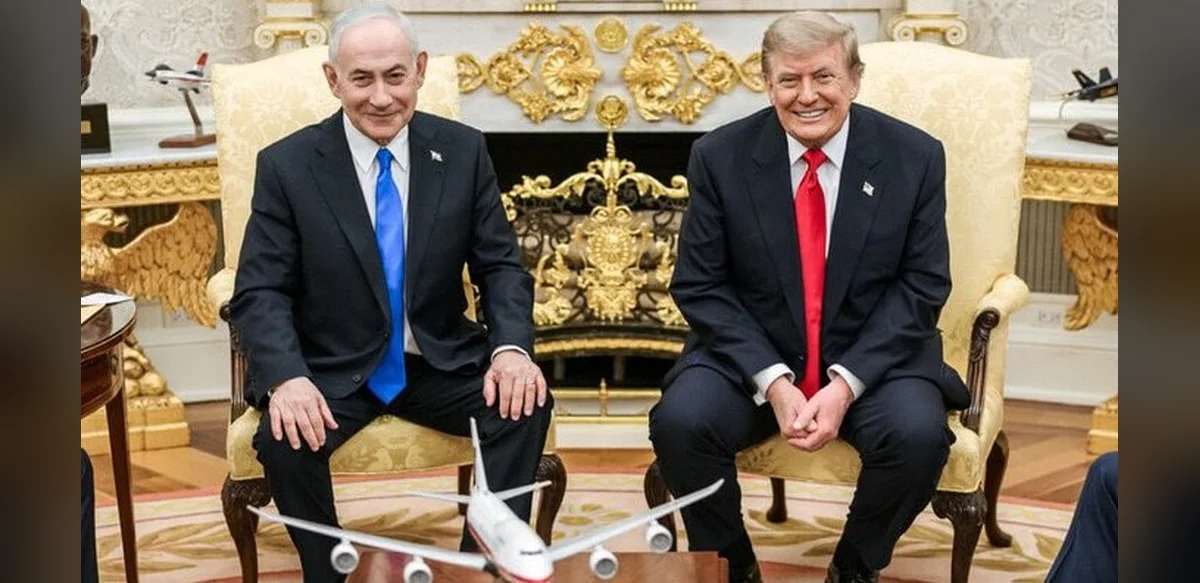
Israeli Prime Minister Benjamin Netanyahu met US President Donald Trump at the White House this week and urged him to retain all options regarding Iran. Israeli officials indicated the nearly 90-minute discussion focused less on encouraging conflict and more on evaluating diplomatic, economic and military routes as tensions reached a critical stage.
The Tuesday talks occurred at a sensitive time. Trump continues parallel efforts at negotiations with Tehran and preparations for possible large-scale operations following a pause in US strikes. Shortly after the meeting, Iran fired ballistic missiles at a US base in Jordan, leading Trump to promise a strong reply.
THREE PATHS TO DEAL WITH IRAN
Iran was the central topic, according to Axios. Trump and Netanyahu reviewed three potential strategies.
The first involved seeking a negotiated settlement. Envoys Steve Witkoff and Jared Kushner are still in contact with Iranian representatives, though major gaps remain. Netanyahu expressed skepticism that Tehran would accept terms sufficient to curb its nuclear program.
The second option centered on sustaining a naval blockade and increasing economic sanctions.
The third called for resuming and broadening military action if talks and penalties prove ineffective.
An official told Axios that all options were examined thoroughly and openly to determine the best possible result from each approach.
Reuters reported that Netanyahu avoided pressing for immediate strikes, noting the final choice rests with Trump.
TRUMP CONCERNED ABOUT GLOBAL ECONOMY
Economic risks also surfaced during the talks. Trump highlighted worries about rising energy costs and the effect of extended conflict on worldwide markets.
Netanyahu observed that Iran views the Strait of Hormuz as its remaining point of leverage and recommended stronger economic steps alongside the blockade.
The briefing revealed internal Iranian debates between officials fearing economic breakdown and hardliners confident the regime can endure through military strength.
The official also commented on Iran’s supreme leader, stating he remains alive yet unseen and requires approval for major decisions.
SYRIA, SAUDI ARABIA AND REGIONAL PLANNING
Additional regional matters were addressed. Netanyahu presented Trump with a map showing Israeli and Turkish positions in Syria, claiming Turkey holds more territory. He indicated Israel would keep its southern buffer zone while jihadist threats persist.
The leaders also considered a possible US-Saudi nuclear deal tied to future Saudi-Israeli normalization.
NETANYAHU SEEKS GREATER DEFENCE AUTONOMY
Netanyahu informed Trump, Vice President JD Vance and envoy Steve Witkoff that Israel aims to reduce reliance on US military aid over the coming decade. Plans include a new assistance agreement plus expanded joint missile defense and weapons programs.
He has directed Israel’s defense sector to develop a next-generation fighter jet within ten years to lessen dependence on US aircraft.


