

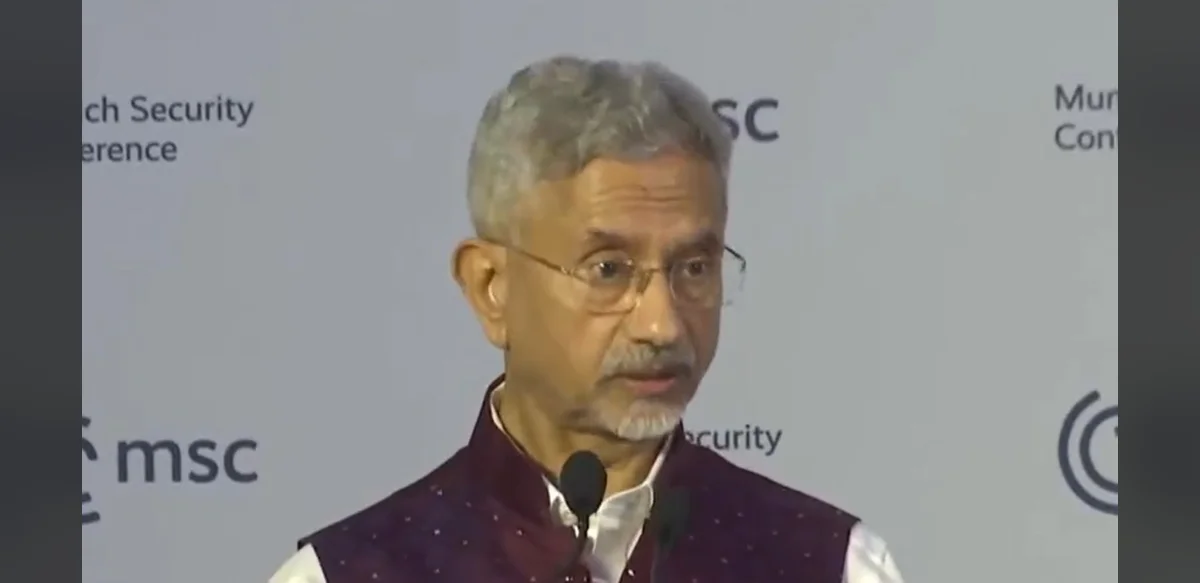
External Affairs Minister S Jaishankar stated that the United States is turning into a lonelier power through its own decisions during his address at the Munich Security Conference. The remarks came amid discussions on shifting global dynamics and the evolving role of major powers.
Jaishankar highlighted several features of the current international landscape. He pointed to the deliberate choices made by the US that have contributed to its reduced influence in certain multilateral forums. Observers noted that his comments reflected India’s perspective on how established powers are adapting to new realities.
The Munich Security Conference serves as an annual gathering where global leaders discuss security challenges. This year’s event focused on topics including geopolitical tensions, economic interdependence and the impact of emerging nations. Jaishankar’s participation underscored India’s growing voice in such dialogues.
In his speech, the minister also referenced the rise of China as another significant development. He described how this ascent is reshaping alliances and prompting countries to reassess their strategies. The combination of these trends, according to Jaishankar, creates a more complex environment for diplomacy.
India has consistently advocated for a multipolar world order. Jaishankar’s observations align with this position by emphasizing the need for inclusive approaches to global governance. He avoided direct criticism while presenting a factual assessment of recent trends.
Delegates at the conference engaged with the ideas presented. Several participants acknowledged the importance of understanding how major powers interact in an era of rapid change. The session provided a platform for diverse viewpoints from Asia, Europe and North America.
The minister elaborated on the implications for smaller and medium-sized nations. These countries often navigate between competing influences while seeking stability and economic growth. Jaishankar stressed the value of strategic autonomy in such circumstances.
Discussions extended to the role of technology and trade in international relations. Participants examined how supply chains and digital infrastructure influence power balances. Jaishankar noted that collaborative frameworks could help mitigate risks associated with fragmentation.
The conference concluded with calls for renewed dialogue among key stakeholders. Jaishankar’s contribution was seen as part of India’s broader effort to engage constructively on global issues. Analysts suggest that such interventions help position the country as a bridge between different blocs.
Overall, the address reinforced India’s commitment to pragmatic foreign policy. By focusing on observable trends rather than ideological positions, Jaishankar presented a measured view of contemporary geopolitics. The event highlighted ongoing conversations about leadership and responsibility in the international system.
Further sessions at the conference addressed regional conflicts and climate security. Indian representatives participated in multiple panels to share perspectives on sustainable development and peacekeeping. These engagements complement the main address delivered by the external affairs minister.
Media coverage of the remarks varied across outlets. Some reports emphasized the phrase regarding the United States while others placed it within the wider context of the speech. Indian diplomatic sources clarified that the comments aimed to stimulate discussion rather than assign blame.
Looking ahead, Jaishankar is expected to continue articulating India’s positions at similar forums. The Munich meeting provided valuable insights into how nations perceive the current order and potential pathways forward. Observers will monitor subsequent statements for additional details on these themes.
The conference also touched upon energy security and defense cooperation. Jaishankar referenced India’s efforts to diversify partnerships in these areas. Such diversification supports national interests while contributing to global stability.
In summary, the minister’s intervention at Munich offered a concise yet pointed analysis of power dynamics. It underscored the interplay between choice and circumstance in shaping international influence. The event remains an important venue for advancing mutual understanding among world leaders.


