


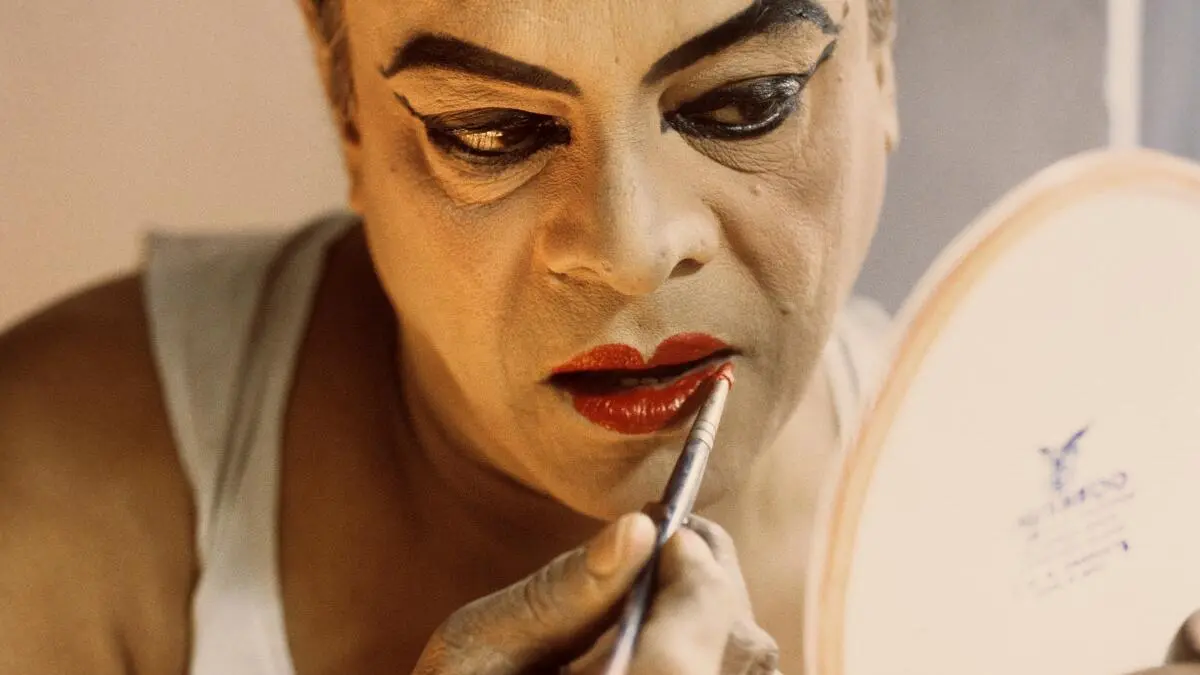
In Chapal Rani, the Last Queen of Bengal, biographer Sandip Roy explores the life and times of Chapal Bhaduri, the last great female impersonator of Bengali jatra. He opens with a rigorous introduction that establishes a clear interpretative frame. This is then gradually neutralised by a first-person voice presented as Chapal’s own, though clearly mediated and shaped by an archivist’s eye. Brief dramatised testimonials from those on the periphery of Chapal’s life interject the narrative, and there is a profusion of detail, which can at first feel unwieldy. But once the reader settles into the loose format, the result is a readable and often compelling account.
The childhood section is bookended by Rabindranath Tagore’s funeral procession, rendered with neatness through the image of a toddler spontaneously breaking into dance, and the death of Chapal’s mother, the pre-Independence stage actor, Prabha Devi. It is an origin myth formed withina powerful maternal universe of recipes, plays, performances, and theatrical lineage, and Chapal’s tentative steps into performing as a female entity on stage.

