


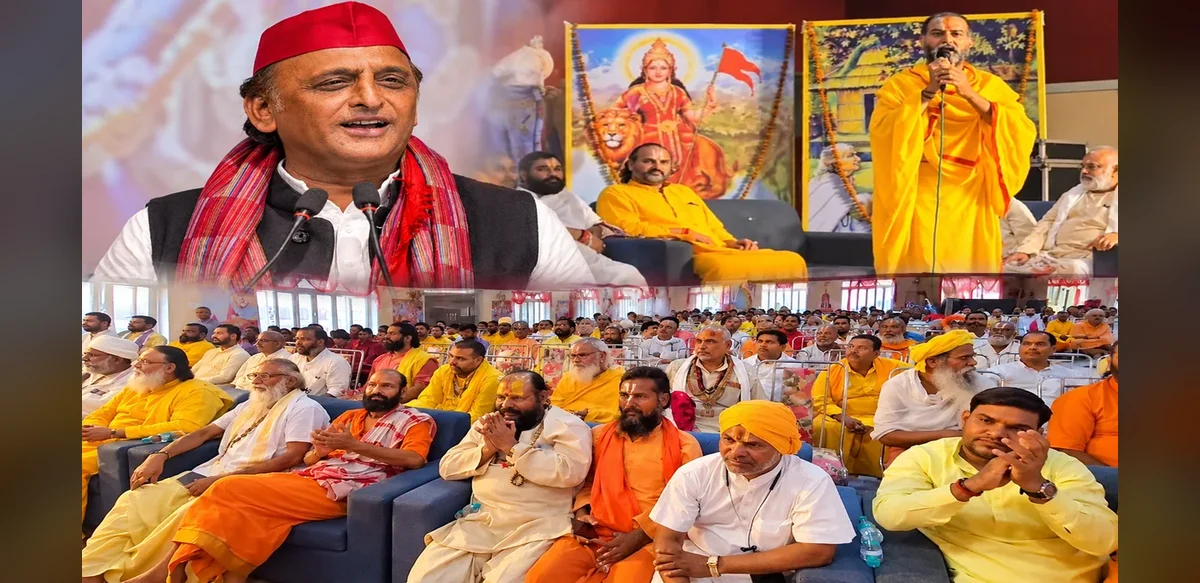
Lucknow authorities noted that a prominent opposition figure has scheduled a family visit to the Ram Temple site in Ayodhya for mid December. The announcement marks the first such trip since the temple consecration ceremony held earlier. Local religious leaders responded by convening a large assembly at a historic monastery in the city. Approximately four hundred saints, temple heads and monastic representatives attended the session. After several hours of discussion the group adopted seven formal resolutions. These statements focus on historical events from 1990 and set conditions for any future visit by the opposition leader.
The first resolution calls for a public statement of regret addressed to affected families and the broader religious community. Participants recalled police action during protests three decades earlier when the current leader father served as chief minister. They argued that acknowledgment of those events remains necessary before any ceremonial entry into the traditional five kos boundary surrounding the city.
A second measure prohibits entry into that defined perimeter without prior apology. Organizers described the boundary as a longstanding scriptural limit tied to the city religious identity. The resolution states that observance of this limit would preserve local sentiments during the planned December arrival.
The third resolution outlines a sequence of ritual steps. It suggests a ceremonial immersion in the nearby river followed by meetings with families of individuals who died in the earlier protests. Only after these steps would temple visitation be considered appropriate according to the assembly.
A fourth point directs an appeal to state officials. The group requested that authorities prevent the visit if the required apology is not issued. The request cites concerns over public order and respect for longstanding community memories.
The fifth resolution emphasizes direct engagement with bereaved families. Participants urged the opposition leader to meet relatives of those affected in 1990 and to convey acknowledgment of past policies. This step is presented as essential for restoring trust.
The sixth measure addresses recent public comments by party members regarding classical texts and cultural traditions. The assembly expressed concern over those remarks and requested a written assurance that similar statements will not recur. The resolution links this assurance to broader respect for religious heritage.
The final resolution commits the group to a month long series of local meetings. These gatherings aim to inform residents about the 1990 events and to maintain unity within the religious community on the matter. Organizers stated that the campaign would take place across Ayodhya and nearby districts.
Several senior monastic figures addressed reporters after the session. One speaker described the 1990 events as an enduring element of local history that cannot be overlooked for political reasons. Another participant clarified that the objection centers on the absence of an apology rather than on the act of temple visitation itself. A third speaker characterized the timing of the announced visit as potentially linked to upcoming state elections and urged restraint until conditions are met.
Additional voices at the meeting questioned the leader intentions and suggested that genuine devotion would include attention to other historic sites. The assembly concluded without indicating any change to the scheduled date. State officials have not yet issued a formal response to the resolutions.
The controversy originated from a November media briefing by a regional party representative who outlined the family itinerary. Details included arrival with spouse and children followed by temple visits. The announcement prompted the rapid convening of the monastic assembly and the subsequent adoption of the seven point statement. Observers note that the episode highlights ongoing intersections between political activity and religious sentiment in the region ahead of the next electoral cycle.

