

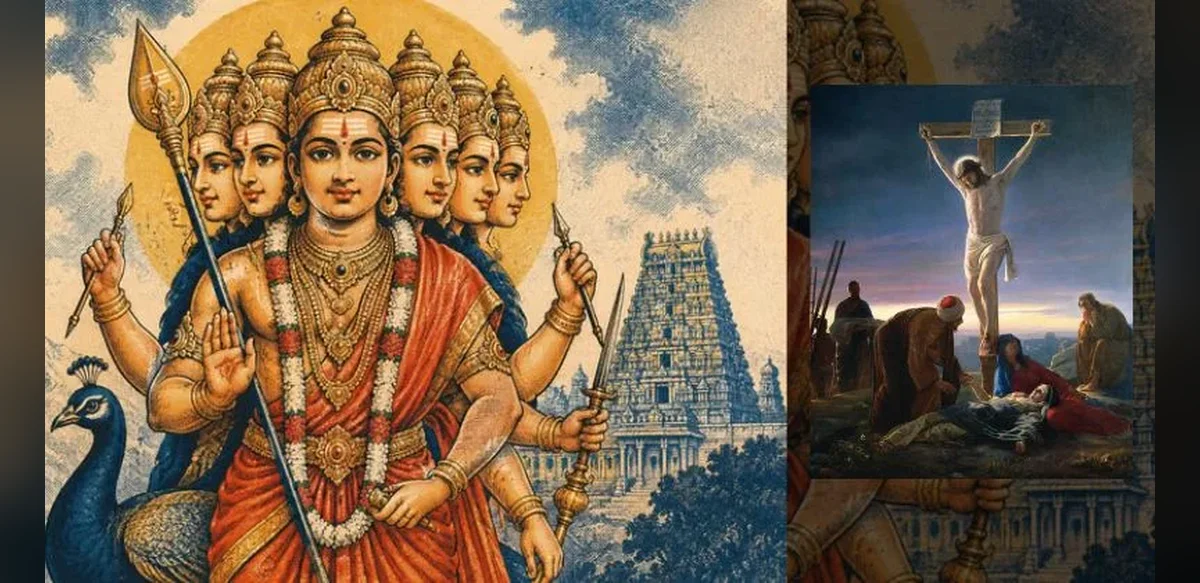
A recently published Tamil language volume has triggered widespread discussion across Tamil Nadu by asserting that the Hindu deity Murugan corresponds to the figure of Jesus. The four hundred page work presents a series of symbolic interpretations linking elements of Murugan worship to Christian narratives. It suggests that the apostle Thomas transported Jesus to southern India where local traditions incorporated him into existing devotional practices. The publication further associates one consort of the deity with early Jewish Christian communities and another with prospective converts from non Jewish backgrounds. Additional claims equate the twelve arms depicted in certain representations with the twelve apostles and interpret the kavadi ritual as a recollection of carrying a cross.
Murugan known by multiple names including Skanda Kartikeya and Subramanya features prominently in ancient Indic texts. References appear in the Rigveda describing a youthful figure linked to river goddesses. Sangam period Tamil literature such as the Thirumurukattrupadai portrays the deity with six faces and connects him to the Pleiades constellation and the element of fire. These descriptions form part of a continuous tradition spanning centuries with recurring motifs across different literary sources.
The book has drawn criticism from various commentators who view the assertions as an attempt to reinterpret established Hindu traditions through an external lens. Social media users have questioned the historical basis for claims involving Thomas arrival in India noting that such accounts remain subjects of scholarly discussion. Others have highlighted perceived inconsistencies such as implications for the identity of associated divine figures within the same tradition.
Political observers note that certain regional parties along with segments of national opposition groups have historically supported activities related to religious conversion. These groups have also opposed stricter oversight of foreign funding mechanisms under existing regulations. Critics argue that such positions facilitate external influences seeking to expand particular religious frameworks in the region.
Similar interpretive efforts have appeared in earlier publications regarding the Tamil poet Thiruvalluvar. Some authors have proposed Christian influences on the Tirukkural drawing parallels to specific teachings. These suggestions have consistently faced challenges from scholars emphasizing the text indigenous character and philosophical roots.
Public reactions include calls for adherents of the reinterpreted traditions to reconsider their affiliations and return to ancestral practices. Commentators have pointed to instances where Christian groups incorporate local customs such as chariot processions lamp lighting and festival observances. They suggest these adoptions reflect a pattern rather than organic development.
A prominent economic analyst referenced historical remarks by Mahatma Gandhi describing conversion efforts as commercial enterprises involving persuasion and social disruption. The analyst condemned materials that equate Hindu deities with external religious figures through selective symbolism.
The controversy unfolds against a backdrop of ongoing debates about cultural identity and religious boundaries in southern India. Proponents of the book maintain that it uncovers suppressed historical connections while opponents see it as part of broader efforts to diminish indigenous traditions. Discussions continue across digital platforms and community forums with participants emphasizing the need for respectful dialogue grounded in verifiable evidence.
Historical records indicate that missionary activities expanded notably during colonial eras and persisted afterward through various organizational channels. Contemporary observers link some political stances to these longer patterns of engagement. The current publication adds to a series of claims that periodically surface in regional discourse prompting renewed examination of textual and archaeological sources.
Readers are encouraged to consult primary texts such as the Rigveda Mahabharata and Sangam anthologies alongside independent historical analyses when evaluating such assertions. The episode underscores tensions between differing interpretive frameworks and the importance of preserving distinct cultural heritages without unsubstantiated conflations.
Further commentary has addressed attempts to portray ancient figures as belonging exclusively to one tradition while overlooking their established contexts. Such approaches are seen by some as extensions of language based exceptionalism that seeks to isolate regional identities from broader civilizational continuities. The debate remains active with multiple perspectives contributing to public understanding of these complex intersections.


