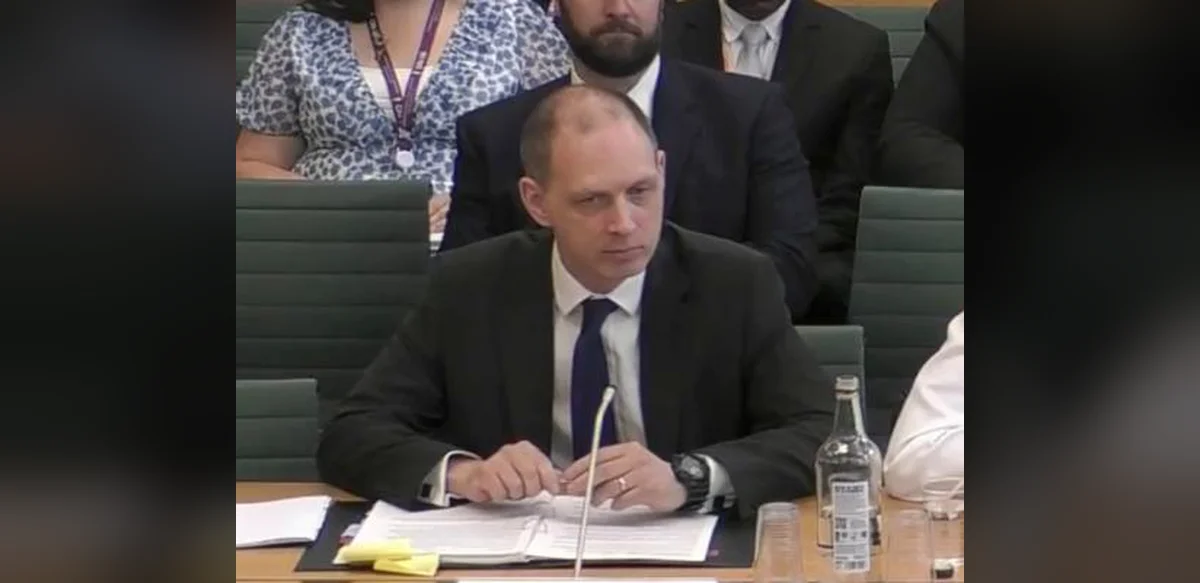
A significant individual involved in the controversy surrounding Peter Mandelson’s selection as the UK’s envoy to Washington has chosen not to testify in person before a group of lawmakers. Emily Thornberry, who leads the foreign affairs committee, had invited Ian Collard to appear on Tuesday but announced on Saturday that he would provide responses in writing instead. The panel has already received statements from Olly Robbins, the senior Foreign Office official dismissed last week after his department reversed the initial rejection of Mandelson’s security assessment, and Cat Little, the Cabinet Office’s top administrator. Morgan McSweeney, previously chief aide to Keir Starmer, is scheduled to testify on Tuesday. Collard, a past envoy to Lebanon and Panama, took on the role of the Foreign Office’s head of property and security in March 2023 and has testified before the committee before. Robbins indicated that Collard informed him about the evaluation results, which viewed the appointee as a marginal candidate and suggested denying approval. In a communication to the Foreign Office, Thornberry requested Collard to describe his memory of that discussion and confirm if it matches Robbins’s account, with replies due by 5 p.m. Monday. She also sought details on whether he experienced any coercion to approve Mandelson’s status, following Robbins’s mention of an environment of urgency and persistent follow-ups from the prime minister’s office. Additional questions included if he reviewed the submission from UK Security Vetting, which flagged major issues and advised against granting access, and whether anyone from the Foreign Office, the prime minister’s team, or the Cabinet Office sought his input on if Mandelson needed evaluation as a House of Lords member. Thornberry also inquired about any guidance he offered on handling Mandelson during the interval from his nomination announcement to approval confirmation. On social media Saturday, Thornberry stated she accepted the rationale for Collard’s decision against live testimony currently and requested written input. She noted that further inquiries might lead to a request for in-person appearance or additional documentation. Robbins mentioned that upon assuming his Foreign Office position in January 2025, Mandelson was already receiving selective access to sensitive information without full authorization. He added that he never examined the vetting document but received a summary. Little informed the group that early talks questioned if the prominent Labour figure required screening due to his peerage. Starmer has asserted that Robbins erred by not disclosing the advanced vetting results and claimed he would not have chosen Mandelson for the diplomatic role if informed. The prime minister defended removing the ex-Foreign Office leader, stating he encountered only routine governmental demands to finalize the envoy’s placement in 2024. In a Sunday Times interview, he differentiated between various forms of demands, describing typical urgency to expedite processes as standard in administration. Starmer emphasized that pressure to ignore security protocols would differ, and Robbins confirmed no such influence occurred.