


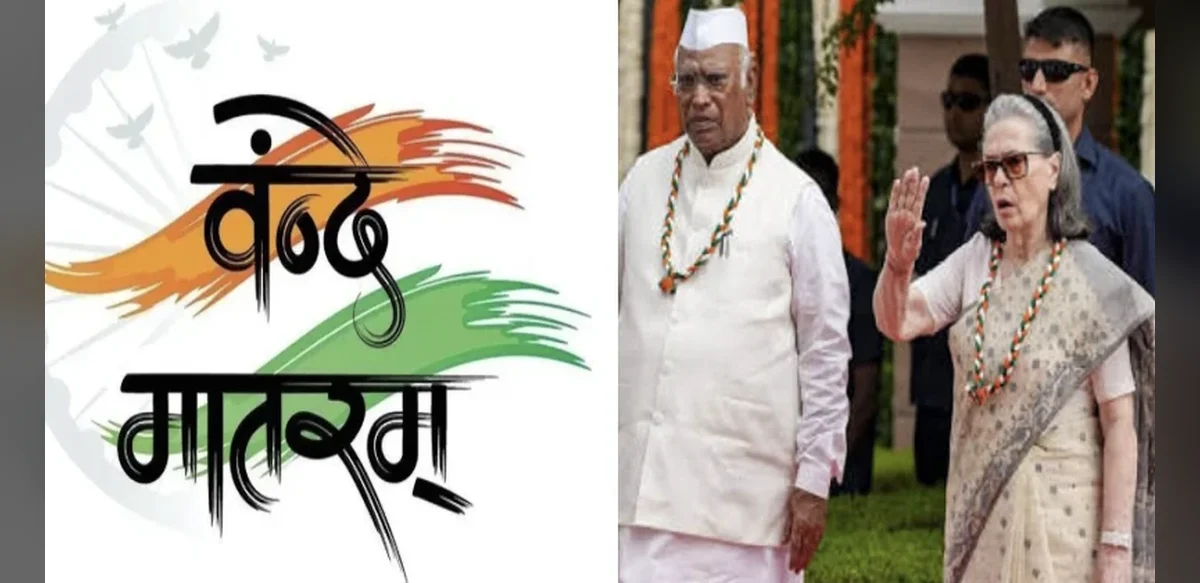
On Independence Day in 2026, videos from the Congress party headquarters in New Delhi showed party leaders engaged in conversation while the full rendition of Vande Mataram played. The footage included Sonia Gandhi, Mallikarjun Kharge and Rahul Gandhi appearing to talk and gesture during the performance. Observers noted that the moment, intended as a solemn occasion, instead highlighted ongoing discussions about the party’s approach to national symbols.
Similar incidents have been reported in other parts of the country. In Kerala, the state government led by Congress chose not to include the complete version of Vande Mataram in its official Independence Day program, despite instructions from the central government to perform the entire composition. Earlier, during the opening session of the Kerala Assembly, a state minister stated publicly that he would not sing the full song. Congress member of Parliament Imran Masood indicated he would stand in respect but would not participate in singing. A Congress corporator in Indore had previously made a comparable statement.
These events have prompted broader conversations about the historical role of the song. Vande Mataram was composed by Bankim Chandra Chatterjee and featured in the novel Anandamath. Rabindranath Tagore performed it at a Congress session in 1896. It later became associated with the Swadeshi movement, during which many participants faced colonial authorities while reciting its lines. In 1937, the Congress Working Committee decided to limit official performances to the opening stanzas following objections regarding religious imagery in later verses.
The song has continued to appear in public and political settings over the decades. Recent legislative changes include the Prevention of Insults to National Honour Amendment Act of 2026, passed by both houses of Parliament during the monsoon session and signed into law on August 11, 2026. The amendment extends Section 3 of the 1971 Act to cover the National Song, aligning its protections with those already in place for the National Anthem. The measure specifies penalties of up to three years imprisonment, a fine, or both for deliberately interrupting a performance or assembly involving the song, though it does not require individuals to sing.
The central government under Prime Minister Narendra Modi has promoted initiatives marking 150 years of the composition to highlight its place in public memory. Party statements from Congress have emphasized respect for constitutional freedoms and personal beliefs while addressing concerns about cultural expression. Historical records show that the early independence movement incorporated various forms of cultural and political expression within a shared framework.
Public reactions have varied, with some viewing the recent episodes as isolated personal choices and others seeing them as part of a longer pattern. The law does not compel participation but focuses on preventing disruptions. Discussions continue regarding the balance between individual convictions and collective national practices.
Additional context includes the song’s evolution from a literary work to a widely recognized element of the freedom struggle. Its verses reference the landscape and heritage of the country, themes that have been interpreted differently across political and social groups. The 1937 decision by the Congress Working Committee reflected efforts to accommodate diverse viewpoints within the party at the time.
In the years following independence, successive governments have addressed national symbols through legislation and public programs. The 2026 amendment represents one such update aimed at providing uniform legal safeguards. Party leaders across the spectrum have referenced the contributions of figures from the independence era when discussing these matters.
The incidents in Delhi, Kerala and Indore have been covered in various media outlets, leading to statements from multiple political figures. Supporters of the full rendition argue it represents a shared heritage, while critics stress the importance of voluntary participation. The statutory framework remains focused on prohibiting interference rather than mandating performance.
Overall, the events illustrate ongoing debates about symbols from the independence period and their role in contemporary public life. The legal protections now in place apply equally to the National Song and Anthem, with enforcement mechanisms defined in the amended act. Historical accounts document both the song’s origins and the adjustments made to its official use over time.

