

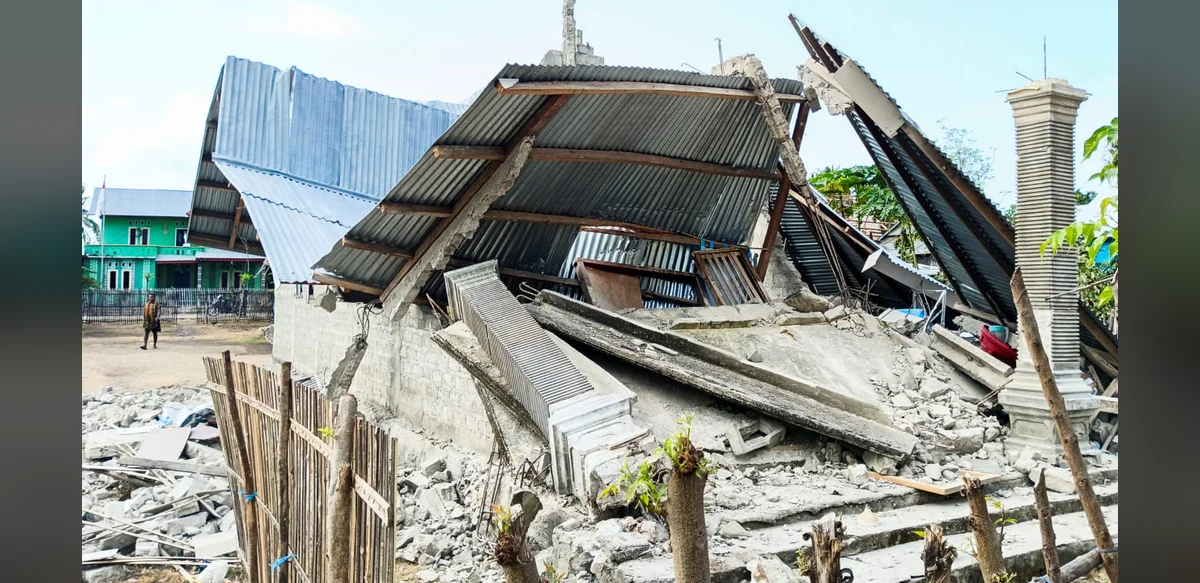
An earthquake struck East Nusa Tenggara province in Indonesia on Saturday morning, prompting widespread evacuations and resulting in multiple casualties along with numerous injuries. Reports indicate that thousands of residents were moved from their homes to safer locations as authorities assessed the damage across affected areas. Dozens of individuals lost their lives in the incident, highlighting the severity of the seismic event in the region.
Local health officials provided updates on the medical impact. Thirty six people sustained serious injuries requiring immediate attention, while seventy seven others experienced minor injuries. Deputy Health Minister Benjamin Paulus Octavianus shared these figures, noting the ongoing efforts to provide care to those impacted. Medical teams were deployed to handle the influx of patients and ensure that treatment reached all who needed it.
The quake’s timing on a Saturday morning caught many residents during routine activities, complicating initial response measures. Emergency services focused first on search and rescue operations in areas where structures had been compromised. Evacuation centers were established to accommodate those displaced, with supplies of food, water, and temporary shelter distributed to support the affected population.
Authorities emphasized the importance of continued monitoring for aftershocks, which could pose additional risks to already vulnerable communities. Coordination between national and provincial agencies facilitated the movement of resources to the hardest hit zones. Public advisories urged residents to remain cautious and follow guidance from officials regarding safe return to homes once assessments were complete.
The event underscores the challenges faced by regions prone to seismic activity. Preparedness measures, including regular drills and infrastructure reinforcements, play a key role in mitigating future impacts. In this case, the rapid mobilization of health and rescue personnel helped address immediate needs arising from the quake.
Community members in East Nusa Tenggara have begun the process of recovery, supported by government initiatives aimed at restoring normalcy. Assessments of building safety continue to determine which structures can be reoccupied and which require repairs or rebuilding. The focus remains on ensuring the well being of all residents while documenting the full extent of the damage.
International offers of assistance were acknowledged, though local teams managed the primary response. The situation continues to evolve as more details emerge from remote areas within the province. Officials remain committed to transparent communication with the public throughout the recovery phase.
This incident serves as a reminder of the unpredictable nature of natural events and the need for sustained investment in disaster management capabilities. Residents are encouraged to stay informed through official channels for any further updates on safety protocols or aid distribution.


