

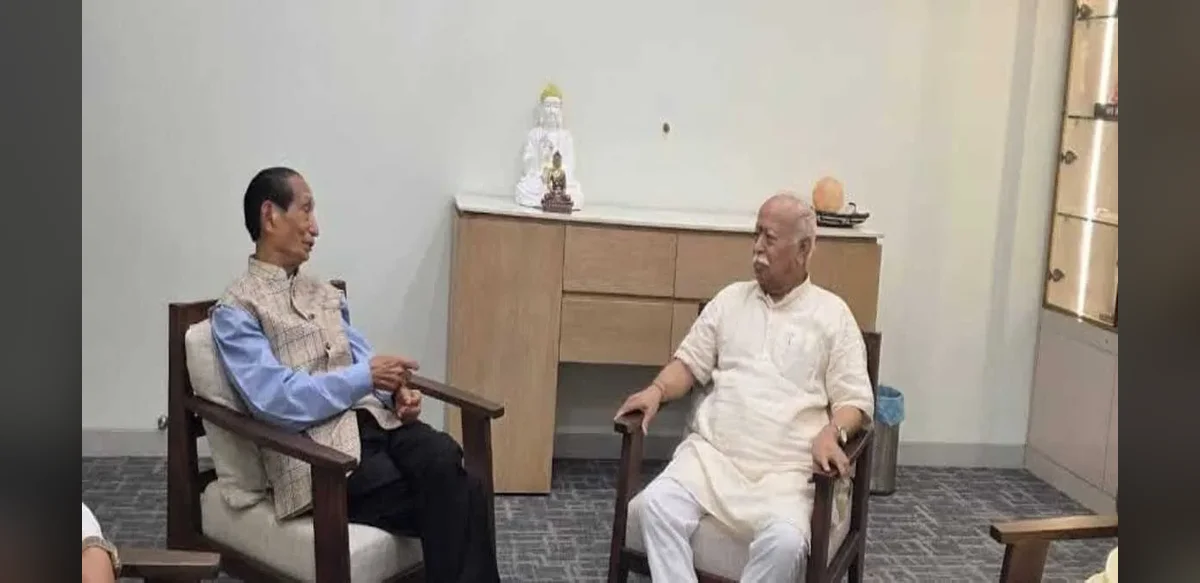
A senior political figure from Nagaland recently held discussions with the head of a prominent cultural organization in the capital. The exchange focused on India’s tradition of accommodating varied regional, religious and cultural identities while preserving national cohesion. The former governor stressed that the country’s strength derives from its ability to integrate differences rather than enforce uniformity across all communities.
During the meeting, the veteran leader welcomed recent public remarks by the organization’s chief that highlighted secular principles and diversity as central to India’s identity. He encouraged wider dissemination of these ideas within the organization’s network inside the country. The conversation was described as an effort to foster greater understanding between different parts of the nation and to address long-standing regional aspirations.
The former governor explained that his initiative stemmed from a personal commitment to the people of his state and was not aligned with any political party. He was accompanied by local party representatives and officials. He noted that engaging with groups across the ideological spectrum, including cultural organizations, ruling parties and opposition platforms, helps build broader support for resolving outstanding issues.
Central to the discussion was the idea that Indian identity should not require every community to adopt identical customs, language or religious practices. Instead, the emphasis was placed on a voluntary sense of togetherness in which each group feels secure in its distinct heritage. Historical examples were cited to illustrate how periods of cultural synthesis had strengthened the nation in the past.
The former governor also outlined the constitutional safeguards available to Nagaland, particularly provisions that protect local customs, social practices and religious traditions. He pointed out that these protections apply equally to the predominantly Christian population of the state and to other minority communities elsewhere. He argued that safeguarding such rights for all groups contributes to overall national stability.
Attention was drawn to the prolonged political negotiations concerning the Naga issue. While earlier agreements were acknowledged, concern was expressed over the extended timeline for reaching a final settlement. The proliferation of multiple groups claiming authority has created parallel structures that sometimes interfere with regular administration and local commerce.
Youth unemployment and related social pressures were identified as growing challenges. The former governor urged state authorities to address these matters before frustration leads to further unrest. He also expressed reservations about recent changes to regulations governing foreign contributions to nonprofit organizations, warning that restrictions could affect education and health services in the region.
The meeting concluded with a call for continued dialogue aimed at strengthening inclusive values throughout the country. Both sides were reported to have agreed on the importance of protecting minority rights and honoring constitutional commitments to different regions. Observers described the exchange as a constructive step toward reducing misconceptions between the northeast and other parts of India.
The former governor reiterated that any lasting solution must respect the distinct identity of the Naga people while reinforcing their equal place within the larger national framework. He expressed hope that ongoing conversations would help translate shared principles into practical outcomes for governance and social harmony.


