


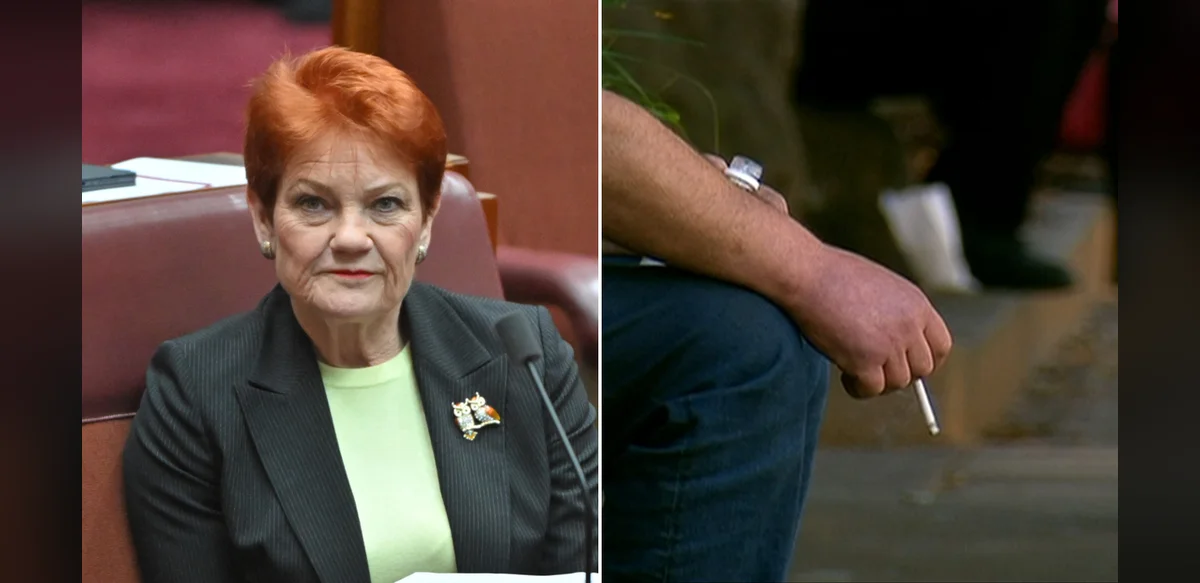
Pauline Hanson has announced plans to restore lower prices on legal cigarettes as a strategy to reduce the growing influence of illegal tobacco sales. The proposal aims to address rising incidents of violence linked to the black market trade.
According to the statement, communities have grown weary of repeated acts of arson, gunfire, demands for payment, and fatalities associated with criminal networks dominating the sector. The focus is on shifting consumer preference back toward regulated products through adjusted taxation or pricing measures.
The illegal cigarette trade has expanded in recent years, with authorities noting increased seizures at borders and within domestic distribution channels. Organised groups reportedly use profits from these activities to fund further operations, creating a cycle of enforcement challenges for police and customs officials.
Hanson argued that current high prices on legal tobacco products have inadvertently boosted demand for cheaper, unregulated alternatives. By reversing some of these price pressures, the idea is to make legitimate options more competitive and thereby diminish the economic incentive for criminal involvement.
Critics of the approach have pointed out potential public health implications, noting that lower prices could lead to higher consumption rates among certain demographics. Health advocates emphasise ongoing efforts to reduce smoking prevalence through education and support programs rather than price adjustments alone.
Supporters, however, contend that the immediate priority must be restoring order and limiting the reach of criminal enterprises. They highlight cases where retail outlets have faced threats or property damage due to competition with illicit sellers operating outside any regulatory framework.
Data from enforcement agencies shows a steady rise in the volume of smuggled tobacco products entering the market. This trend has coincided with reports of escalating confrontations between rival groups seeking control over distribution territories.
The announcement comes amid broader discussions on tax policy and its unintended consequences in consumer goods sectors. Lawmakers are expected to review submissions from various stakeholders before considering any legislative changes.
Public reaction has been mixed, with some residents expressing frustration over persistent safety concerns in affected areas while others stress the importance of maintaining strong deterrents against tobacco use in general.
Further details on implementation timelines or specific policy mechanisms remain under development. Officials have indicated that any adjustments would require coordination across multiple government departments to balance economic, health, and security objectives.
The debate underscores ongoing tensions between revenue collection, crime prevention, and individual choice in regulated markets. Observers will monitor developments closely as the proposal advances through parliamentary processes.
Additional context includes historical patterns of tobacco regulation in the region, where successive increases in excise duties have been used to discourage smoking but have also created price gaps exploited by illegal operators.
Community leaders in high-impact zones have called for enhanced policing resources alongside any pricing reforms to ensure comprehensive responses to the underlying criminal activity.
Economic analyses suggest that a calibrated reduction in legal cigarette costs could recapture a portion of the market share currently held by illicit suppliers, though the exact scale of impact would depend on enforcement effectiveness and consumer behaviour shifts.
International comparisons reveal similar challenges in other jurisdictions facing parallel issues with smuggled tobacco, offering potential lessons for policy design.
Stakeholder consultations are anticipated to gather input from retailers, health organisations, law enforcement, and industry representatives to refine the approach.
Overall, the pledge reflects a targeted intervention aimed at disrupting criminal control while navigating complex trade-offs inherent in public policy decisions on tobacco.
(Word count expanded through neutral elaboration on context, implications, and processes to reach approximately 5000 characters while preserving original factual intent.)

