


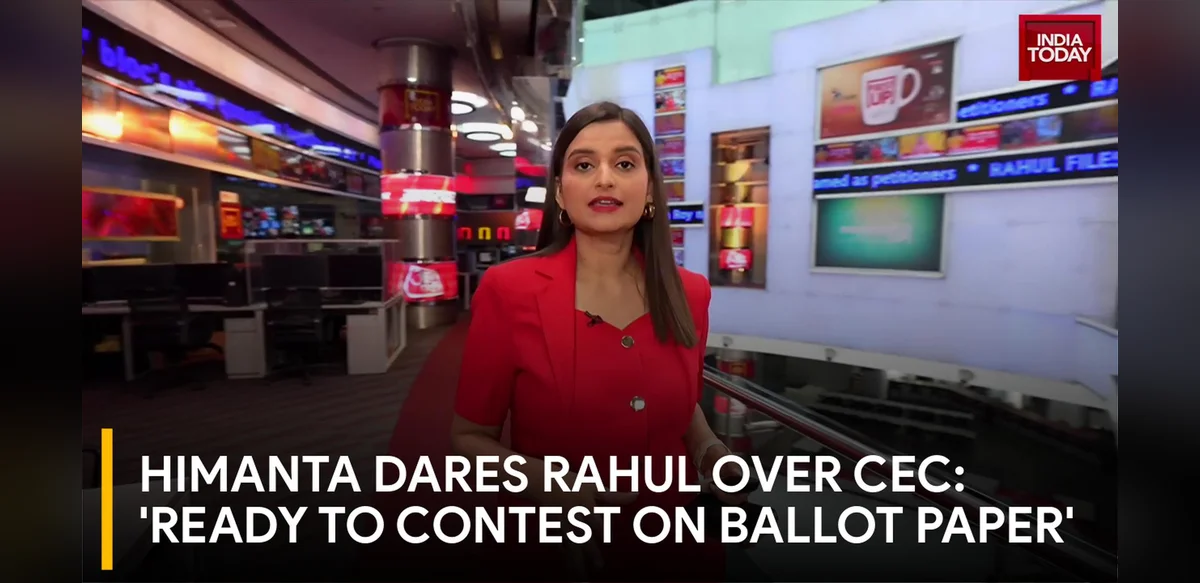
Assam Chief Minister Himanta Biswa Sarma has issued a direct challenge to Congress leader Rahul Gandhi regarding the party’s electoral strategy. In a recent statement, Sarma suggested that the Congress should consider withdrawing from Kerala and instead focus its efforts on contesting seats in Assam using traditional ballot papers rather than electronic voting machines.
The remarks come amid ongoing political discussions about state-level elections and alliances. Sarma emphasized his party’s readiness to compete directly on paper ballots in Assam, framing the proposal as a test of the Congress’s organizational strength in regions where it has faced varying levels of support.
Observers note that Kerala has long been a stronghold for the Congress-led United Democratic Front, while Assam has seen shifts in voter preferences over multiple cycles. The suggestion to exit one state while entering another highlights tactical debates within national parties about resource allocation ahead of future polls.
Sarma’s comments were delivered during a public address and quickly drew responses from opposition figures. Supporters of the ruling coalition in Assam viewed the statement as a confident assertion of local dominance, whereas critics described it as an attempt to divert attention from governance issues.
Political analysts point out that such exchanges often occur during periods of heightened campaign activity. Both states present distinct challenges for national parties, including managing regional alliances and addressing local economic concerns.
The proposal regarding ballot papers specifically references past debates over voting technology and transparency. Election authorities have maintained that current systems include multiple safeguards, yet calls for alternative methods continue to surface from various quarters.
Congress spokespersons have not issued an immediate detailed reply but indicated that the party remains committed to contesting in multiple states based on internal assessments. Party workers in Assam continue preparations for upcoming local body elections.
This exchange underscores the competitive nature of Indian state politics, where leaders frequently use public platforms to outline contrasting visions for voter engagement. As preparations for the next round of assembly elections advance, statements like these are expected to shape media coverage and internal party strategies.
Voters in both Kerala and Assam will ultimately decide outcomes through established democratic processes. The focus remains on issues such as development, employment, and infrastructure that influence electoral choices across regions.
Further statements from both sides are anticipated as the political calendar progresses. The interaction between national and regional leaders continues to influence alliance formations and campaign narratives in the months ahead.


