

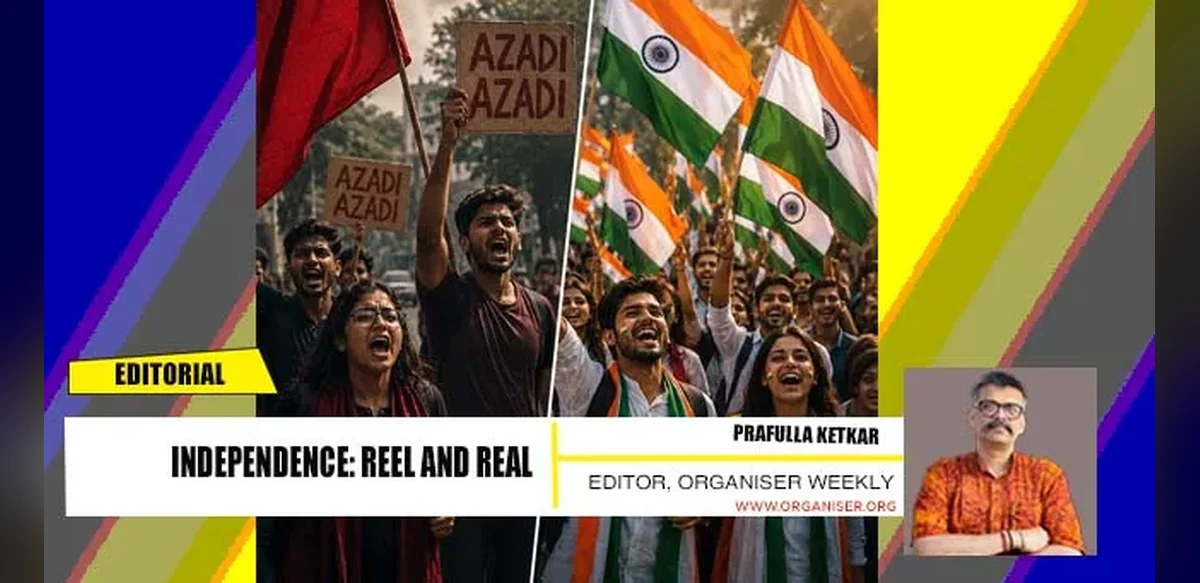
The 80th Independence Day is marked by widespread enthusiasm and optimism. The Har Ghar Tiranga campaign spreads the spirit of devotion to the nation across regions and communities. Yet alongside the celebrations, several issues invite reflection. The global situation remains unpredictable. Economic strains are compounded by energy security threats from ongoing conflicts in the Gulf and Eurasia. The international order is undergoing change similar to the interwar years. India, though not directly engaged in these conflicts, faces impacts on multiple fronts. External actors who anticipated India’s fragmentation due to its diversity now seek to exploit the circumstances. They did not foresee India emerging as a stable democracy with steady growth and an expanding global role. One potential method to disrupt this progress after repeated colonial experiences is to turn the youth against their country through distorted notions of freedom spread via popular media. The question arises of how to understand independence as technology reshapes society, relationships and thinking.
The RSS chief, Dr Mohan Bhagwat, addressed this issue at an event in Mumbai. He urged distinction between screen heroes and actual heroes. While protests form part of democratic life, their purpose should be to build agreement and solve problems rather than undermine the system.
Technology companies have used new methods to engage younger audiences across generations from X to Alpha. Algorithms shape viewing choices and promote figures who embody resistance and rejection. This approach influences youth across Asia by encouraging separation from national culture, distrust of democratic institutions and calls to replace the government without presenting viable alternatives. The Cockroach Janta Party and its leadership appear tied to this pattern. Many now view them as the main voice of a supposed Gen-Z group. Abusive behaviour will not produce genuine change, as reasonable observers recognise. Students demonstrating in Jharkhand, Punjab and Karnataka belong to the same generation. Social media figures promoted from abroad should not be equated with all Indian youth. The Cockroach Janta Party must be distinguished from the broader range of youth aspirations in India. Media-driven notions of independence may offer short-term expression but will not deliver lasting solutions for people or the country.
Large numbers attend temples and Kanwar pilgrimages. Social entrepreneurs, startup founders and sports achievers motivate young people more than confrontational attitudes. Not all youth in India feel disillusioned with the democratic system. These individuals reject casteism, regionalism and dynastic politics and seek to participate in national development. They question aspects of the past while exploring cultural heritage. They seek greater inclusion and openness in institutions yet remain willing to contribute. Young women are demonstrating capability in education and advanced technology. Ways must be found to position such youth as genuine role models.
Young people show concern for mental and physical health, sustainability and development goals. They are ambitious and resist outdated social constraints. Dialogue across generations offers the path to address these issues through societal and policy measures rather than unthinking opposition. They maintain a global outlook shaped by access to information.


