


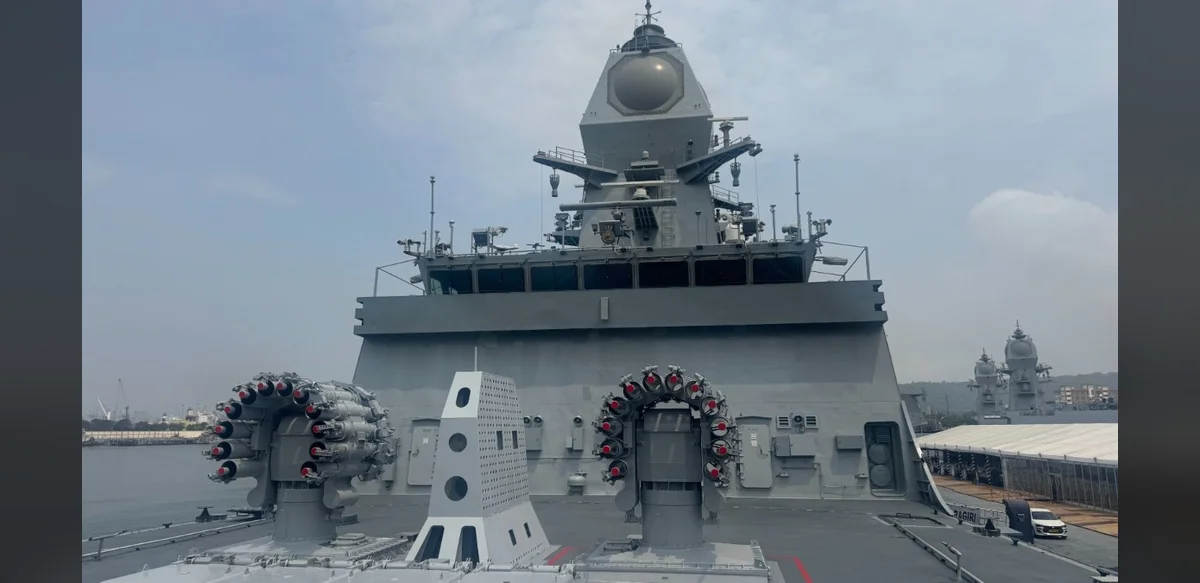
Amid rising challenges in the Indo-Pacific and maritime security issues after the US-Iran conflict, India will strengthen its navy with the commissioning of INS Mahendragiri on July 11.
As the vessel moves through the sea and raises the national flag at the Naval Dockyard in Visakhapatnam, INS Mahendragiri (F-38) will represent India’s push for self-reliance and maritime goals. Defence Minister Rajnath Singh will formally induct the stealth guided missile frigate into the Indian Navy.
With this addition, the number of warships commissioned in the past year will exceed 18, and a similar number is planned for 2026.
The frigate takes its name from the Mahendragiri mountain range in the Eastern Ghats along the Odisha-Andhra Pradesh border, evoking strength, endurance and national heritage. The navy traditionally names ships after rivers, mountains and historic sites.
Built under Project 17A as a Nilgiri-class frigate, it was designed by the Indian Navy’s Warship Design Bureau and constructed by Mazagon Dock Shipbuilders Limited in Mumbai. More than 75 percent of its equipment and technology is indigenous. It features advanced weapons, sensors and a modern combat system, marking progress in naval modernisation and self-reliant defence production.
The ship is intended for future naval operations and extended missions. It can perform anti-air, anti-surface and anti-submarine warfare, maritime security tasks, surveillance, long-range deployments, humanitarian assistance, disaster relief and search-and-rescue operations.
It carries surface-to-surface and surface-to-air missiles, updated radar and sensor systems, electronic warfare gear, anti-submarine weapons and an integrated combat management system. Its stealth features reduce radar detection.
High automation and better survivability measures are included. The high indigenous content aims to lower reliance on foreign equipment and support local defence firms, small businesses and shipbuilding.
As activity grows in the Indian Ocean and Indo-Pacific, the frigate will improve surveillance, deployment range and the ability to counter surface and submarine threats while highlighting domestic manufacturing capacity.

