

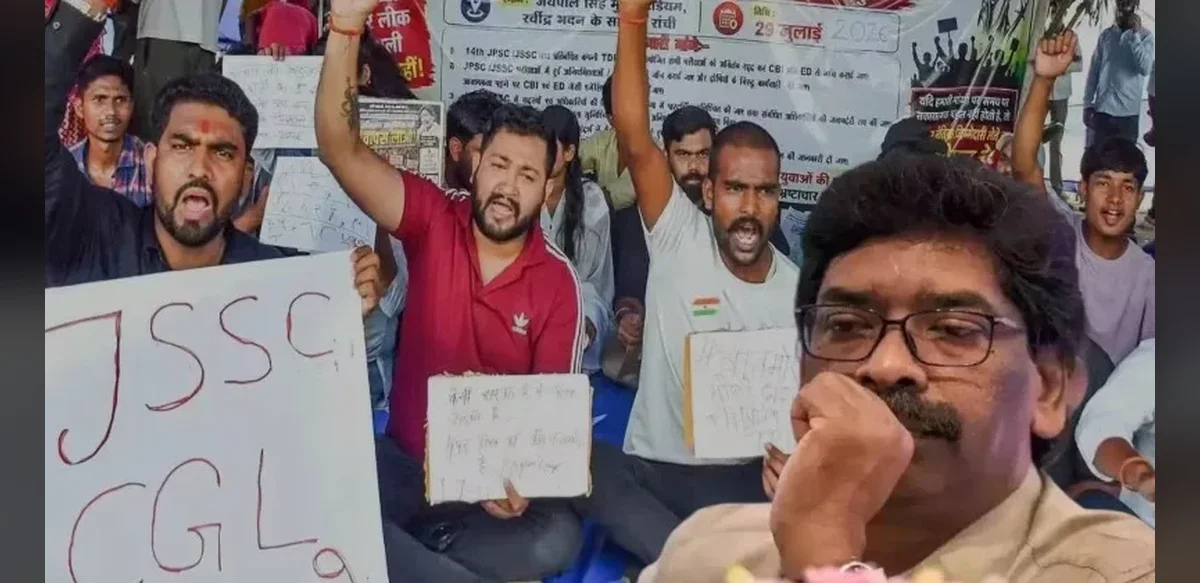
The Jharkhand High Court has issued a stay on the state government’s decision to cancel the 11th to 13th Jharkhand Public Service Commission civil services examinations along with related appointments. This development has drawn sharp reactions from student groups that had been protesting for several weeks over alleged irregularities in the recruitment process.
Student representatives have expressed disappointment with the state administration led by Chief Minister Hemant Soren. They claim that officials had previously indicated support for cancelling the exams and launching inquiries into reported issues such as paper leaks. According to these leaders, the assurances given before the court hearing differed from the position presented during proceedings.
The protests, organised under the banner of the JPSC-JSSC Reform Manch, lasted more than 26 days and included hunger strikes as well as sit-ins. Participants included not only candidates but also parents and educators who voiced concerns about the integrity of the selection system. The demonstrators had demanded a thorough review of multiple recruitment cycles.
Leaders of the agitation stated that the government’s approach appeared aimed at ending the demonstrations rather than fully resolving the underlying complaints. They pointed to simultaneous actions allowing some appointments to proceed even as cancellations were announced. This perceived inconsistency has led to accusations that the administration sought to manage the situation without addressing core demands.
One student spokesperson noted that senior legal representation was not present during the high court hearing despite the matter affecting thousands of aspirants. The absence was contrasted with the level of legal support typically provided in other high-profile cases. The group plans to continue its campaign through peaceful means across all districts of the state.
Another representative emphasised respect for the judicial order while expressing hope that the court would examine the evidence thoroughly. Concerns were raised about whether investigation reports from the criminal investigation department were adequately presented during the hearing. The students maintain that their actions were driven by fears that irregularities could harm the career prospects of many young people in the region.
On August 17 the state government had issued a statement outlining steps for various examinations, including cancellations in some cases, probes in others and postponements in a few. A follow-up notification from the personnel department on August 18 detailed actions across 45 recruitment processes. Student leaders now question whether these measures were primarily intended to reduce pressure from the ongoing demonstrations.
The protesting groups have indicated they will announce further steps soon while adhering to constitutional methods. They had previously set a 60-day deadline for responses to their demands. The situation remains fluid as both the administration and the demonstrators await further directions from the judiciary.
Observers note that the episode highlights ongoing debates about transparency in public recruitment examinations in several states. Similar concerns have surfaced elsewhere regarding leaks and procedural lapses. In Jharkhand the focus remains on restoring confidence among candidates who have invested significant time and resources in preparing for these competitive tests.
The high court intervention has temporarily halted implementation of the cancellation order. Both sides are expected to present additional arguments in upcoming hearings. Student organisations continue to mobilise support while stressing that their campaign will remain non-violent and focused on systemic reforms.
Local authorities have not issued detailed public comments on the specific allegations of misleading statements. The matter is now primarily before the judicial system for resolution. Meanwhile the affected candidates await clarity on the status of their applications and future examination schedules.


