

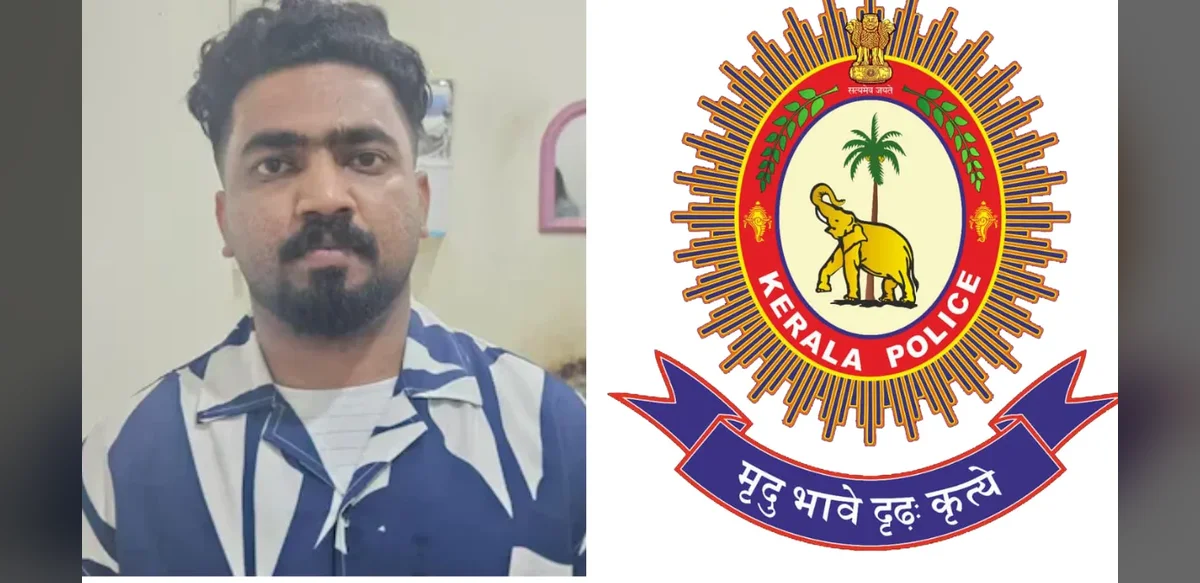
Authorities in Kerala have taken into custody a twenty six year old resident of Malappuram district following an inquiry into remarks posted online and suspected ties to groups viewed as working against national interests. The individual identified as Mohammed Sanoof from the locality of Aikkarapadi was apprehended by the state Anti Terrorism Squad after investigators examined a comment he is said to have made beneath a video related to the Pahalgam terror incident of twenty twenty five. The comment reportedly appeared to defend the attack and stir religious discord according to police statements.
The case was registered on the basis of information gathered during an earlier detention at Calicut International Airport in July of twenty twenty six when the man returned from Saudi Arabia. Subsequent checks on his mobile device and initial questioning led officials to apply provisions of the Unlawful Activities Prevention Act. A fresh case was opened once digital traces indicated participation in a private messaging channel that authorities claim was used to plan actions contrary to national security.
After being produced before the Additional District and Sessions Court in Ernakulam the accused was placed in the custody of the Anti Terrorism Squad for further questioning. Reports indicate that forensic examination of electronic material formed a key part of the evidence presented to the court.
This development has renewed focus on connections between certain individuals from Kerala and broader networks engaged in activities deemed hostile to national stability. Past operations by central agencies have revealed that some residents maintained online contact with figures linked to major incidents abroad including the Paris attacks of twenty fifteen and the Easter bombings in Sri Lanka during twenty nineteen.
Investigators have noted that a number of suspects from northern districts of the state exchanged messages with Zahran Hashim the individual identified as the planner of the Sri Lanka blasts. Several persons including one named Riyas Aboobacker from Palakkad were taken into custody by the National Investigation Agency after admitting they had followed radical online content and considered carrying out attacks within the country.
Extensive searches were conducted across areas such as Kasaragod and Palakkad to map digital and ideological links that crossed national borders. Evidence gathered suggested that some young people from the region who later joined extremist groups had used transit points through Sri Lanka and Iran. Additional findings pointed to interactions with propaganda material in Tamil that promoted recruitment into such networks.
One documented case involved a Keralite named Subahani Moideen who traveled to conflict zones in Iraq and Syria after aligning with the Islamic State. Records examined during prior probes indicated that this individual received training alongside persons who took part in the twenty fifteen Paris events.
The current matter is being handled under existing legal frameworks that allow for extended detention and detailed scrutiny of electronic communications. Officials have emphasized that the investigation remains ongoing and that additional information may emerge as analysis of seized materials continues.
Public attention has once again turned to the role of social media platforms in spreading content that authorities consider inflammatory. The comment in question was posted in relation to coverage of a victim family member from the Pahalgam incident and was flagged during routine monitoring of online activity.
Security agencies continue to monitor cross border digital traffic involving residents of coastal states where migration for employment is common. The combination of international travel records and online activity has been cited as a factor prompting closer examination in this instance.
The arrest has prompted discussions among local communities about the impact of radical online narratives on young adults. Community leaders have called for greater awareness programs to counter extremist messaging while stressing the importance of lawful conduct.
Legal proceedings are expected to follow standard judicial timelines with the accused entitled to representation and the opportunity to contest the charges. The Anti Terrorism Squad has stated that all actions were taken in accordance with procedural requirements and court orders.
This episode forms part of a wider pattern of cases involving alleged radicalization through digital channels that have been reported in several Indian states over the past decade. Central and state agencies maintain that coordinated efforts are necessary to address such threats while upholding constitutional protections.
Further updates are anticipated as the investigation progresses and additional forensic reports become available. The focus remains on verifying the extent of any organized activity and identifying other potential participants if evidence warrants.


