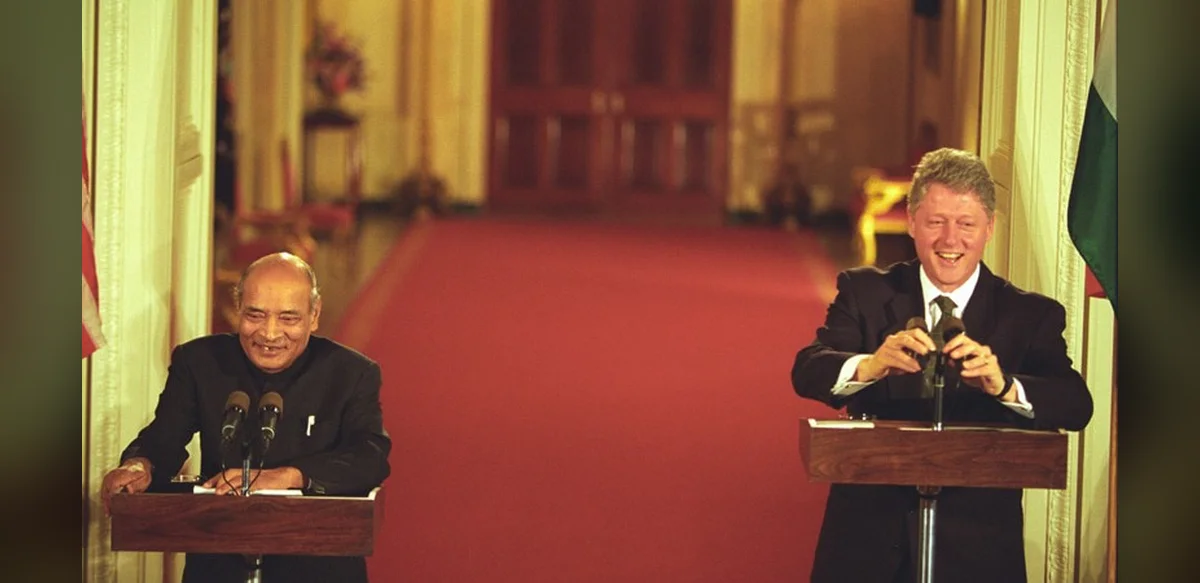
The year 1991 stands out in India’s post-independence era as a period of major change. Multiple crises and worldwide shifts pushed the country to adjust its economic and foreign policy paths at once. On the economic side, India faced a severe balance-of-payments problem. Reserves fell to levels covering only two weeks of imports, leading officials to pledge gold holdings abroad to prevent default. The Gulf War added further strain, and the situation led to broad economic reforms. These changes ended the licence-permit system and integrated India into global markets. By 1995, American firms viewed India as a key growth area. US investment rose from $32.6 million in the mid-1980s to $700 million by 1994. By early 2004, the United States ranked as the second-largest source of foreign direct investment, holding over 16 percent of the total. Globally, the Soviet collapse in December 1991 ended the Cold War and left the United States as the only superpower. India lost a key strategic ally and had to adjust its approach in a new unipolar setting. Commentators noted that New Delhi worked to rebuild its economic, political and strategic connections. US diplomat Dennis Kux had earlier called the two countries estranged democracies, a description that began to shift in the 1990s. In 1992, the Narasimha Rao government appointed Siddhartha Shankar Ray as ambassador to the United States. Ray, a senior lawyer, politician and former West Bengal chief minister who had also governed Punjab, lacked prior diplomatic experience. The choice reflected a political move to improve ties while India revised its foreign policy and liberalised its economy. Ray used his political background to engage both US officials and business leaders as India promoted itself as an investment destination. His four-year term is viewed as effective in enhancing India’s standing in Washington. It overlapped with Rao’s visit to the United States, where the prime minister spoke to a joint session of Congress, marking closer engagement. The government also resisted US pressure on Kashmir and the nuclear programme, preserving policy independence. Economic reforms boosted India’s information technology sector and created lasting commercial links. The nuclear issue remained sensitive. In 1995, plans for a test were reportedly halted after US satellites detected preparations and diplomatic pressure followed.