


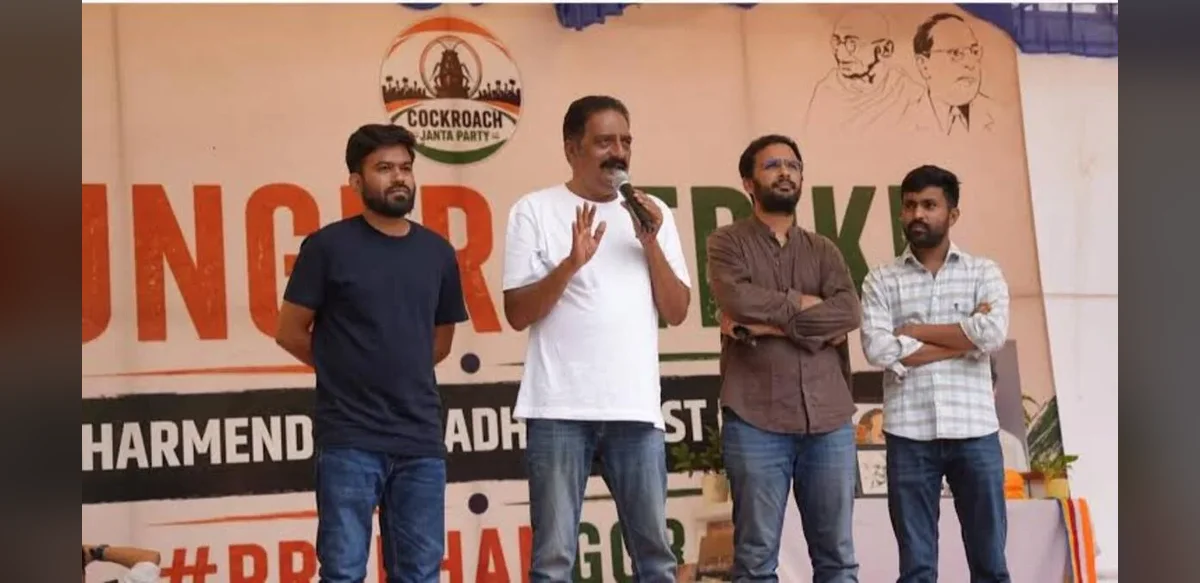
What started as a modest gathering at New Delhi’s Jantar Mantar evolved into a larger event that drew national attention. Organizers initially described the CJP protest as a student-led peaceful demonstration. However, accounts indicate that some participants voiced slogans and statements critical of Hindu traditions and symbols.
Social media footage showed instances where individuals appeared to disregard national emblems and used language opposing Sanatan practices. Observers noted this shift raised concerns among many citizens who viewed the event as an effort by certain left-leaning groups to create divisions.
One report highlighted the case of an individual identified as Rosy at the October 3, 2026, demonstration. She accused a Delhi Police officer of misconduct while presenting herself as a journalist. Investigations later suggested she held a coordination role within the CJP network. Videos circulated showing her expressing views that salvation is limited to church attendees and criticizing rituals involving the Ganga River. Supporters defended her actions, citing her partisan stance.
Another participant, Harsh Yadav, contributed to online efforts linked to the protests. His posts often used phrases like Bhagwa Aatankwad when discussing Hindu groups and coordinated campaigns against the government and BJP. This activity illustrated connections between street actions and established political networks such as Congress and NSUI.
On July 18, 2026, activist Barkha Trehan confronted CJP founder Abhijeet Dipke at the site. She objected to perceived mockery of deities like Shri Ram and Sita on stage. Trehan, claiming no party ties, threw ink during the exchange. She reported subsequent physical confrontation from supporters before police intervention.
A minor participant named Nishu Azad drew scrutiny after posts targeting Prime Minister Narendra Modi. Records revealed earlier social media content insulting figures such as Maa Saraswati, Maa Durga, Bhagwan Shri Krishna, and Bhagwan Shiv. An FIR was filed against her and her father for alleged hurt to religious sentiments.
Neha Bora, associated with AISA, spoke at the events. Her addresses defended individuals facing terror-related charges and called for removal of Hindutva influences. She also employed anti-caste arguments that some interpreted as directed at the Brahmin community.
Vijeta Dahiya served as a spokesperson for the June 2026 protest. Prior work included a music video depicting Lord Shiva in a political context and statements questioning figures like Adi Shankaracharya. Her role highlighted involvement of individuals with histories of critiquing Hindu elements.
Comedian Kunal Kamra addressed the July 15 gathering. He drew comparisons between religious figures and business leaders, prompting cheers from parts of the audience. The remarks led to public backlash from those who saw them as disrespectful.
Additional accounts from the period described repeated instances of stage performances and speeches that challenged core Hindu beliefs. Organizers maintained the focus remained on policy issues and citizen rights. Critics argued the events revealed deeper ideological opposition to traditional values.
The series of incidents prompted discussions on the boundaries between protest and cultural sensitivity. Legal actions followed in several cases, while supporters framed the gatherings as exercises in free expression. The events at Jantar Mantar continued to generate debate into late 2026 regarding the role of student movements in broader political discourse.
Further coverage examined links between the CJP platform and established left organizations. Participants from various student associations contributed to the programming. Reports noted coordination with digital campaigns that amplified specific narratives.
Public reaction varied, with some citizens expressing support for the demonstration’s stated goals and others voicing alarm over the tone of certain speeches. Media outlets on multiple sides presented differing interpretations of the same footage.
Authorities monitored the gatherings for compliance with assembly regulations. Police presence increased following reports of confrontations. Investigations into specific complaints proceeded through standard legal channels.
The overall narrative surrounding the CJP protests reflected ongoing tensions in Indian public life between expressions of dissent and respect for cultural heritage. Observers called for clearer distinctions between political critique and religious targeting in future events.

