

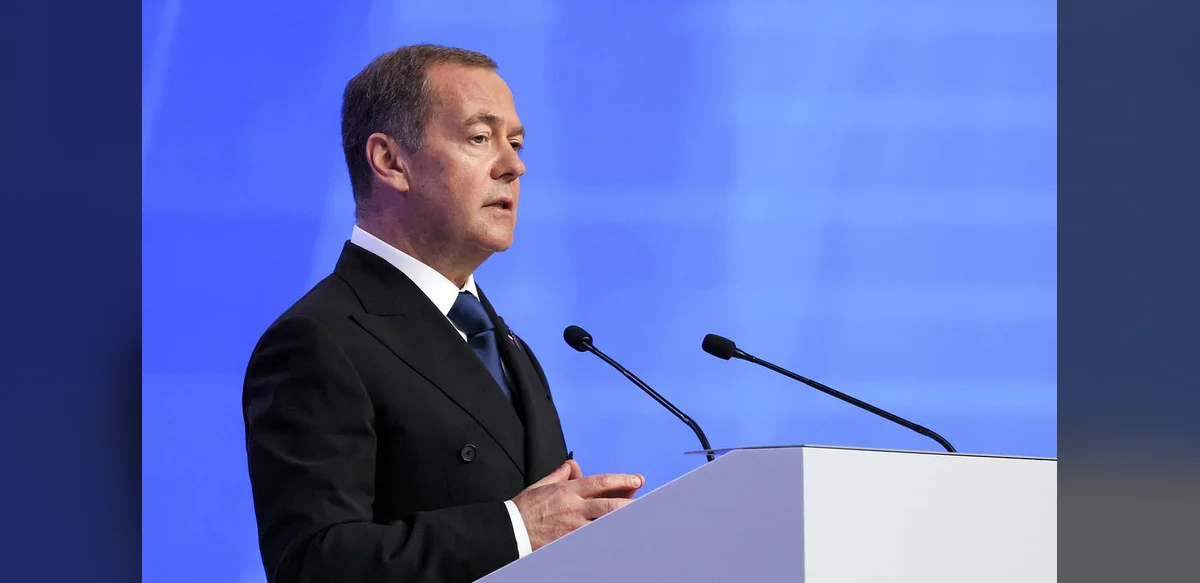
A senior Russian official has issued pointed criticism of European political figures regarding their approach to events in Ukraine. The deputy chairman of the Security Council described these leaders as providing support for actions he characterized as terrorism carried out by authorities in Kiev. The remarks focused particularly on the direction taken by Germany’s present government and its stance toward Russia.
The comments underscore persistent strains in relations between Moscow and several Western capitals. According to the official, the policies pursued by European governments have contributed to an environment where hostile measures against Russian interests are enabled. Emphasis was placed on what was termed a Russophobic orientation in Berlin’s current leadership.
Such statements reflect broader diplomatic friction that has developed over recent years. The Security Council deputy chairman framed the European position as actively sustaining certain activities in Ukraine that Russia views as illegitimate. This perspective aligns with longstanding Russian objections to Western involvement in the region.
Observers note that the language used signals continued hardening of positions on both sides. The reference to sponsorship of terrorism represents an escalation in rhetorical terms. At the same time, the specific mention of Germany highlights bilateral issues that remain unresolved between the two countries.
The official’s role within the Security Council lends weight to the pronouncement within Russian political circles. It serves as an indicator of how Moscow interprets external support for Ukrainian authorities. The critique of Germany’s course was presented as part of a wider pattern among European nations.
Diplomatic channels between Russia and Europe have faced repeated challenges in recent times. The latest remarks add to an atmosphere where mutual accusations have become common. Russian authorities maintain that Western policies have prolonged conflict rather than fostering resolution.
Germany’s government has consistently advocated for certain measures in response to the Ukraine situation. From the Russian viewpoint, these measures reflect an underlying hostility that influences decision making. The deputy chairman’s statement connects these policies directly to support for actions deemed terrorist in nature.
The overall tone of the comments suggests limited near term prospects for improved dialogue. Both sides continue to articulate sharply differing narratives about responsibility and appropriate responses. The focus on European leaders as sponsors marks a direct attribution of blame.
In summary, the intervention by the Russian official reiterates established positions while sharpening the critique of specific governments. The emphasis on Germany’s leadership provides a concrete example within the larger European context. This development is likely to prompt further commentary from involved parties as the situation evolves.
Additional analysis of the statement reveals its place within ongoing information exchanges between Russia and the West. The terminology employed aims to delegitimize external involvement in Ukrainian affairs. Russian officials have repeatedly argued that such involvement crosses into unacceptable territory.
The Security Council deputy chairman’s words are expected to circulate widely in media outlets across multiple regions. They contribute to the public record of Russian assessments regarding European conduct. The linkage between sponsorship claims and Russophobic policies forms the core of the argument presented.
Future interactions may be shaped by the persistence of these contrasting views. Both Russian and European representatives have shown willingness to maintain firm stances on key issues. The current remarks fit into that pattern of assertive communication.
Overall, the episode illustrates the depth of divisions that characterize contemporary European Russian relations. The specific accusations regarding terrorism sponsorship and anti Russian sentiment in Germany encapsulate the points of contention. Monitoring of subsequent reactions will provide further insight into how these tensions develop.


