

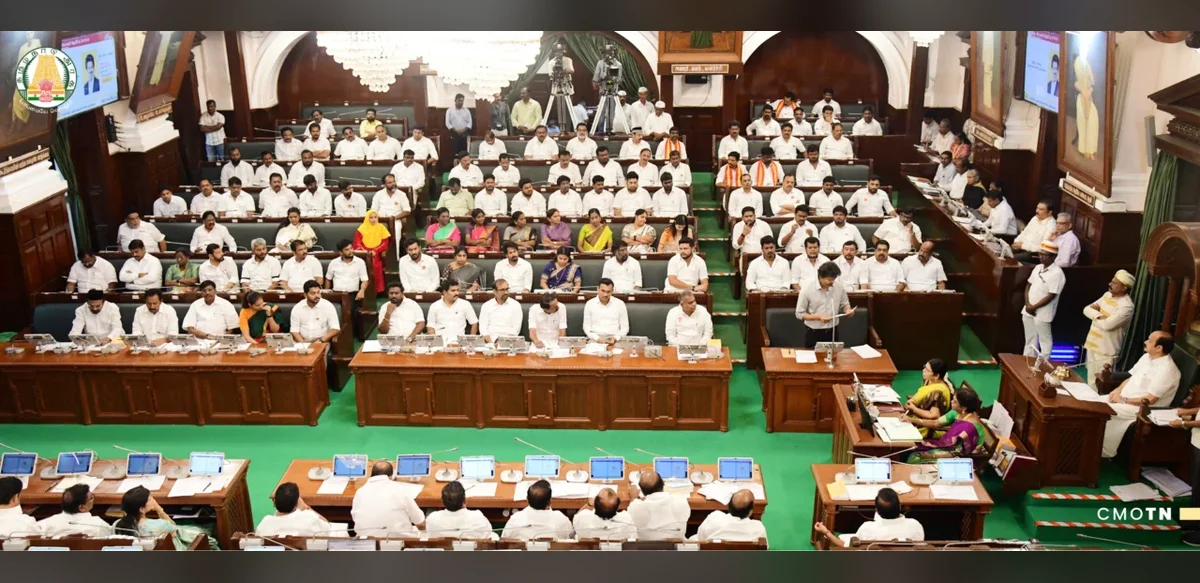
The Tamil Nadu administration has outlined eleven new initiatives under the minorities welfare department aimed at supporting education, skill development, and infrastructure for minority communities. These steps include establishing a dedicated arts and science college for women in Chennai to facilitate higher education access for Muslim girls. Additional provisions cover tuition fee coverage for undergraduate students admitted through government quotas in various colleges, with an allocation of twenty crore rupees set aside for the current fiscal year.
Further measures extend educational assistance through the Waqf Board, increasing annual support from one thousand rupees to two thousand rupees for Muslim girl students in classes nine and ten. This expansion is expected to benefit over forty one thousand students at a cost of eight point two eight crore rupees. Skill training programs will also be rolled out across districts in fields such as information technology, automobile repair, apparel design, and agriculture, targeting ten thousand participants over four years.
Infrastructure developments feature the construction of community halls in five districts including Cuddalore and Krishnagiri at a total estimated expense of ten crore rupees. New positions for district level minority welfare officers will be created in ten areas with a budget of four point four five crore rupees to improve implementation of schemes.
Grants have been approved for preserving heritage structures, including ten crore rupees for renovating ancient churches while maintaining their original character. A new facility for the Tamil Nadu Waqf Board is planned at forty crore rupees. Interest free funding totaling one hundred crore rupees has been designated for maintenance of Waqf and church properties.
The Hindu Munnani organization has raised objections to these announcements, arguing that they reflect an uneven approach favoring specific religious groups. The group contends that many historic temples require urgent repairs yet receive no comparable support, despite contributions from temple resources to state funds. It questions the absence of similar programs for Hindu institutions and calls for impartial policies that address needs across all communities.
Critics from the organization also highlight that taxpayers from every background contribute to public resources and suggest that welfare distributions should consider economic disadvantages without regard to religious affiliation. They express concern that such targeted allocations could widen social divisions and urge the government to uphold principles of equal treatment as outlined in its foundational commitments.
Officials have presented the measures as efforts to promote educational opportunities and livelihood improvements for minority populations. The announcements were made during assembly proceedings and include provisions for both immediate assistance and longer term infrastructure projects.
Reactions from various quarters indicate ongoing debates about the balance of welfare policies in the state. Supporters view the initiatives as necessary steps to address specific community challenges, while opponents advocate for broader inclusion of all groups facing similar issues.
The government has allocated resources for these programs within the current budget cycle, with implementation timelines spanning the next several years. Monitoring mechanisms are expected to track progress in education enrollment, training completion, and facility development.
This series of announcements continues a pattern of targeted interventions in social sectors, prompting discussions on resource allocation and equity in public spending. Observers note that such policies often intersect with broader questions of governance and representation in regional politics.


