


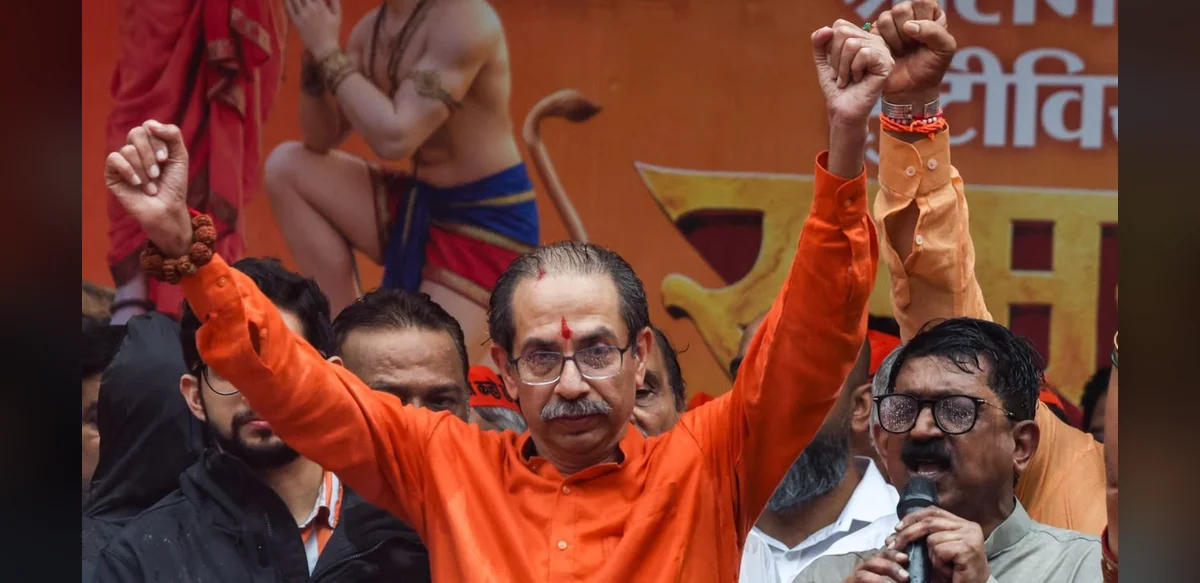
After mostly avoiding emphasis on Hindutva in his campaigns since splitting with the BJP in 2019, Shiv Sena (UBT) leader Uddhav Thackeray placed it at the forefront on Sunday. At Dadar’s Hanuman temple, he started the Rama Raksha Andolan, referenced the Ram Janmabhoomi campaign, highlighted Bal Thackeray’s involvement, and criticized those managing Ayodhya temple funds for misusing devotee contributions.
The move followed reports of irregularities in temple donations. It also came shortly after six of his nine Lok Sabha MPs joined the Eknath Shinde faction and senior leader Sachin Ahir switched sides. Uddhav aimed to redirect attention from these losses toward ideological matters.
After visiting affected areas to support workers, the event marked the party’s first major statewide effort since the setbacks. Following rituals and chants, his address centered on Ayodhya rather than recent departures.
He stated that Hindus would not tolerate exploitation of their beliefs. Recalling past participation in the movement, he noted sacrifices made and questioned shifts since Narendra Modi became prime minister. He clarified the focus remained on fund management, not the deity, and introduced a new slogan about keeping Ram in heart and speech.
Party figures maintained this aligned with longstanding ideology rather than a shift, framing it around protecting devotee trust. The effort also sought to emphasize ideology over defections without targeting the temple.
Historically, the Ram Janmabhoomi movement helped expand Shiv Sena’s reach beyond regional identity in the late 1980s. It strengthened ties with the BJP and led to Maharashtra’s first such government in 1995. The 1992 Babri Masjid demolition further defined the party’s direction.
Following the 2022 split, this legacy gained renewed relevance for the Uddhav faction.

