


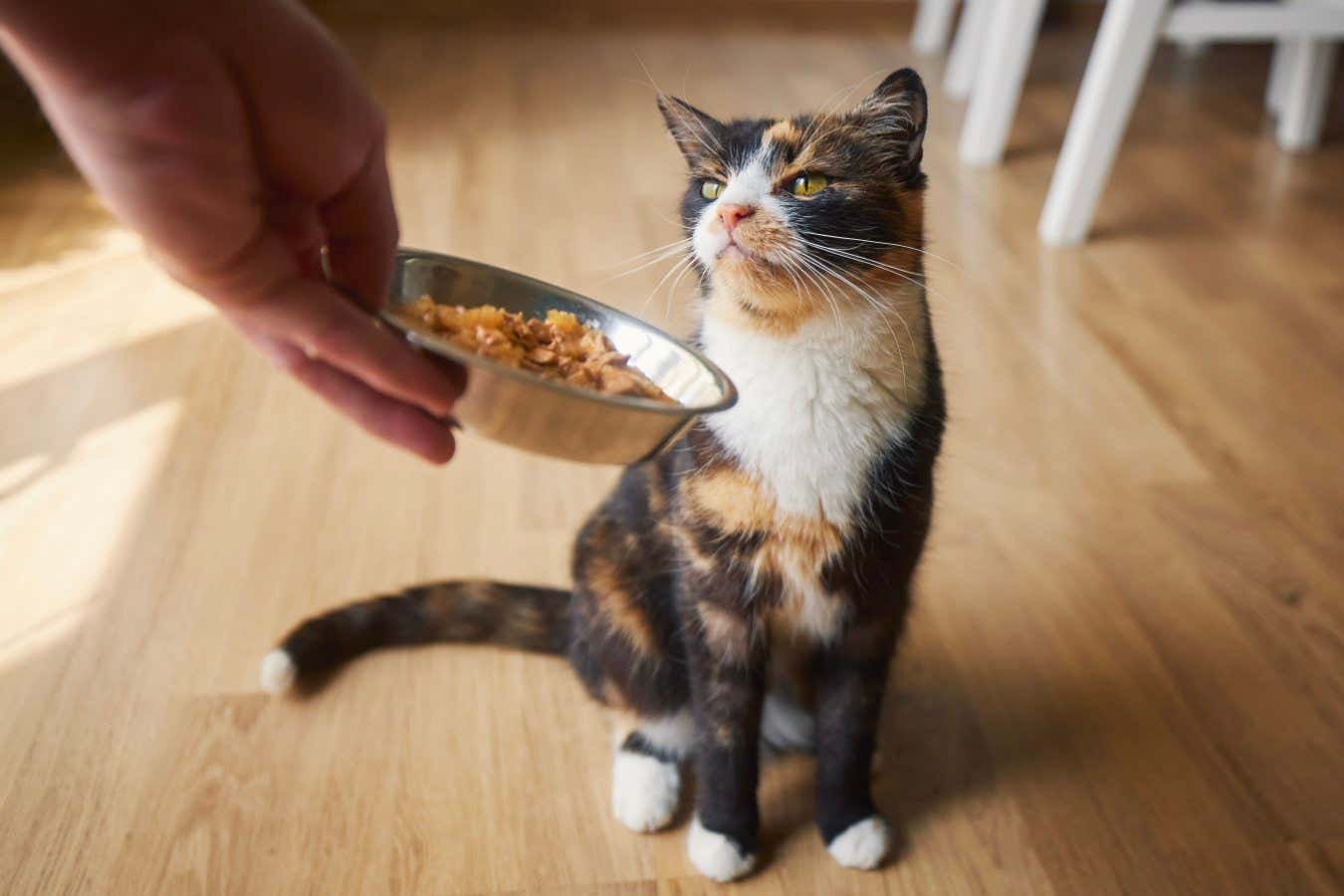
Certain cats abruptly stop eating brands of food they previously consumed without issue. Modifying the scent of the food could address this behavior.
Felines might respond better to meals with unique aromas. (Image: Jaromir/Getty Images)
Cats that reject their usual meals may have grown tired of the scent, a finding that points to potential methods for encouraging them to eat.
Pet owners often experience the challenge of dealing with selective cats—purchasing food that initially appeals, only for the animals to refuse it shortly after. Although this can make cats seem overly particular, research shows that simple adjustments to the food’s aroma might help satisfy them and improve feeding times, according to Masao Miyazaki from Iwate University in Japan.
‘Such adjustments could involve adding a flavor enhancer, slightly altering the diet, or updating the serving area,’ he explains. ‘Cats might not be selective in the way people think; they could just become uninterested when the aroma grows too familiar.’
Miyazaki and his team conducted tests with 12 cats—six males and six females, all intact. They presented each cat with various commercial dry foods for 10 minutes, tracking consumption. After a 10-minute pause, the cats received either the same food or a different type for another 10 minutes. This process repeated six times, totaling 110 minutes. The cats consumed progressively less with each session, particularly when the food remained unchanged. On average, alternating foods doubled overall intake compared to offering the same option repeatedly.
To examine the role of scent, the team repeated the test using identical food in all sessions, placed in the top section of a two-part bowl with a perforated separator. The bottom section held additional food that the cats could detect by smell but not access. For the first five sessions, both sections contained the same food, and eating decreased as anticipated. In the sixth session, the researchers replaced the bottom food with a different variety featuring a new scent. This scent change prompted a significant increase in consumption, with cats eating about twice as much as in the prior session.
These results highlight the powerful influence of odors on cats’ hunger, Miyazaki states.
‘This explains the wide array of cat food options available in stores,’ notes Katherine Houpt from Cornell University in New York. ‘It also raises questions: do cats alternate between prey like mice and birds after catching a few?’
‘I have firsthand knowledge, both professionally and personally, of how choosy cats can be with food,’ says Scott McGrane from the Waltham Petcare Science Institute in the UK. ‘This study offers valuable perspectives on how aromas affect feeding patterns. Providing varied wet food options or combining wet and dry diets can introduce diversity and sustain intake levels for cats.’
However, David Thomas from Massey University in New Zealand suggests the results might relate to weight issues in domestic cats. ‘This could explain why diets with multiple flavors, such as mixed pouch packs, contribute to overeating and obesity in cats,’ he says.
That said, Mikel Delgado, a cat behavior specialist in Sacramento, California, advises that owners can promote enjoyment by providing diverse scents and tastes, including options at each meal, while monitoring portions to support healthy weights.
Crucially, owners should clean feeding dishes to remove lingering smells from past meals, Delgado recommends. She also cautions that persistent selectivity, despite these efforts, might indicate medical problems requiring veterinary attention.

