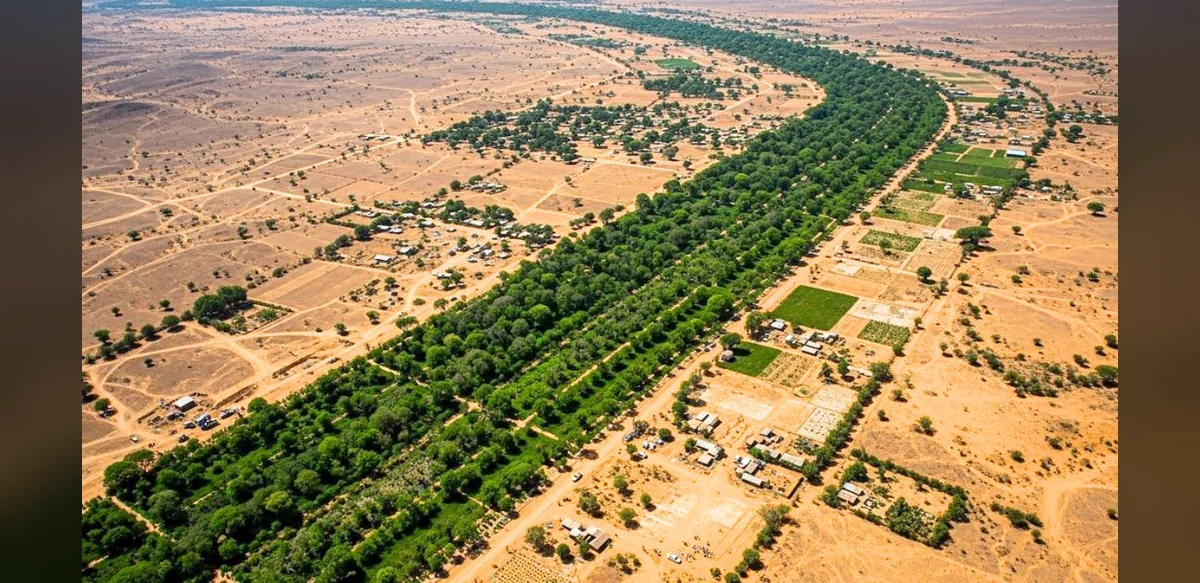
Africa is developing an 8,000-kilometre belt of restored vegetation known as the Great Green Wall to counter desertification across the Sahel region. The project runs from Senegal on the Atlantic coast to Djibouti on the Red Sea and seeks to revive degraded soils, improve food security and generate employment. Launched in 2007 by the African Union, the effort initially planned a continuous line of trees but now emphasises broader landscape restoration suited to local conditions. Goals include restoring 100 million hectares of land, capturing 250 million tonnes of carbon dioxide and creating 10 million jobs by 2030. More than 20 countries participate alongside international partners. Senegal and Ethiopia have already restored millions of hectares through tree planting and soil improvement. Assessments indicate roughly 30 million hectares have been revived so far, though further funding and regional cooperation remain necessary. The initiative combines tree planting with grassland and wetland recovery to stabilise soils, increase water retention and support biodiversity. Communities benefit through higher crop yields and more reliable livestock grazing. Success could offer models for other dry regions facing similar environmental pressures.