


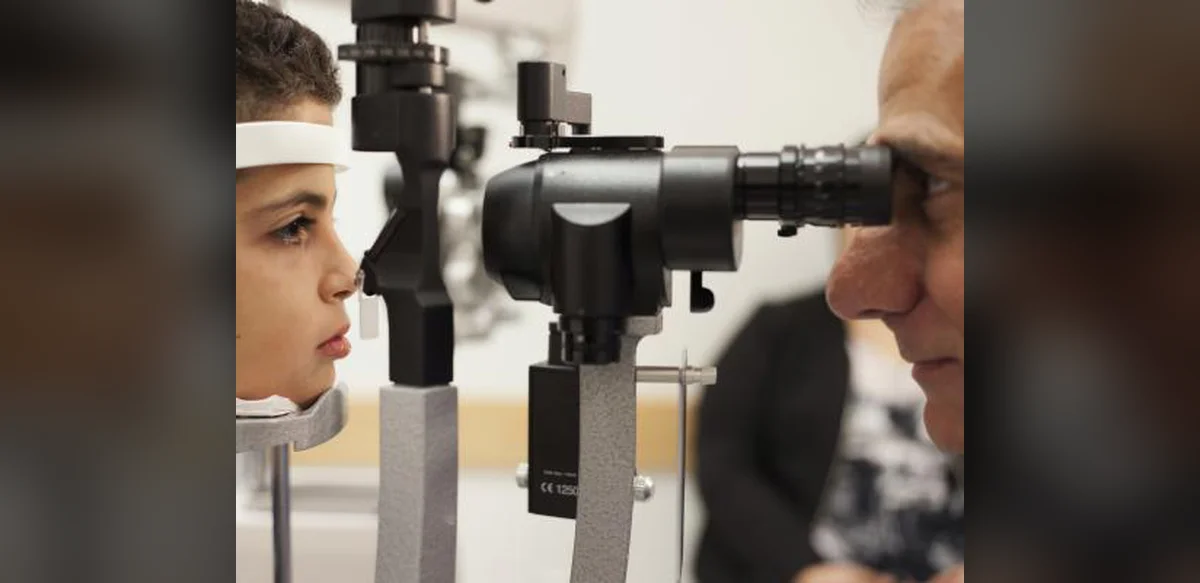
A husband-and-wife team of researchers, who first connected while examining a brain specimen, has received a prestigious science award for developing the initial gene therapy approved to combat a form of inherited blindness. Molecular biologist Jean Bennett and eye specialist Albert Maguire, along with physician Katherine High, were honored with the $3 million Breakthrough Prize in life sciences for their quarter-century effort. During the project, the couple took in two dogs they had successfully treated for vision loss.
The treatment, known as Luxturna, gained U.S. approval in 2017 and has significantly improved outcomes for individuals with Leber congenital amaurosis (LCA), a hereditary condition that often results in complete vision loss by young adulthood. Evidence of its effectiveness emerged in trials where one participant recounted viewing their child’s features for the first time, noticing details in wood textures, and observing tree limbs moving in the breeze. Others described comparable life-changing enhancements.
Bennett, now retired from the University of Pennsylvania, expressed being deeply moved by the results, calling it an extraordinary moment of discovery. She highlighted the vibrant period for scientific and medical advancements but cautioned that U.S. government policies undermining science might inflict long-term harm, potentially causing a loss of talent that could be hard to reverse. She noted that priorities have grown politicized, funding bodies for research have been weakened, experienced advisors have departed, and new policies clash with established studies.
The Breakthrough Prizes, likened by their tech-industry founders to awards in entertainment, were presented at a formal event in Los Angeles on Saturday evening. Additional life sciences honors recognized a gene therapy for sickle cell anemia and beta thalassemia, as well as findings on genetic factors in frontotemporal dementia and amyotrophic lateral sclerosis (ALS), the motor neuron disorder that impacted physicist Stephen Hawking.
Bennett and Maguire connected at Harvard Medical School during a brain dissection assignment. At the University of Pennsylvania, they targeted LCA, associated with defects in the RPE65 gene, despite limited tools available at the time. Bennett reflected that youthful inexperience helped her persist without full awareness of the challenges.
After extensive efforts, they created a gene therapy that delivers a functional gene copy to retinal cells. Animal studies and human trials, conducted with High, demonstrated vision recovery. The dogs Venus and Mercury, treated in the process, joined their family.
Another life sciences award went to Swee Lay Thein of the U.S. National Institutes of Health and Stuart Orkin of Harvard Medical School for advancing gene therapy for sickle cell disease and beta thalassemia. These conditions stem from issues in adult hemoglobin, the protein enabling oxygen transport in blood. They found that inhibiting the BCL11A gene prompts production of a healthy fetal hemoglobin variant, addressing the disorders.
This led to Casgevy, an innovative approach that modifies patients’ blood stem cells and returns them to the body. Thein, who identified BCL11A at King’s College London in the 2000s, described the treatment as demanding but noted rapid progress in the field. Future methods may edit cells internally or use oral medications. Orkin stated that while current options won’t eradicate the diseases immediately, they mark a crucial advancement toward more accessible treatments to lessen disease impact.
Similar to Bennett, Orkin criticized governmental assaults on American science, saying a peak era of biomedical progress is threatened by challenges to institutions and the dismantling of longstanding research frameworks. He questioned the rationale behind such leadership decisions.
The mathematics prize recognized contributions to nonlinear evolution equations, which model changes in intricate systems. Physics awards highlighted research on the force binding atomic nuclei and a long-term study measuring muons, particles akin to heavier electrons.

