


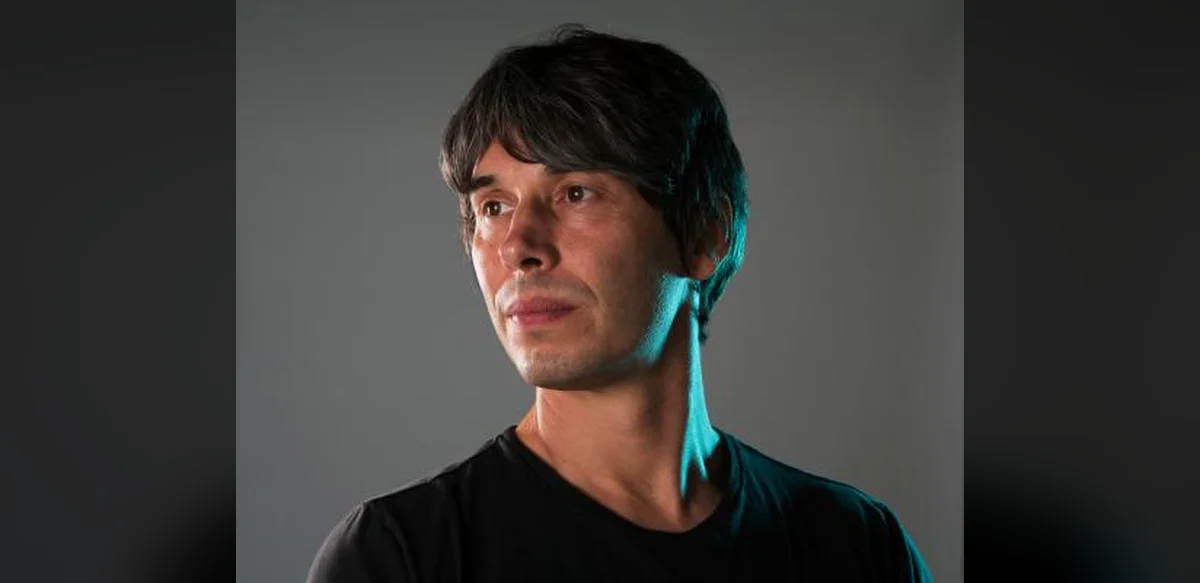
Physicist Brian Cox explained that his new live performance, Emergence, draws from Johannes Kepler’s 1611 book, The Six-Cornered Snowflake. Kepler, known for planetary motion laws, pondered the six-sided structure of snowflakes during a Prague snowstorm while heading to a patron’s home without a gift. Cox highlighted Kepler’s modern approach to symmetry’s origins, despite lacking knowledge of atoms and water molecules. Notably, Kepler admitted his uncertainty, which Cox sees as groundbreaking. The show explores known scientific facts, unresolved questions, and potentially unanswerable mysteries.
When asked which unsolved scientific puzzle he most wants resolved, Cox cited the existence of extraterrestrial life, possibly in our solar system or beyond. He noted ongoing missions to Jupiter’s moons and the James Webb Space Telescope’s ability to analyze distant planetary atmospheres for life signs.
Responding to actor Damian Lewis’s query on whether music is science or art, Cox rejected strict divisions between fields. He views both as responses to the world’s beauty and enigma, with science and music sharing creative elements.
Cox identified artificial intelligence as a field poised for major advances in the coming decade, though its ultimate capabilities remain unpredictable, offering both promise and risks. He also mentioned quantum computing, where experts disagree on timelines, underscoring the revolutionary yet uncertain nature of these technologies.
Cox admitted to shifting views on social media. Initially optimistic about its potential for open dialogue, he now sees it as cluttered with falsehoods and a harmful force in politics, though he continues reassessing its overall impact.
The best guidance Cox received was to pursue passions, which his parents supported despite their hopes for his university education. He spent five years in music before switching to astronomy, a rare path in his Manchester upbringing.
On popular culture, Cox confessed limited familiarity but suggested musical innovation has declined since the rapid changes from the 1950s to 1980s, with less stylistic evolution in recent decades.

