

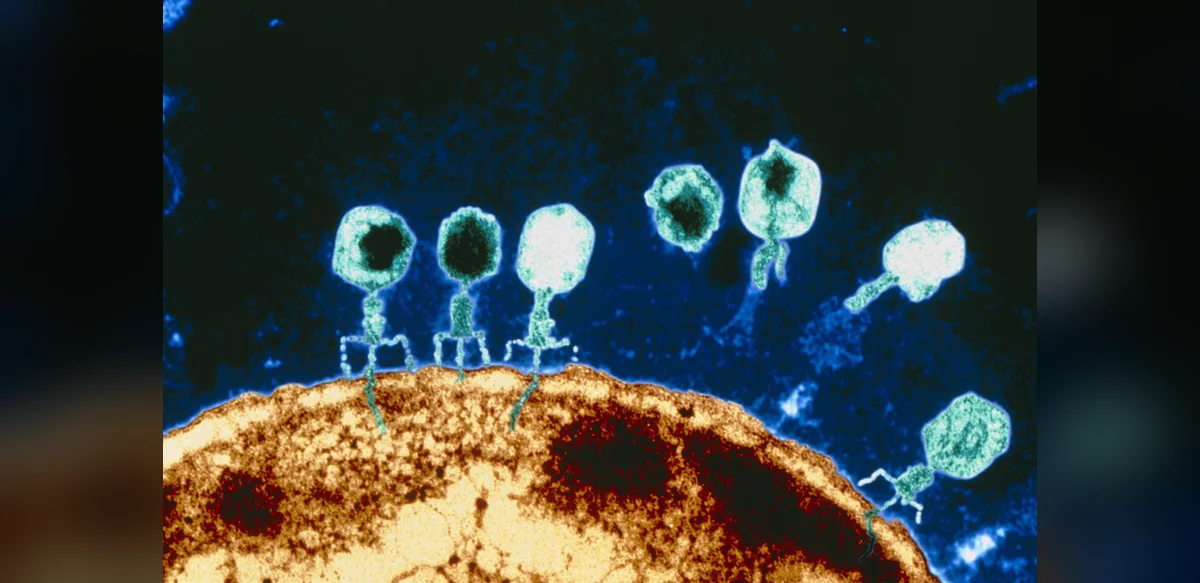
A man with a severe antibiotic-resistant Escherichia coli infection showed clear improvement after treatment with bacteria-killing phages equipped with CRISPR systems. The infection arose months after his kidney transplant, producing a large bladder mass and open abdominal wounds. Standard antibiotics proved ineffective, prompting California physicians to request experimental phage therapy from Danish firm SNIPR.
One week after treatment began, the wounds started healing and the mass shrank from 0.74 litres to 0.37 litres. The patient had started stronger antibiotics eleven days earlier, so the exact contribution of the phages remains uncertain. Researchers suggest the phages may have disrupted bacterial biofilms, allowing antibiotics to work more effectively.
Bacteriophages are abundant viruses that target specific bacteria. SNIPR001, a cocktail of engineered phages, can eliminate 90 percent of E. coli strains and is delivered orally, intravenously or directly to wounds. A phase II trial is testing whether reducing gut E. coli levels lowers bloodstream infection risk in cancer patients. The current case was authorised under compassionate-use rules. Further clinical studies are planned to confirm the findings.


