

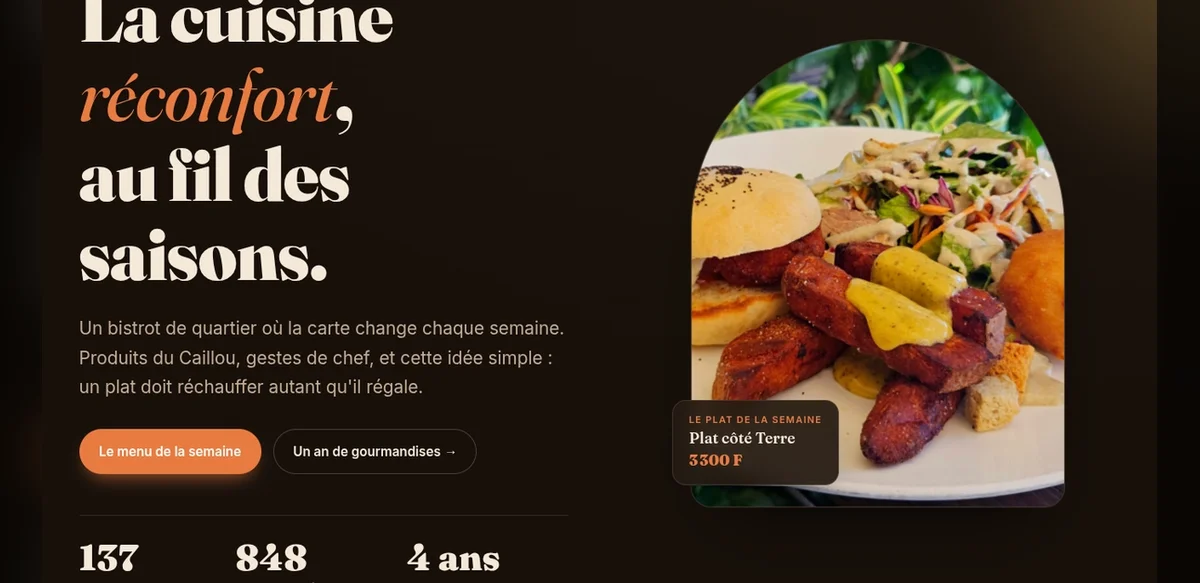
A participant in an online frontend development event has produced a landing page that incorporates elements from historical restaurant menus. The project was submitted as part of the Comfort Food Edition of the Frontend Challenge and focuses on presenting archival menu content in a modern web format.
The submission highlights the use of older menu records to create an engaging user interface. Historical menus often contain detailed descriptions of dishes, pricing from past eras and regional culinary traditions. By drawing on these sources the developer aimed to evoke a sense of nostalgia while maintaining contemporary design standards.
Landing pages of this type typically serve as entry points for websites that promote food related services or cultural archives. In this case the page organizes menu items into clear sections allowing visitors to explore different time periods or geographic origins. Navigation is kept simple with emphasis on readability and visual hierarchy.
The challenge itself encourages participants to explore themes connected to comfort food through web technologies. Entries are judged on aspects such as code quality visual appeal and user experience. The current project demonstrates how archival material can be repurposed for digital storytelling without requiring extensive original content creation.
Historical menus provide rich textual and visual data that can illustrate changes in dining habits over decades. Ingredients once considered common may now appear unusual while presentation styles reflect evolving social norms. Integrating such material into a landing page can educate users while offering an aesthetically pleasing experience.
Developers working on similar projects often combine static content with interactive elements. Scroll triggered animations or filter options based on cuisine type or decade can enhance engagement. The submitted page reportedly employs these techniques to guide visitors through the collection in a structured manner.
Community feedback on the submission has centered on the balance between historical authenticity and modern usability. Observers note that careful typography and color choices help preserve the original character of the menus while ensuring accessibility across devices.
Projects like this contribute to broader discussions about digital preservation of cultural artifacts. Menus from past restaurants serve as snapshots of economic conditions and popular tastes. Making them available through web interfaces can increase public interest in culinary history.
The Frontend Challenge series continues to attract creators interested in experimenting with new approaches to familiar topics. Each edition introduces a specific theme that prompts participants to apply their skills in novel ways. The Comfort Food Edition has generated multiple entries exploring food related interfaces and content presentation.
Future iterations of the landing page could incorporate additional datasets or user generated contributions. Such expansions would allow the project to grow beyond its initial scope while remaining grounded in the original historical sources.
Overall the submission illustrates a straightforward method for transforming archival documents into interactive web experiences. It underscores the potential of frontend tools to bridge past and present through thoughtful design choices.


