


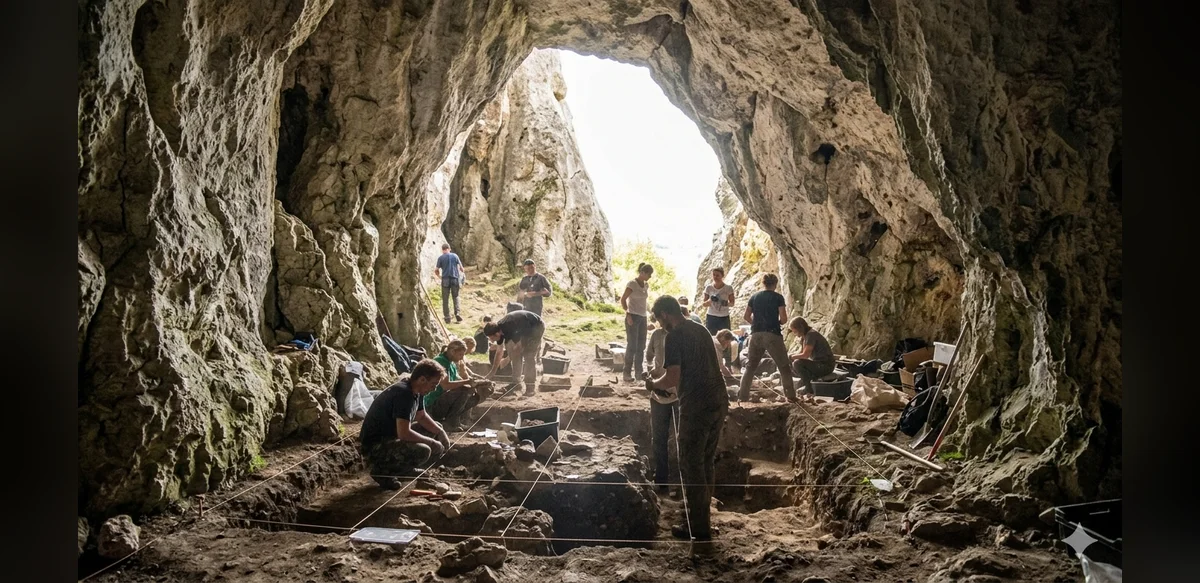
Scientists have reconstructed the genetic profile of the oldest known Neanderthal group in Central-Eastern Europe using DNA from sediments in Poland’s Stajnia Cave, dating back more than 80,000 years. This breakthrough provides insights into how these ancient humans adapted and thrived in challenging environments.
The research focused on mitochondrial DNA extracted from a Neanderthal tooth found in the cave. Advanced paleogenomic techniques revealed that this individual belonged to a lineage linked to Neanderthals in the Caucasus region.
Detailed in a study titled ‘First multi-individual Neanderthal mitogenomes from north of the Carpathians,’ published in Scientific Reports, the findings suggest extensive migration or interactions across vast areas of Eurasia. Researchers noted that the Stajnia specimen shares genetic traits with Caucasus Neanderthals, indicating no isolated groups in Europe.
This evidence highlights Neanderthal migration patterns, showing they were more mobile than previously believed. Factors such as Ice Age climate shifts likely prompted these movements, leading to population dispersals and changes.
The discovery underscores Neanderthals’ adaptability, challenging old views of them as sedentary cave-dwellers. Studying these ancient humans enhances understanding of human evolution, revealing its non-linear complexity.
As genetic technologies advance, more such revelations are expected. Ultimately, these findings portray Neanderthals as dynamic beings who traveled, adjusted to new settings, and formed connections over long distances, much like modern humans.

