


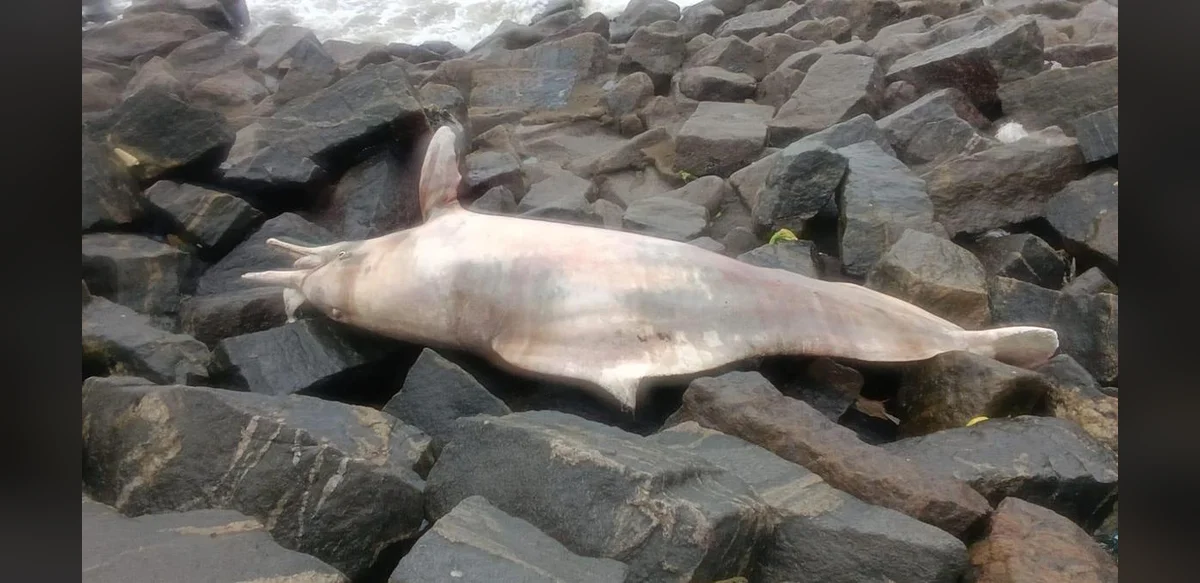
On July 4, 2026, residents discovered an Indian Ocean humpback dolphin and an Indo-Pacific finless porpoise dead on separate stretches of Kozhikode beach in Kerala. Officials collected the bodies for examination after public reports. The necropsy of the roughly 200-kilogram dolphin, listed as endangered by the IUCN, showed an empty stomach and mostly normal organs, yet nearly two kilograms of plastic fishing net tightly blocked its oesophagus and prevented feeding.
Veterinary officer K.M. Manojlal explained that the animal likely swallowed the net while hunting prey and could not expel it. Fermentation gases probably compressed the material into a mass that moved upward into the throat.
The smaller porpoise, weighing about 80 kilograms, showed signs of suffocation, possibly from net entanglement.
Experts link these incidents to rising human pressures on coastal waters, including plastic waste, lost fishing gear, and accidental capture. Strandings have stayed elevated along India’s shores. Central Marine Fisheries Research Institute records list 171 cases across 11 species in 2024 and 161 cases across 14 species in 2025. Goa reported the most strandings both years, followed by Kerala and other states.
Coastal species such as the humpback dolphin, which stays in waters shallower than 20 metres, face frequent contact with human activity. Humpback dolphins accounted for 129 strandings over the two years, with numbers increasing from 47 to 82. The finless porpoise ranked second with 98 total strandings.
CMFRI has tracked strandings through a wide network, though officials note many cases likely go unreported. Senior scientist Ratheesh Kumar Raveendran stated that millions of tonnes of plastic enter the sea annually, fragmenting over time. Mammals often ingest pieces while feeding or mistake them for prey, causing blockages, injury, or toxicity.
He added that abandoned synthetic nets remain in the water for years, trapping various marine animals and leading to injury, restricted movement, or drowning. Guest investigator Divya Panicker called for targeted, evidence-based protection steps, including public release of necropsy results and reduced use of single-use plastics. Fishers report dolphins sometimes damage nets while chasing trapped fish. Kerala forest officials indicate that complete statewide data on strandings remain unavailable.

