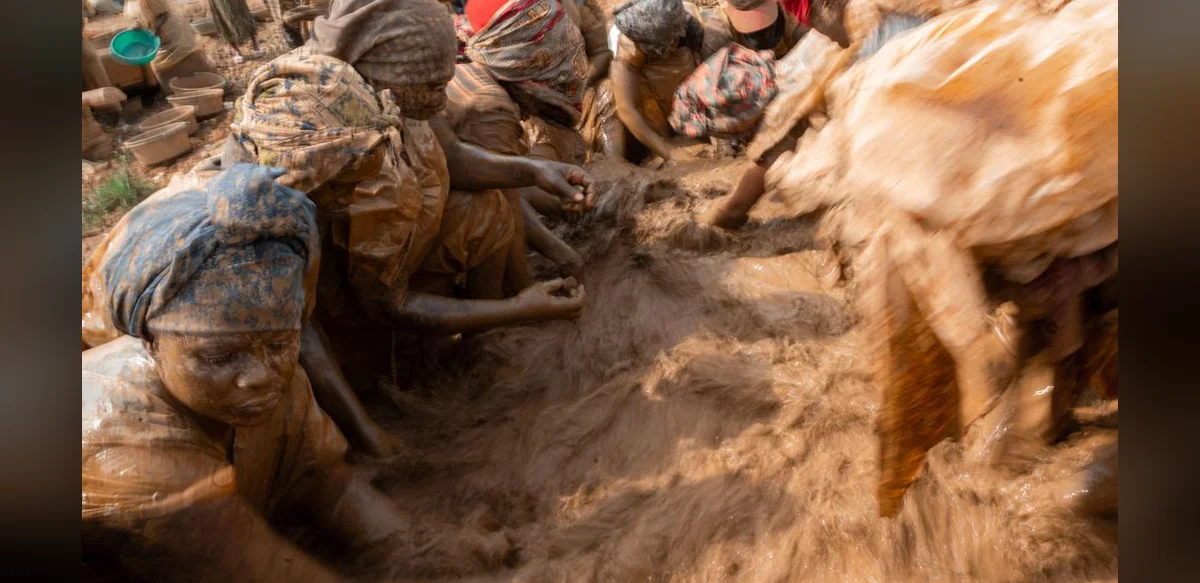
In the mines around Mongbwalu, the center of an Ebola outbreak in northeastern Democratic Republic of Congo, gold prospectors must set aside fears of the virus to continue their demanding labor. “Ebola is real and it scares us. But if I stay at home, what are my children going to eat?” asked artisanal digger Justin Okaume. The country’s 17th Ebola outbreak began on May 15 following unexplained deaths in Mongbwalu, located in the resource-rich yet unstable Ituri province. It has caused over 250 deaths and 1,000 cases across the large central African country, though the full scale remains hard to determine. Official data show 209 infections and 89 deaths in Mongbwalu alone. Several miners were among those affected, according to local hospital head Richard Lokudu. The ochre landscape features numerous holes dug by dozens of artisanal workers who break rocks and extract gold particles. Men and women covered in mud labor side by side for hours in poor safety conditions. Some travel from other provinces or nearby nations such as Uganda in hopes of earning a few hundred dollars weekly. Day laborer Jeannette Akelo, a mother of seven, said workers have no option but to continue “to survive.” The outbreak stems from the Bundibugyo strain, which lacks a vaccine or targeted treatment. Current Ebola vaccines work only against the Zaire strain from earlier outbreaks. Red Cross teams in protective gear have repeatedly collected bodies in recent weeks to limit virus spread after death. Miners begin shifts at dawn before equatorial heat intensifies. Most gold output in the DRC comes from artisanal operations. After long hours, some eat rice with leaf gravy while others mix mercury by hand into extracted material to form raw gold. “We don’t know who is infected or not, and after work everyone goes home,” said digger Jean-Baptiste Liwawi, who uses ginger and traditional remedies. Many patients turn to healers instead of hospitals due to deep mistrust in a region long affected by armed groups. In Ituri, militias control nearly all gold sites and collect taxes, with much of the output smuggled to Uganda, per UN reports.