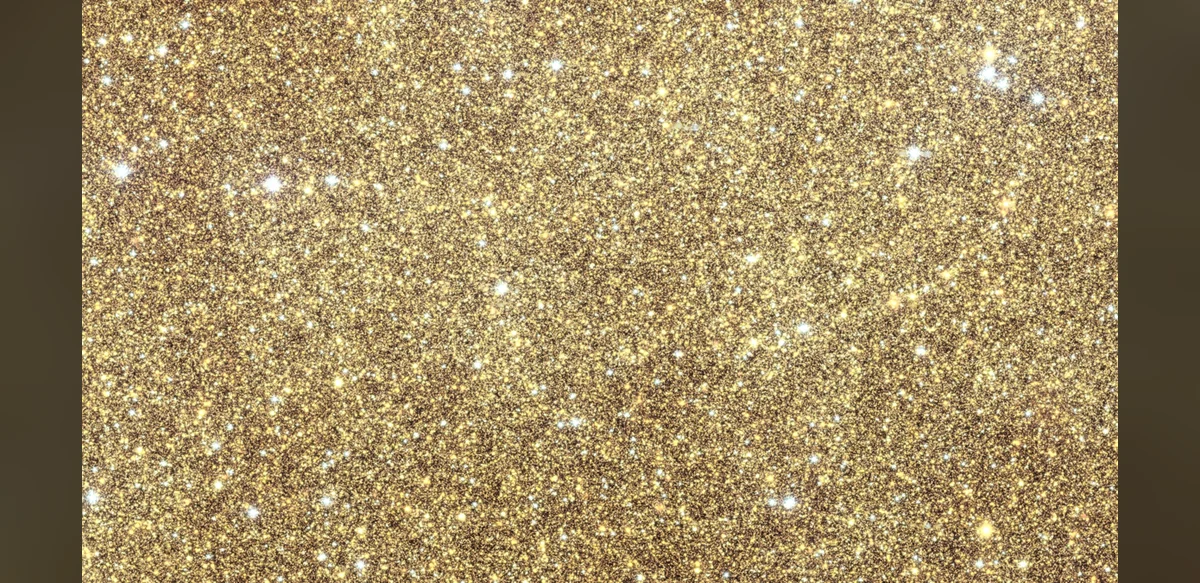
The Euclid space telescope has taken the largest and most detailed image yet of the Milky Way’s central region, revealing around 60 million stars, the European Space Agency reported Wednesday. The image of the galaxy’s bright core will aid efforts to find planets outside the Solar System, the agency noted. At the galaxy’s center lies a bulge holding billions of stars, according to French astronomer Jean-Charles Cuillandre, who is part of the Euclid mission. Launched in 2023, Euclid aims to map one-third of the sky to investigate dark matter and dark energy. The telescope was directed at the sky’s brightest area, producing excellent results. This marks the largest high-resolution image in visible light of the Milky Way’s center. It was obtained on 23 March 2025 from a position 1.5 million kilometres from Earth, using the visible light camera over 26 hours. The mosaic combines nine frames, each larger than the Moon’s apparent size. The original black-and-white data received colour from separate observations by the Canada-France-Hawaii Telescope. The goal was not only to create an attractive picture. In recent years, thousands of exoplanets have been found. While new ones are unlikely to appear in this image, it will help determine the mass of known and future planets through microlensing. This occurs when one star passes in front of another, acting as a lens that bends and brightens the background light. A planet around the nearer star causes a slight additional shift, revealing its presence. Nearly 300 exoplanets have been detected this way in the past two decades, all toward the galactic center using ground telescopes. The new image covers 51 known planetary systems and will support further discoveries.