


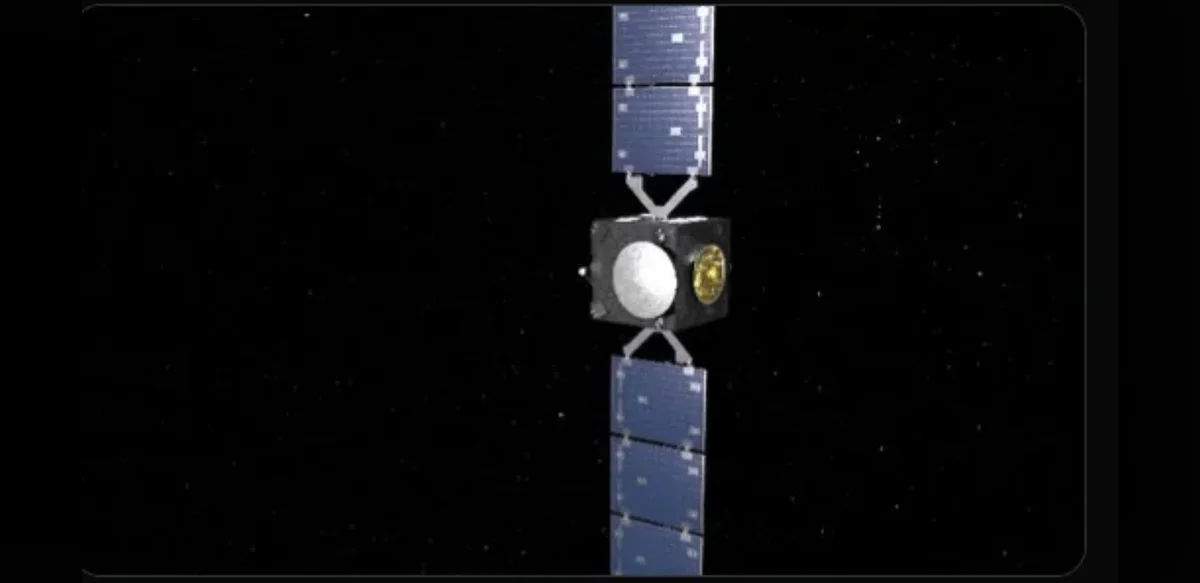
The European Space Agency has started detailed observations of a binary asteroid system using its Hera spacecraft. This follows an earlier experiment conducted by NASA in 2022 that involved directing a probe into one of the asteroids to test deflection techniques. The current effort focuses on examining the results of that collision and gathering data that could support future strategies for protecting Earth from potential asteroid impacts.
The target is the Didymos system, which consists of a larger asteroid and a smaller companion. The 2022 test altered the orbit of the smaller body, and researchers now seek to measure the precise changes in its path and structure. Understanding these outcomes is viewed as a key step in developing reliable methods for planetary defense against near-Earth objects.
Hera carries a suite of instruments designed to map the surface, analyze composition, and assess any damage or reshaping caused by the earlier impact. In addition, the mission includes the release of small companion satellites that will conduct close-range measurements and relay information back to the main craft. These supporting probes are expected to provide complementary views of both asteroids in the system.
Scientists emphasize that the data collected will help calculate the momentum transfer efficiency from the 2022 collision. This factor determines how much an impact can change an asteroid’s trajectory and is essential for modeling future deflection scenarios. Physical alterations to the smaller asteroid, such as crater formation or surface disruption, will also be documented in detail.
Planetary defense has gained attention in recent years as agencies worldwide monitor objects that pass near Earth. While no immediate threat has been identified from the current target, the information obtained could inform response plans if a hazardous body is ever detected. The mission therefore serves both scientific and practical purposes by testing technologies and refining theoretical models.
The journey of the European probe to the asteroid system has taken several years, allowing time for trajectory adjustments and system checks. Upon arrival, the spacecraft began a series of flybys and orbital insertions to optimize data collection. Early transmissions indicate that initial imaging and sensor readings are proceeding as planned.
Collaboration between international space organizations has been central to this sequence of events. The 2022 test and the follow-up investigation represent coordinated steps toward a shared goal of improving asteroid deflection capabilities. Data sharing and joint analysis are expected to continue throughout the mission duration.
Further phases of the mission will involve more intensive mapping and sample analysis where possible. The small satellites will operate independently for periods before returning to the vicinity of the main spacecraft. Their combined observations should yield a comprehensive picture of the post-impact environment.
Public interest in asteroid missions has grown with each successful milestone. Educational outreach efforts often accompany these projects to explain the science behind orbital mechanics and impact physics. Clear communication helps maintain support for continued investment in space-based research.
The overall timeline for the current mission extends several months, during which ongoing adjustments may be made based on real-time findings. Engineers and scientists will monitor instrument performance closely to ensure high-quality results. Any unexpected findings could prompt revisions to observation strategies.
In summary, the arrival of the European spacecraft marks the next stage in an ongoing effort to understand and potentially mitigate asteroid risks. By building on the 2022 experiment, the mission aims to deliver actionable insights that advance both knowledge and preparedness in this field.

