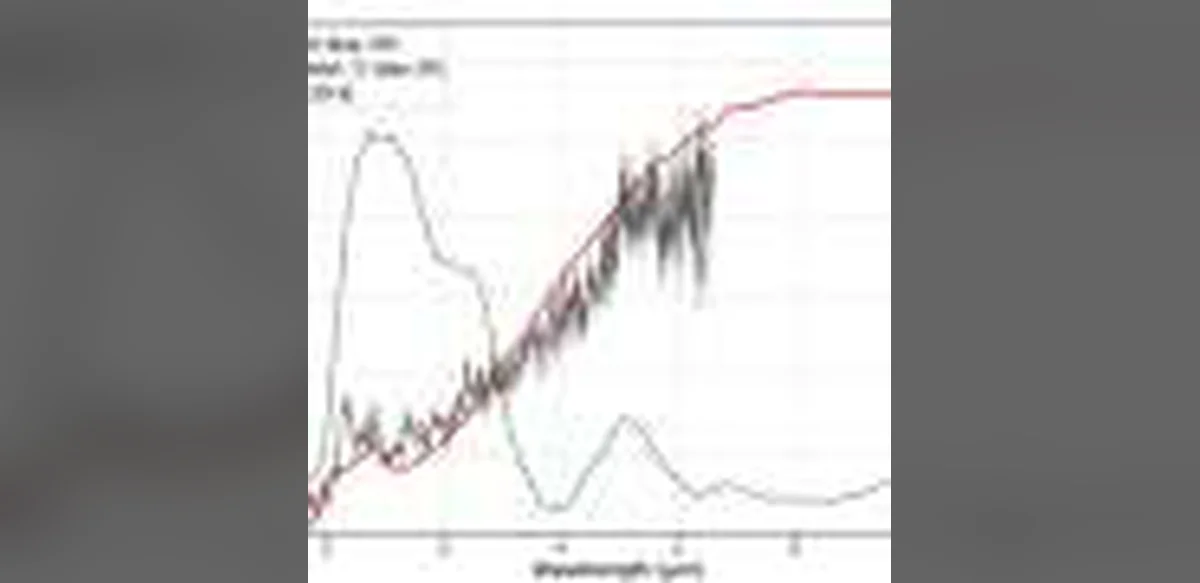
Astronomers propose that dust made from heavy elements formed in neutron star mergers can account for puzzling late-time infrared signals seen in kilonovae. When two neutron stars collide, they produce a bright explosion that ejects neutron-rich material. This material undergoes rapid neutron capture, creating some of the universe’s heaviest elements. Observations of events such as AT2017gfo and AT2023vfi showed unexpected smooth infrared glows at late stages that standard atomic models could not reproduce. A new study posted on arXiv models how r-process elements condense into solid grains as the ejecta cool. The calculations indicate dust formation begins around 10 to 20 days after merger, first in outer layers and later throughout inner regions. Once present, the dust produces a thermal spectrum matching the observed 660 K blackbody-like feature. The same process may explain similar reddening recorded in earlier kilonovae. The model also predicts variation among events depending on ejecta speed and mass, offering testable predictions for future spectroscopy. Researchers note this dust signature could help trace heavy-element production in mergers and other astrophysical sites.