

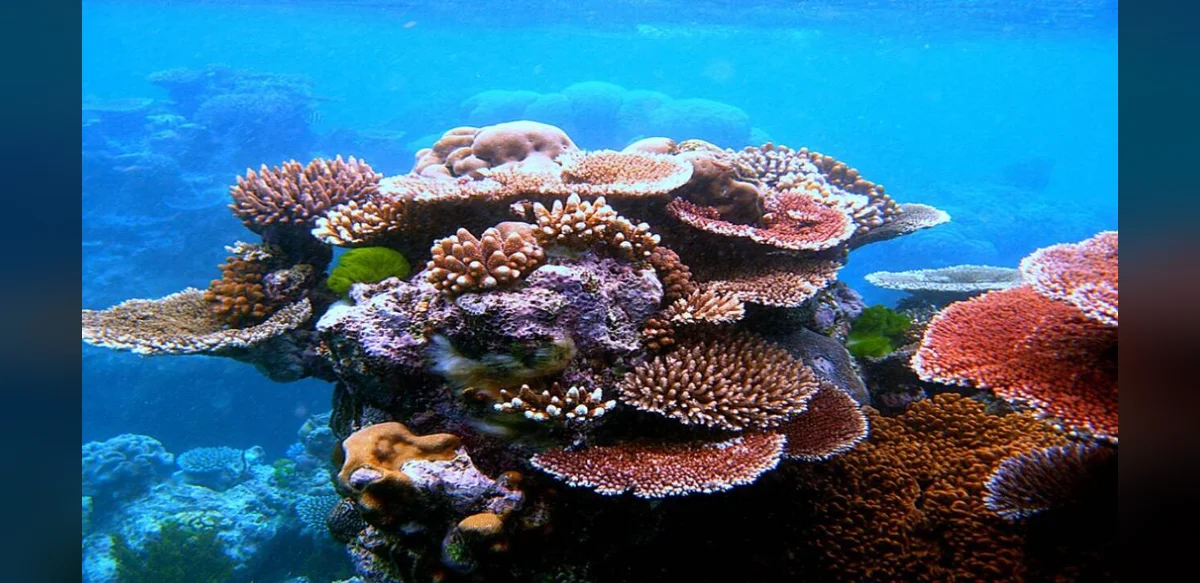
The Great Barrier Reef faced contrasting conditions over two recent years. In 2025 the northern section recorded its largest annual drop in coral cover, falling to 30 percent after severe bleaching. One year later, new surveys showed an increase to 35.1 percent despite another bleaching episode early in 2026. The Australian Institute of Marine Science released these results in August 2026, noting the reef can recover when conditions allow. Elevated sea temperatures in 2024-25 caused widespread bleaching across all regions. Northern cover fell by about a quarter, central areas declined 14 percent, and southern sections dropped nearly 30 percent, the largest annual loss recorded there. Corals lose their symbiotic algae under prolonged heat, turning white and risking death. Early 2026 again brought above-average temperatures and bleaching risk in northern and central zones. A late-summer monsoon then delivered cloud cover and rain that cooled waters and limited damage. Surveys across 121 reefs from August 2025 to June 2026 found cover stable or higher on most sites. Northern levels rose from 30 to 35.1 percent, central from 28.6 to 31.6 percent, and southern remained near 26.4 percent within error margins. Coral cover now exceeds long-term averages in northern and central regions. Scientists warn the rebound remains fragile amid more frequent marine heatwaves. Without major cuts in greenhouse emissions the reef will face repeated stress beyond its recovery capacity.


