

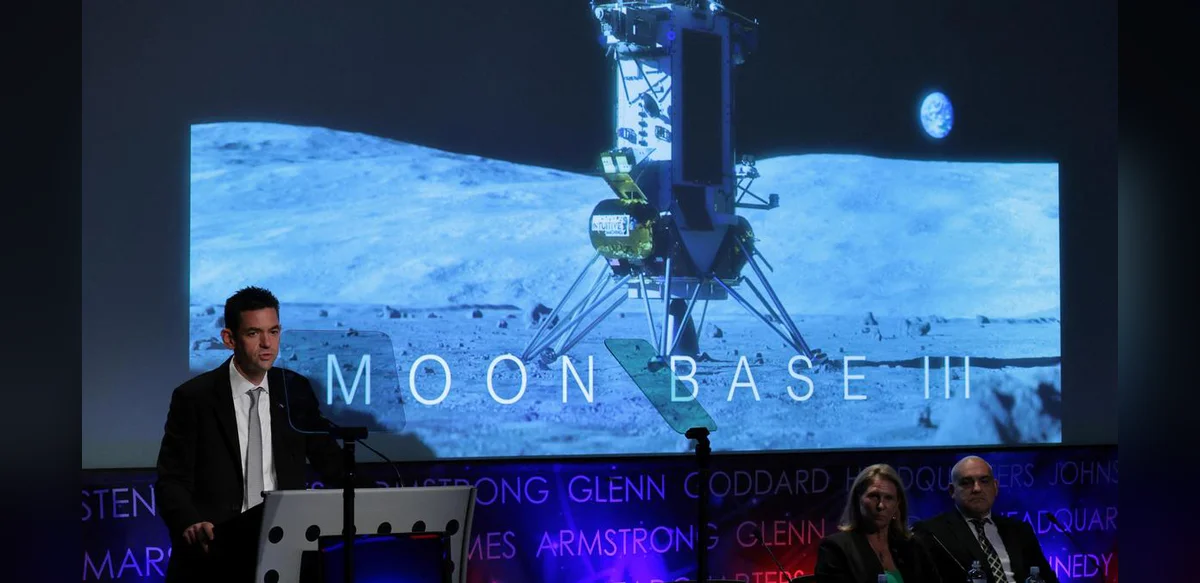
The Moon is becoming an extension of terrestrial geopolitics as the United States seeks to outpace China in establishing a presence there. At a recent India-U.S. space cooperation meeting held at ISRO headquarters, NASA proposed that the Indian agency join its Moon Base program under the Artemis Accords framework. The planned facility would be assembled gradually near the lunar south pole, where extended sunlight and water ice deposits offer practical advantages. Completion is targeted around 2030 as humanity’s initial outpost on another celestial body.
NASA is relying on commercial partners, awarding hundreds of millions of dollars to companies for lunar vehicles, delivery services, and robotic missions that will transport equipment. Recent adjustments to the Artemis schedule now call for a crewed orbital test in 2027 and a lunar landing attempt in 2028, positioning the Moon Base as the subsequent stage for sustained astronaut presence.
India signed the Artemis Accords in 2023, leading to expanded collaboration that includes astronaut training for Gaganyaan, joint technology initiatives, and the NASA-ISRO radar satellite mission. NASA instruments are also scheduled for upcoming Chandrayaan flights. Meanwhile, China and Russia are advancing their own International Lunar Research Station near the same polar region, with a 2035 goal and participation from multiple nations.
NASA has indicated it will exclude entities with ties to China from certain payload opportunities and has framed the Moon Base in terms of maintaining U.S. leadership. These developments risk extending Earth-based alignments to lunar infrastructure, potentially complicating India’s future choices between competing programs.


