

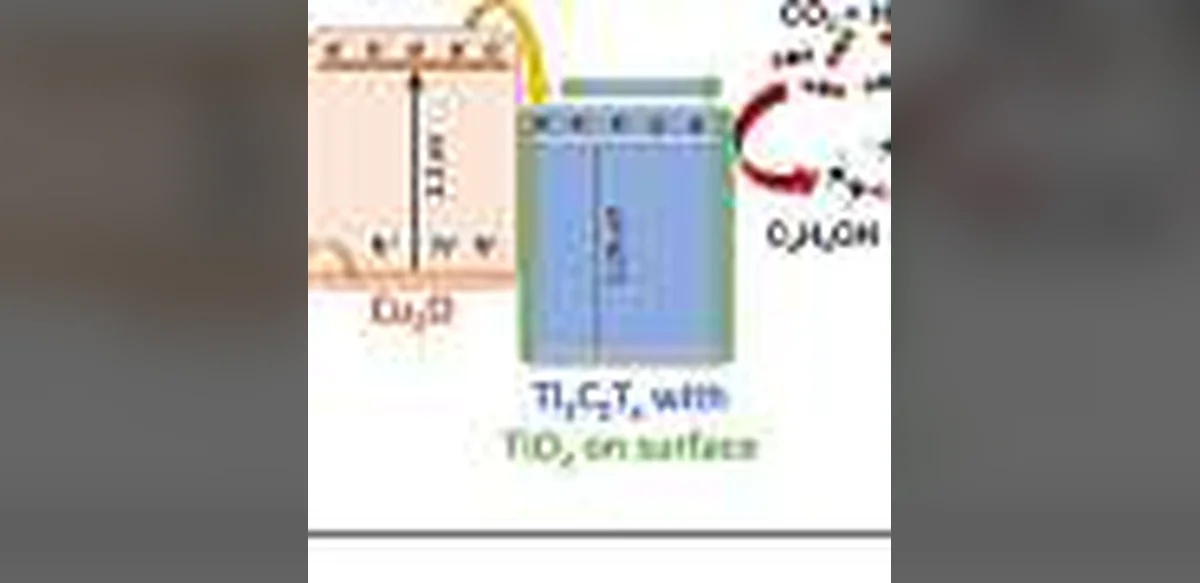
Scientists in the Czech Republic have created a new type of photocathode that uses sunlight to turn carbon dioxide into ethanol. This development comes from work at Charles University in Prague. The approach addresses ongoing challenges with material stability when exposed to water during the conversion process. It also reaches higher efficiency levels than previous methods and supports efforts to produce renewable fuels from greenhouse gases.
The research focuses on improving how light energy drives chemical reactions that reduce carbon dioxide. Ethanol produced this way could serve as a cleaner alternative in fuel applications. By overcoming degradation issues common in aqueous environments, the photocathode maintains performance over longer periods. This stability is key for practical scaling of the technology.
Carbon dioxide conversion using solar power offers a pathway to lower emissions while generating useful chemicals. The team achieved record results in efficiency for producing pure ethanol directly. Such outcomes highlight progress in photoelectrochemical systems designed for environmental applications.
Publication of the findings appears in Advanced Energy Materials. The journal covers advances in energy-related materials and processes. Details in the paper describe the structure of the photocathode as a layered or sandwich-like arrangement that enhances both light absorption and reaction selectivity.
Broader implications include potential contributions to sustainable fuel production. Ethanol from this method avoids reliance on traditional biomass sources. It could integrate with existing industrial setups aimed at carbon capture and utilization. Continued refinement may lead to further gains in yield and durability under real-world conditions.
The process relies on precise material engineering to facilitate electron transfer when illuminated. Water plays a role in the reaction medium, yet the new design prevents breakdown of the active components. This balance allows consistent output of ethanol without unwanted byproducts.
Global interest in solar-driven carbon reduction continues to grow amid climate concerns. Technologies like this photocathode add to the range of options for renewable energy conversion. They complement other strategies such as electrolysis or catalytic methods that also target carbon dioxide.
Future work might explore variations in the material composition to optimize for different scales or conditions. The current achievement establishes a benchmark for efficiency in similar systems. It demonstrates how targeted improvements in photocathode architecture can unlock better performance.
Overall, the development represents a step forward in combining materials science with environmental goals. By turning a greenhouse gas into a usable fuel using only sunlight, the method aligns with principles of circular carbon economies. Additional studies will likely build on these results to enhance viability for wider adoption.
The neutral tone of reporting on such innovations helps convey technical progress without overstating immediate impacts. Readers can appreciate the scientific advance while recognizing the need for further validation and development. This balanced view supports informed discussion around emerging energy solutions.
In summary, the photocathode innovation from Prague researchers provides a promising tool for solar-to-fuel conversion. Its ability to handle water exposure while delivering high ethanol purity marks a notable improvement. The work published in the specified journal adds valuable data to the field of advanced energy materials.


